FREE SHIPPING OVER $200


Material · size · tone · ritual use
Singing Bowl Buying Guide: Metal vs. Crystal, Size, Tone, and Ritual Use
Choose the instrument that fits your room, your hands, and the way you want to listen.
Listen before labels
Choose the voice, then the vessel
Hand-hammered metal
Portable, tactile, individually varied
- Good for hand-held or cushion-supported practice
- Responds to striking and rim play
- Listen to the exact bowl when possible
Frosted quartz
Sustained, powerful, more stationary
- Needs stable floor space and careful storage
- Can fill a room quickly
- Match volume to neighbors and listeners
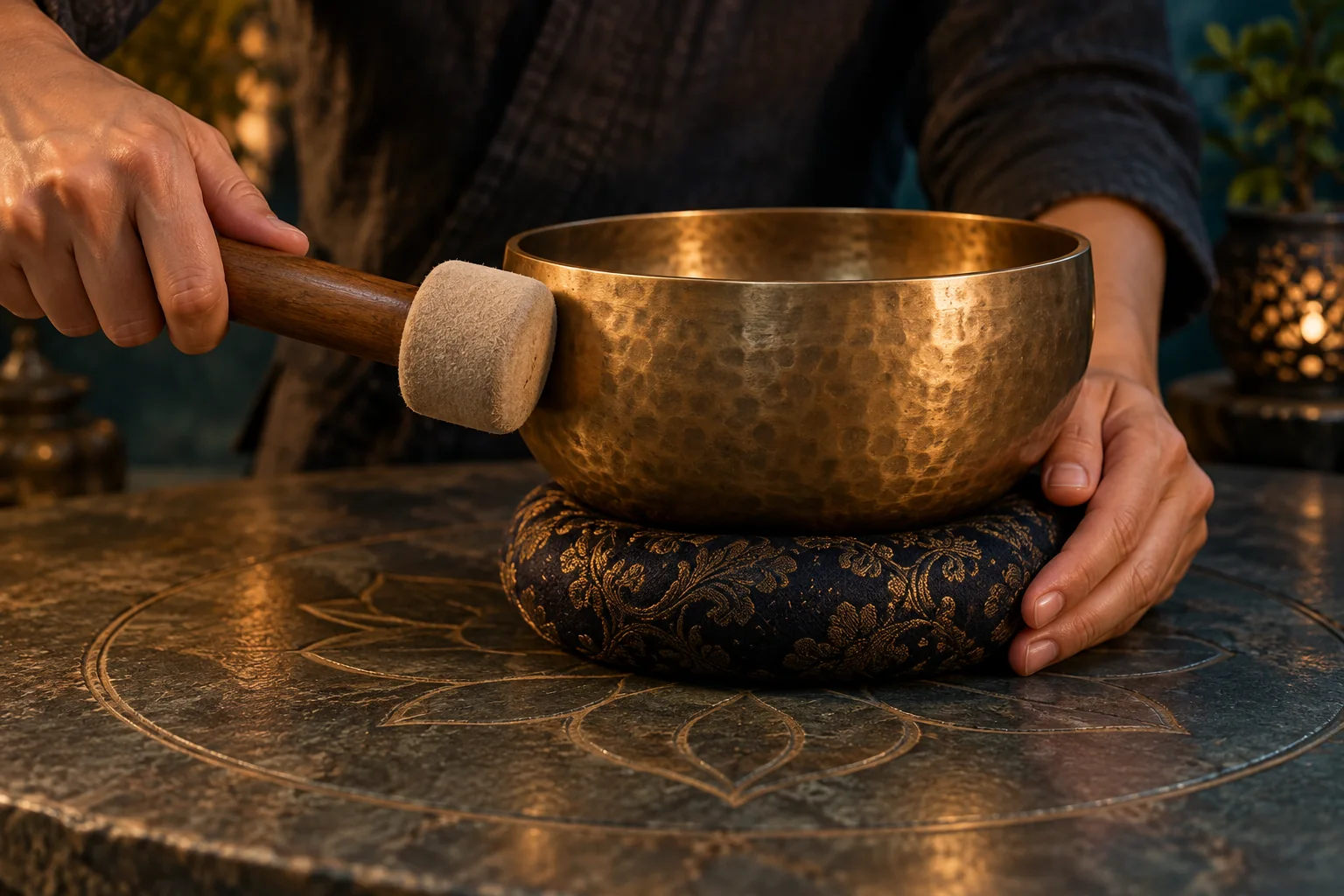
Desk transitionSolo floor practiceGroup sound room
01
Guide 1
Metal and crystal are different instruments
Hand-hammered metal bowls have visible tool marks, warm overtones, and individual variation. They are easier to carry, can sit on a cushion, and respond to both striking and rim play. A frosted quartz bowl is larger, more fragile, and visually minimal; it can produce a powerful sustained tone that fills a room quickly.
Neither material is automatically more “authentic,” more therapeutic, or better for meditation. They offer different physical experiences. If possible, listen to a recording of the exact size and model, then consider where it will live and how loudly you can play it.
02
Guide 2
Size changes more than pitch
Larger bowls often produce lower perceived tones and longer sustain, but material thickness, shape, and manufacturing variation also matter. Size changes the way you hold or place the instrument, the striker you need, and the amount of storage space required. A twelve-inch quartz bowl is a room object; a small metal bowl can travel in a pouch.
Do not buy a note name alone. Recorded sound depends on microphone, room, headphones, and playing technique. Treat online tone labels as orientation, not a promise that the bowl will sound identical in your space.

03
Guide 3
Match the tool to the ritual
For a short transition before journaling, a small metal bowl or tingsha may be enough. For a longer solo listening practice, choose a bowl that is comfortable to circle slowly without gripping too tightly. For group sound sessions, consider projection, room size, transport, and the ability to play at a respectful volume.
Tingsha cymbals create a bright, concise strike and are useful as opening or closing markers. They do not offer the same continuous rim technique as a bowl. Think of them as punctuation rather than a miniature singing bowl.
04
Guide 4
Use sound responsibly
Sound practices can be calming for some people and uncomfortable for others. Start softly, keep instruments away from ears, and give listeners a way to opt out. Be especially considerate in shared buildings and around children, pets, people with sound sensitivity, or anyone prone to headaches.
Place a bowl on its proper ring or cushion on a stable surface. Keep quartz away from edges and temperature shocks. Hold metal bowls without muting the wall, and never force the striker. Stop if an instrument or your wrist feels unstable.

05
Guide 5
Three tools, three roles
The Hand-Hammered Himalayan Singing Bowl is the adaptable choice for tactile practice, portability, and traditional metal character; larger sizes include accessories. The Pure Resonance Frosted Quartz Crystal Singing Bowl is for a more stationary, sustained sound setup and is offered in several sizes. Buddhist Tingsha Cymbals are the compact choice for a clear start-or-finish signal.
Choose based on use and environment, not the longest feature list. A smaller tool used attentively is more valuable than a larger bowl that is too loud or inconvenient for your home.
Curated from the collection
3 focused choices
Real product photography is shown without cropping. Confirm current specifications and availability on each product page.
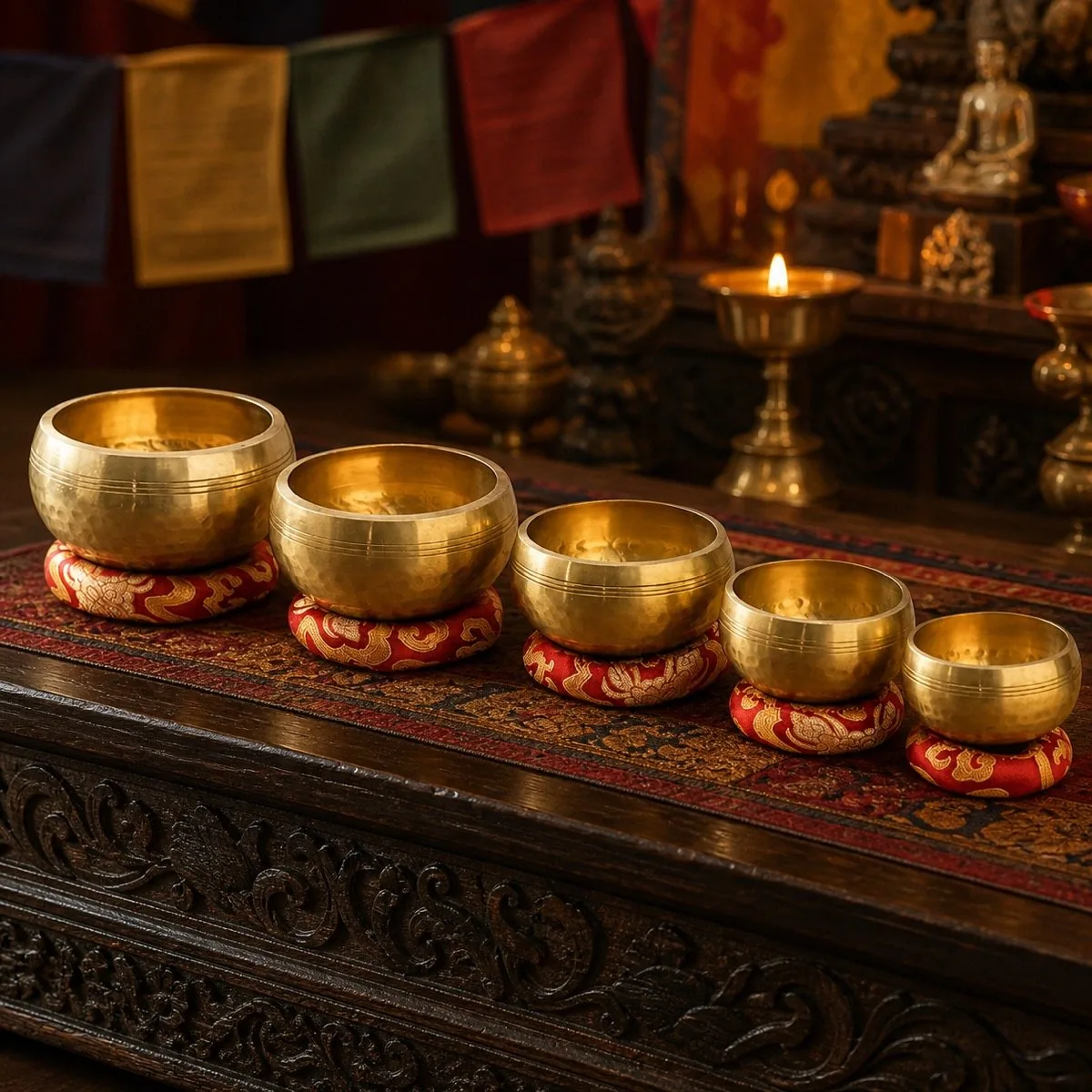
Metal · portable · varied voice
Hand-Hammered Himalayan Singing Bowl
A Nepalese hand-hammered bowl with wooden striker; selected larger sizes include cushion and pouch.
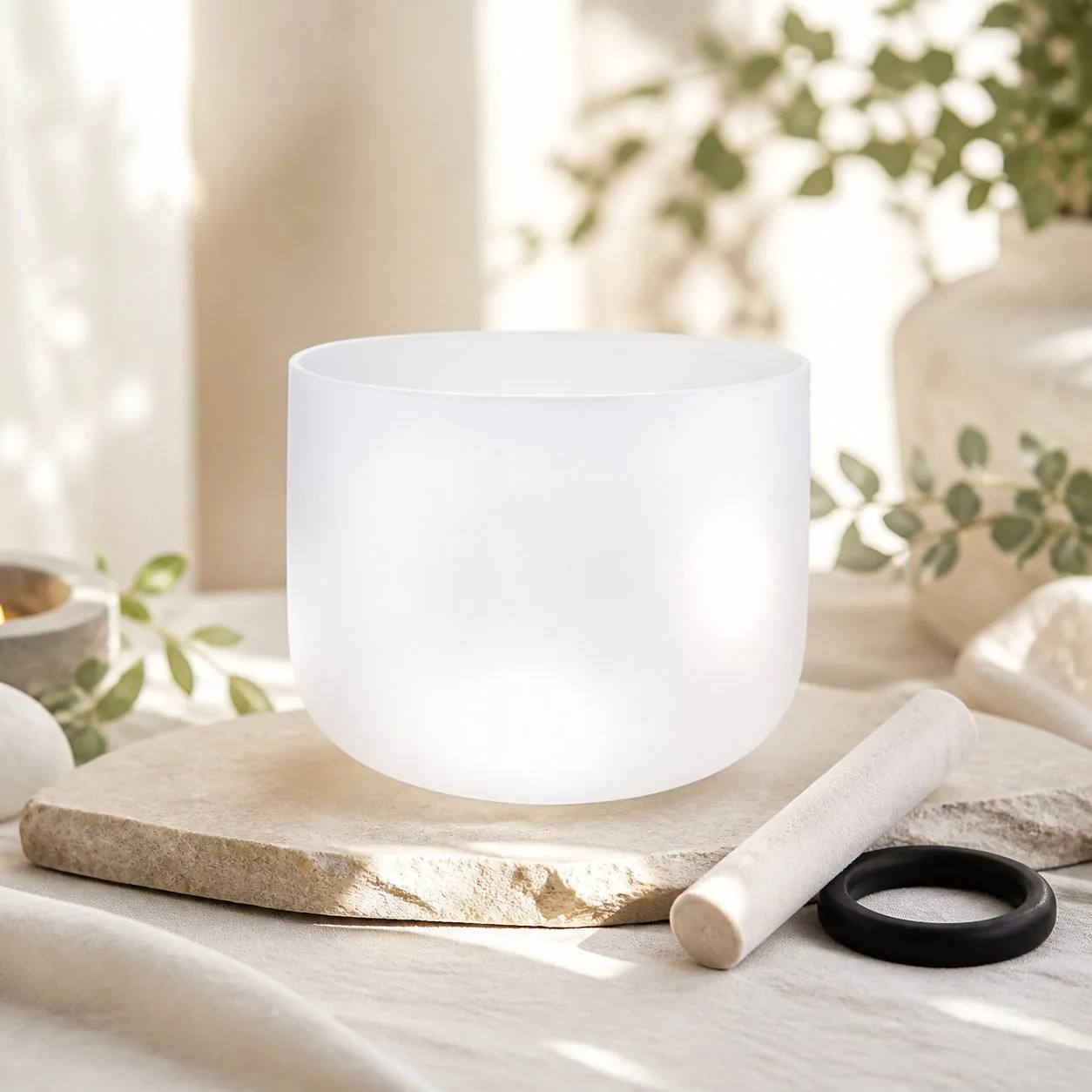
Quartz · 6–12 inch options
Pure Resonance Frosted Quartz Bowl
A room-filling frosted quartz bowl for a dedicated meditation, yoga, or sound space.
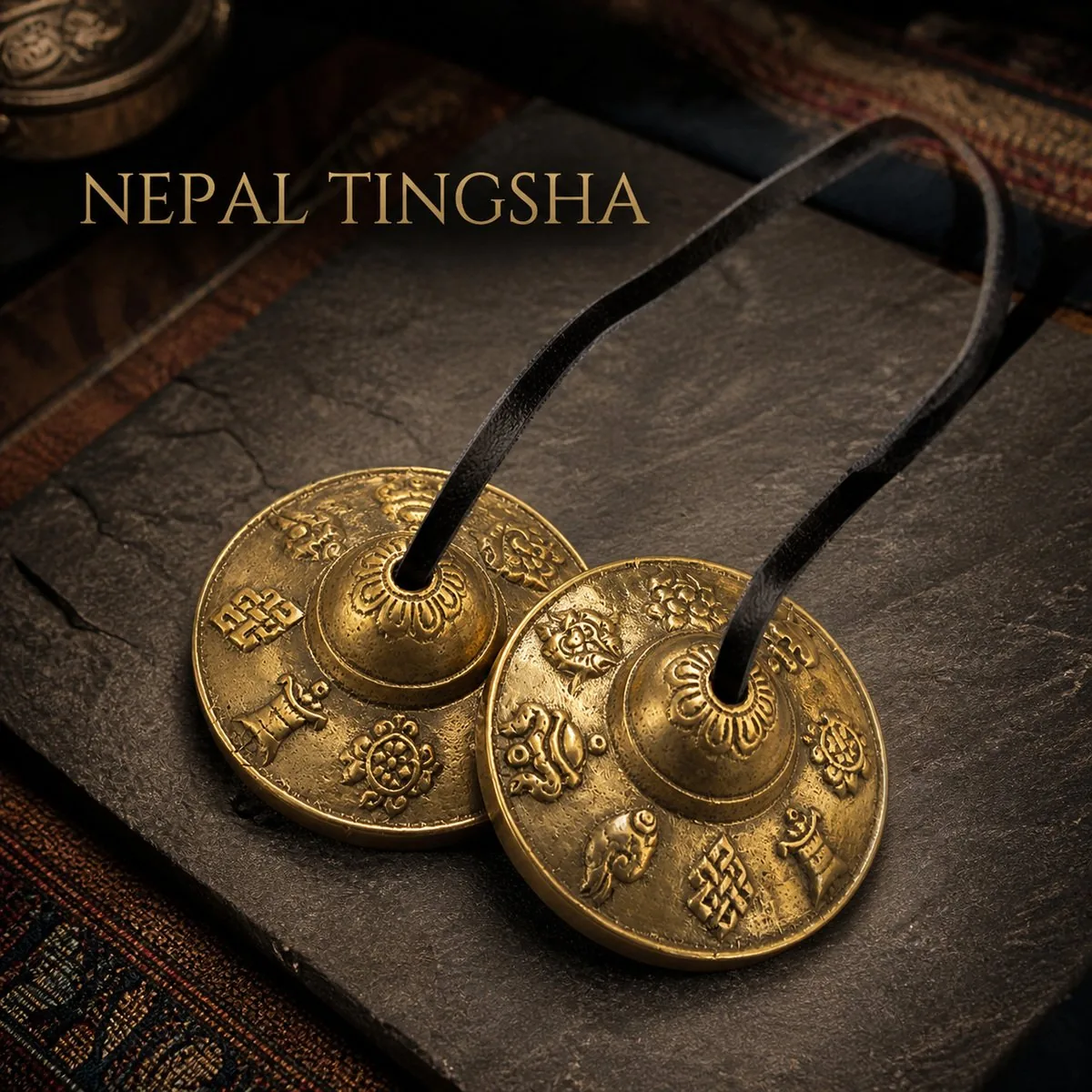
Brass · compact signal
Buddhist Tingsha Cymbals
A pair of brass tingsha joined by leather cord for concise opening and closing tones.
Questions, plainly answered
Frequently asked questions
Is a metal or crystal singing bowl better for beginners?
A small or medium metal bowl is often easier to carry and store; a quartz bowl can be simple to strike but needs more space and careful handling.
Do larger singing bowls sound deeper?
Often, but not always. Material, thickness, shape, striker, and playing technique also influence perceived pitch and sustain.
Can I choose a bowl by chakra note?
You may use note systems as a personal ritual framework, but do not treat them as medical or scientific guarantees. Listen to the actual bowl when possible.
What are tingsha cymbals used for?
They create a bright, brief tone that can mark the beginning or end of meditation, breathwork, or a transition.
How loudly should I play a singing bowl?
Begin quietly and increase only if the room and listeners are comfortable. Keep sound sources away from ears.
Editorial note
This guide is educational product-selection content. Symbolic or spiritual meanings are cultural and personal traditions, not medical or scientific guarantees. Product materials, dimensions, prices, and availability may change; confirm the current product page before ordering.
Choose for real life
The right object is the one you can use, care for, and keep.
Compare dimensions and materials, picture the item in your daily space, and let meaning follow an informed choice.
For additional context on listening and wellbeing, see NCCIH music and health resources.