FREE SHIPPING OVER $200

Incense type · material · airflow · safe placement
How to Choose an Incense Burner: Types, Materials, and Safe Placement
The safest burner is designed for your incense, stable in your room, and easy enough to clean that you will maintain it.
Format-to-holder map
Match the burner to what actually burns
The safest choice begins with the incense format, not decoration.
IncenseHolderMain check
StickLong ash-catching trayHole fit and tray length
ConeHeat-safe dish or lidded burnerVentilation and hot surfaces
Backflow coneDedicated channel burnerResidue path and cleaning access
CoilBroad supported bedFull ember containment
01
Guide 1
Begin with the incense format
A beautiful burner can still be wrong for the incense you own. Stick incense needs a secure opening and a tray long enough to catch falling ash. Cones require a heat-resistant dish with room around the base. Coils need support across a wider area. Resin is used with charcoal or a specialized heater and requires a setup designed for much higher heat.
Backflow burners rely on specially made hollow cones and carefully shaped channels. The waterfall effect is sensitive to drafts and residue, so it is best treated as a display ritual that needs regular cleaning, not as the default holder for every incense type.
02
Guide 2
Read material as a system
Ceramic and stone feel substantial and resist tipping when well designed, but they may become hot and can crack if exposed to sudden temperature changes. Metal is durable and can be highly detailed, yet it conducts heat quickly. Wood should only appear where the design keeps embers and hot ash inside a proper fire-resistant insert.
A lid adds visual containment but must have adequate openings for smoke and oxygen. Decorative perforations can collect residue. Before buying, imagine lifting the lid, removing ash, and reaching every internal surface without bending delicate parts.
03
Guide 3
Safe placement is non-negotiable
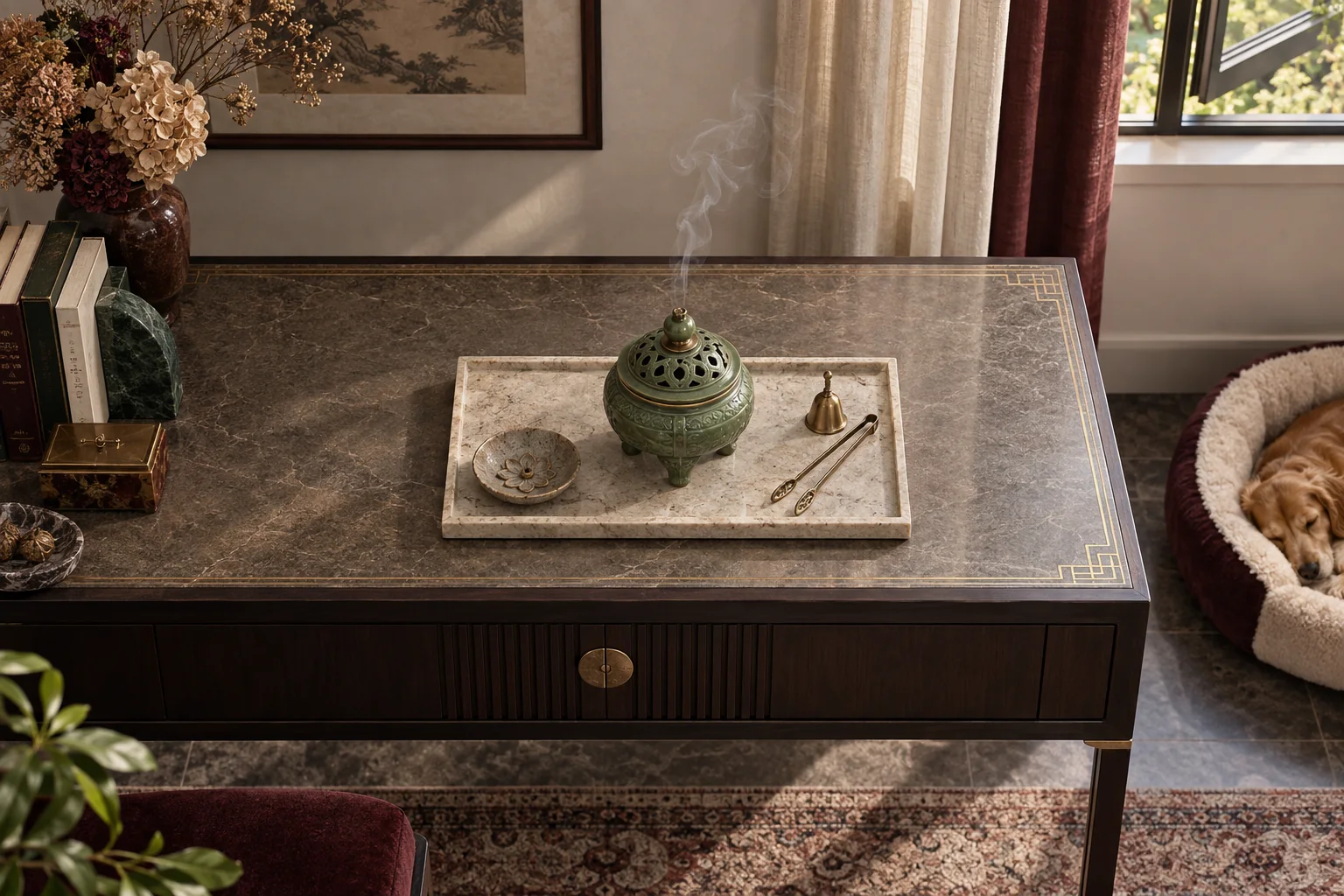
Place the burner on a stable, level, nonflammable tray or surface. Keep it away from curtains, paper, dried flowers, bedding, shelves with low clearance, children, and pets. Do not move it while hot, and never leave burning incense unattended. Use the smallest amount that suits the room.
Ventilation matters because incense produces particulate matter and fragrance compounds. Open a window or use gentle cross-ventilation without creating a draft that blows ash. People with asthma, respiratory conditions, migraines, or fragrance sensitivity may need to avoid incense entirely.
04
Guide 4
Choose for the room, not only the altar
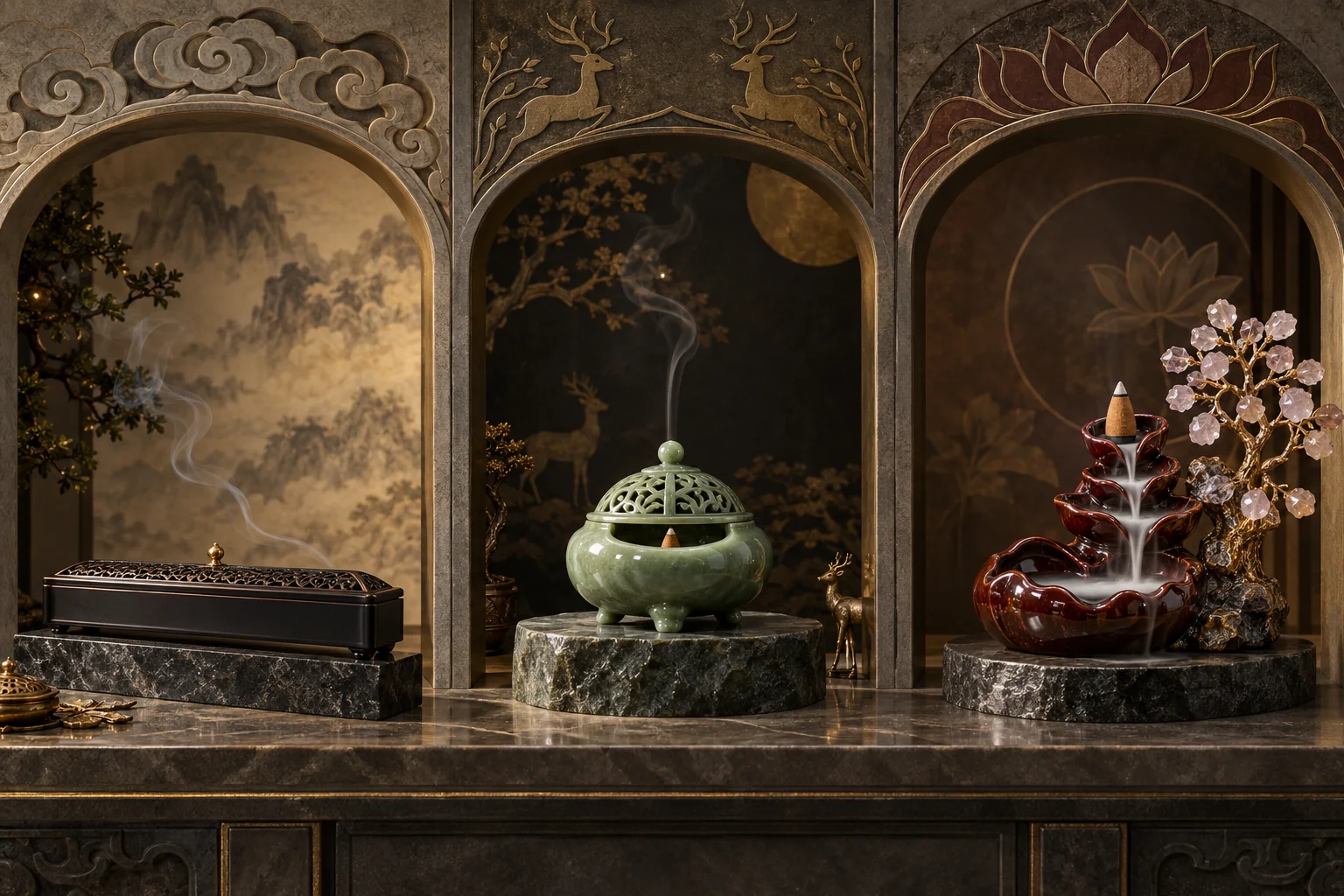
A lidded jade-and-cloisonné-style burner can function as a small decorative object on a tea table or altar when set on a heat-safe tray. A long covered deer-and-mantra tray suits stick incense and visually contains the ash path. A chakra-tree backflow burner creates a more theatrical smoke display and needs a still, washable setting.
Measure the available surface and overhead clearance. A compact object can still produce more smoke than a room comfortably handles. If the burner is mainly decorative, enjoy it unlit; there is no requirement to burn incense for the object to belong in the space.
05
Guide 5
Cleaning protects both function and finish
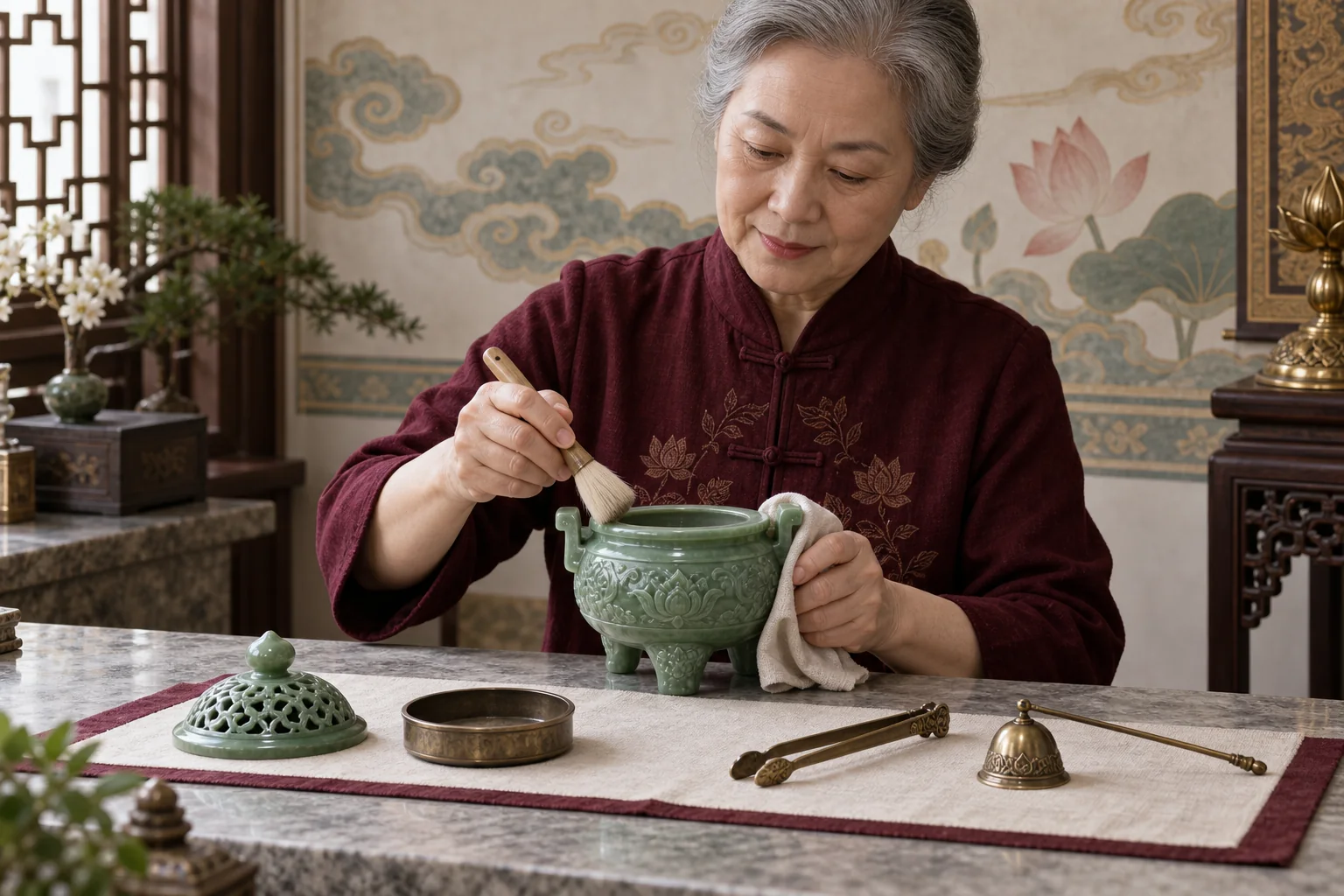
Let every part cool completely. Remove dry ash with a soft brush, then follow the product’s material-specific care instructions. Avoid soaking mixed-material pieces, abrasive powders, or harsh chemicals on decorated finishes. Backflow residue can be oily, so wipe channels regularly before buildup becomes difficult.
Inspect feet, lids, handles, and incense openings before each use. Retire a cracked ceramic piece or an unstable holder from burning use. A small maintenance habit is more important than an elaborate ritual.
Curated from the collection
3 focused choices
Real product photography is shown without cropping. Confirm current specifications and availability on each product page.
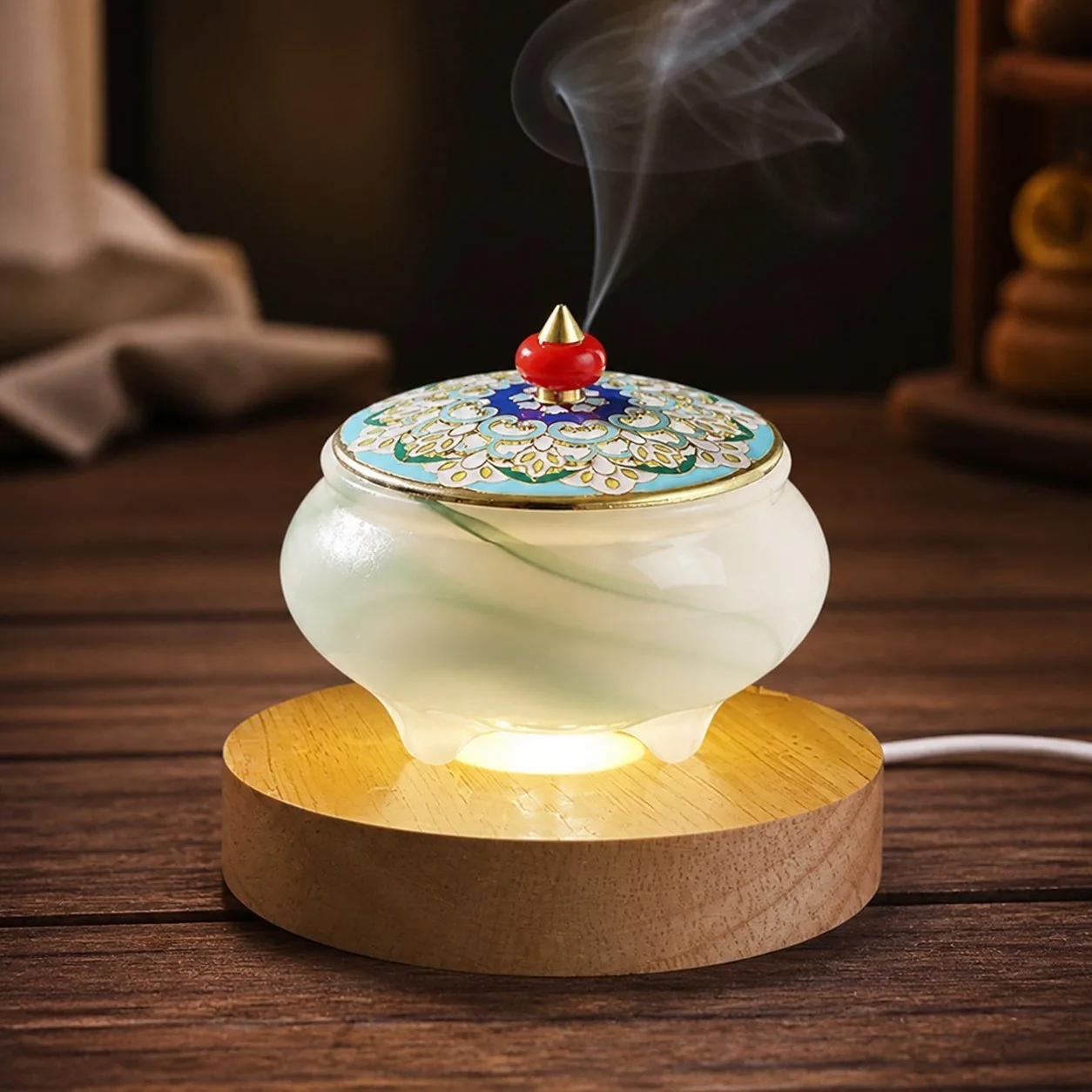
Lidded vessel · decorative stone look
Jade Stone Cloisonné Incense Burner
A jade-stone burner with a floral cloisonné-style lid and optional flat wooden glow base.
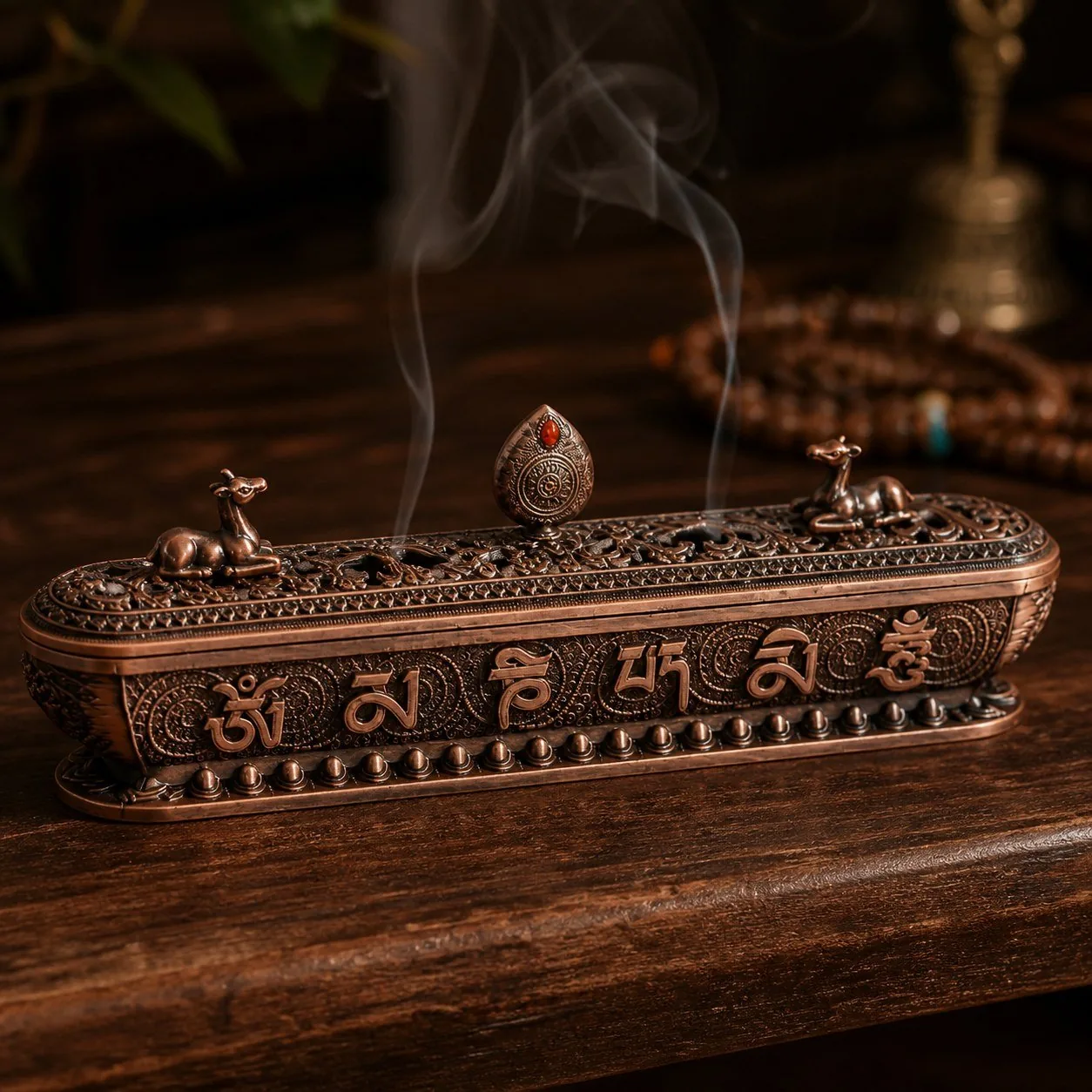
Covered long tray · stick incense
Tibetan Deer Mantra Incense Burner
An ornate covered tray with deer accents and raised mantra detail for a defined ash path.
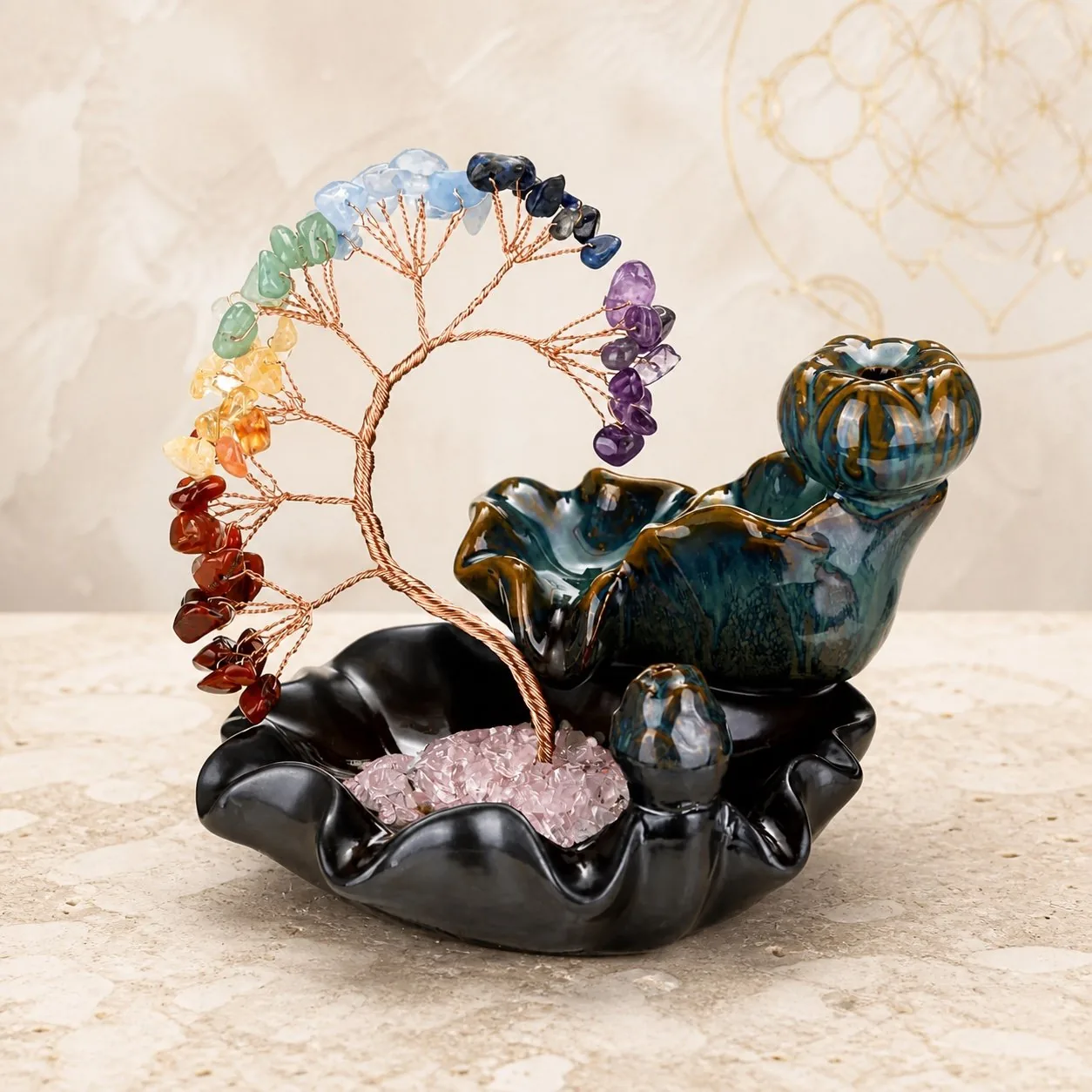
Ceramic · backflow cones
Seven Chakra Crystal Tree Backflow Burner
A glazed ceramic backflow burner with a gemstone tree and lotus-inspired basin.
Questions, plainly answered
Frequently asked questions
What type of incense burner is safest?
A stable, heat-resistant holder designed for the exact incense format is safest when used on a nonflammable surface and never left unattended.
Can I use a regular cone in a backflow burner?
The waterfall effect generally requires a compatible backflow cone with a hollow channel. Follow the burner and incense instructions.
Where should I place an incense burner?
Use a level, nonflammable surface with clear overhead and side space, away from drafts, fabrics, paper, children, and pets.
Should I open a window when burning incense?
Yes, gentle ventilation is advisable. Avoid strong drafts that spread ash, and stop if anyone experiences discomfort.
How often should I clean a burner?
Remove ash after each use and wipe residue as needed. Backflow channels usually need more frequent cleaning.
Editorial note
This guide is educational product-selection content. Symbolic or spiritual meanings are cultural and personal traditions, not medical or scientific guarantees. Product materials, dimensions, prices, and availability may change; confirm the current product page before ordering.
Choose for real life
Choose a vessel that makes the ritual safer.
Match the burner to your incense type, airflow, surface, and daily routine before choosing its decorative character.
For additional context on wellbeing and mindful practice, see NCCIH music and health resources.