FREE SHIPPING OVER $200


Journal · Intentions & Rituals
Yellow Light,
One Next Step
Use a warm yellow stone to point toward one practical action—not wealth, luck, or instant motivation.
Quick answer
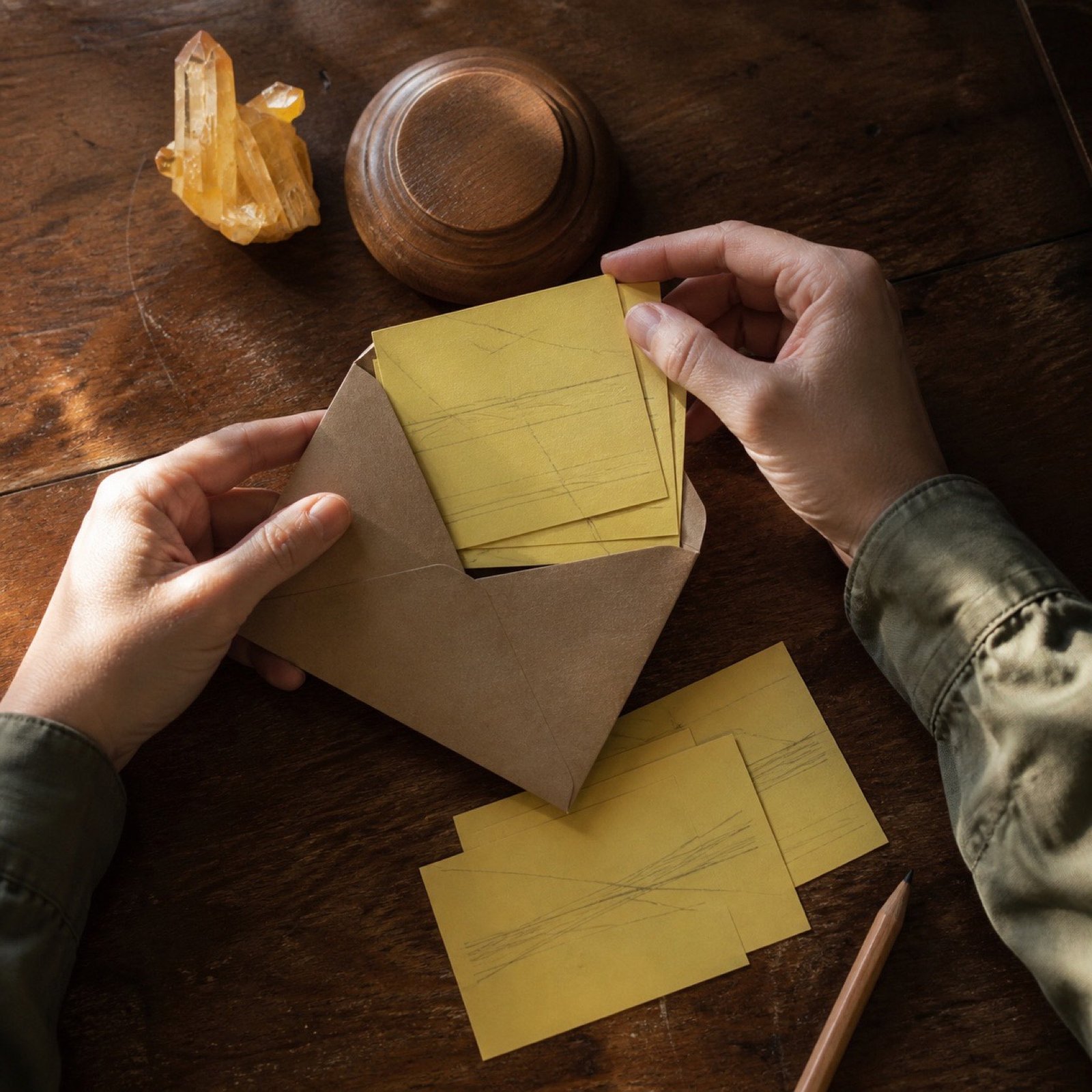
A citrine desk ritual works best as a visual reminder: name one small task, write it on a yellow card, work for 25 minutes, then record what actually moved.
Begin without the hype
Let yellow light point to the work—not promise the result.
Yellow stones are often sold with dramatic claims about success and abundance. A more useful question is quieter: what is one visible step toward the work you value?
Citrine, sunstone, amber, golden beryl, or warm yellow calcite can sit on the desk as a cue for beginning before you feel fully ready. The stone has no job beyond returning your gaze to the card.
Diagnose the starting friction
Make the next step visible.
First name what blocks the start: unclear outcome, missing material, emotional resistance, or too-large scope. Then choose a step that answers that specific friction inside one focused work period.
Unclear outcome
01
Define “done”
Write the smallest observable result this session should produce.
Missing material
02
Collect the input
Find the file, request the quote, or gather the three objects needed to begin.
Too-large scope
03
Cut the first slice
Reduce the task to one paragraph, one product, one call, or one decision.

One focused interval
Write it. Place it. Begin.
25
Set a 25-minute timer. Put the yellow card under or beside the stone, where you will see it when you sit down.
01
One card carries one task only.
02
The stone points your gaze back to the written action.
03
When the timer ends, stop long enough to notice what changed.
Add a small evidence line
Record contact with the work.
At the end of the timer, write one sentence. Even “I found the missing file” counts. The purpose is not to perform optimism; it is to leave an honest record.
Complete this sentence
“Today I moved it forward by …”
30
At month-end, open the envelope.
Ask which kinds of steps created momentum: outreach, editing, preparation, or rest before complex work.
Keep yellow from becoming pressure
A useful cue should not demand positivity.
If bright yellow begins to feel like an instruction to be cheerful or productive, soften the visual signal.
Replace it with honey-toned wood, muted amber, a pale paper card—or no stone at all. A good ritual supports agency; it does not shame you for being human.
One next step is enough.
What the ritual can do
It can make a task easier to see, give attention a short boundary, and leave a record of what happened. It cannot produce money, luck, or a guaranteed outcome.
Source context: Yellow light is used here as a visual cue for an ordinary next action, not as a promise about mood or outcomes. For mineral names and reference images, consult the Mindat mineral database. Browse practical desk objects through the Himalayan Ritual shop.
Use yellow light to mark one task that can be finished today: write a first sentence, send a reply, or collect the materials you need. Keep the cue small enough that it helps you choose, rather than becoming another demand for optimism.
At the end of the day, note whether the yellow light helped you begin. This record makes the practice adjustable: keep it, move it, or replace it with another visible signal that fits the work.