FREE SHIPPING OVER $200

Journal · Styles & Wearing
The Three-
Surface
Home Edit
Style crystals without turning every room into a shrine—one arrival surface, one work surface, and one place to rest.
03
Quick answer
Audit three surfaces separately: arrival must receive real traffic, work must orient a tool, and rest must reduce visual input. Photograph each before editing, remove everything, rebuild with useful objects first, then decide whether one mineral earns its place.
Less display, more intention
A room feels calmer when every object has a job.
More crystals do not automatically make a home feel more considered. Repetition can turn meaningful objects into visual noise.
Three surfaces create a simple boundary. Each one carries a different moment of the day and a different visual rhythm.
01
Threshold
Arrival02
Orientation
Work03
Quiet
Rest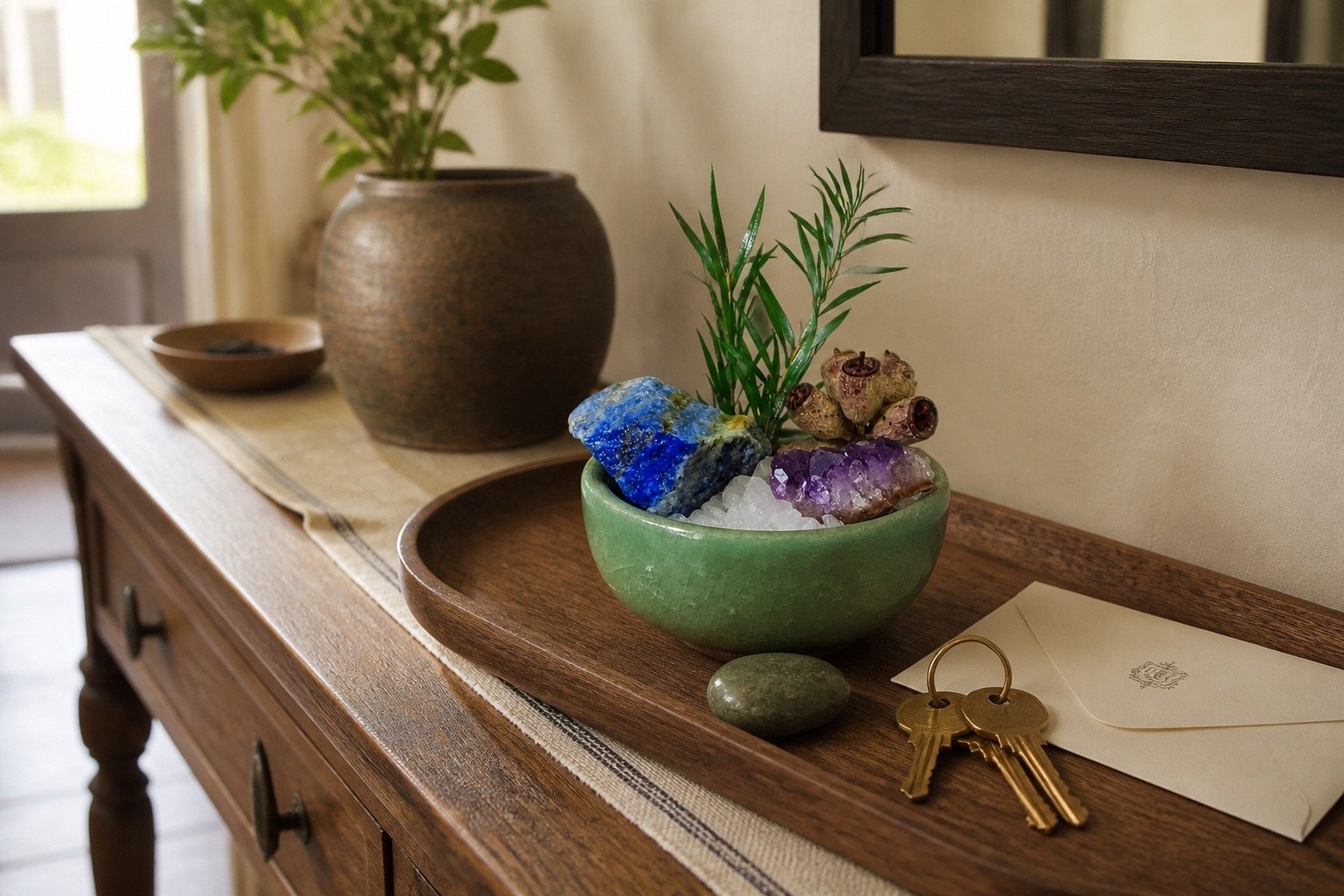
01
The arrival surface
Make the threshold useful first.
Use a shallow tray with one durable green or earthy stone and space for keys. It is a threshold object, not a display competition.
Choose a colour that belongs in the room already. The stone should join the wood, ceramic, textile, or wall colour—not fight them.
Practical role
Mark the place where small daily objects land, so arrival feels orderly rather than ceremonial.
02
The work surface
Use contrast to orient attention.
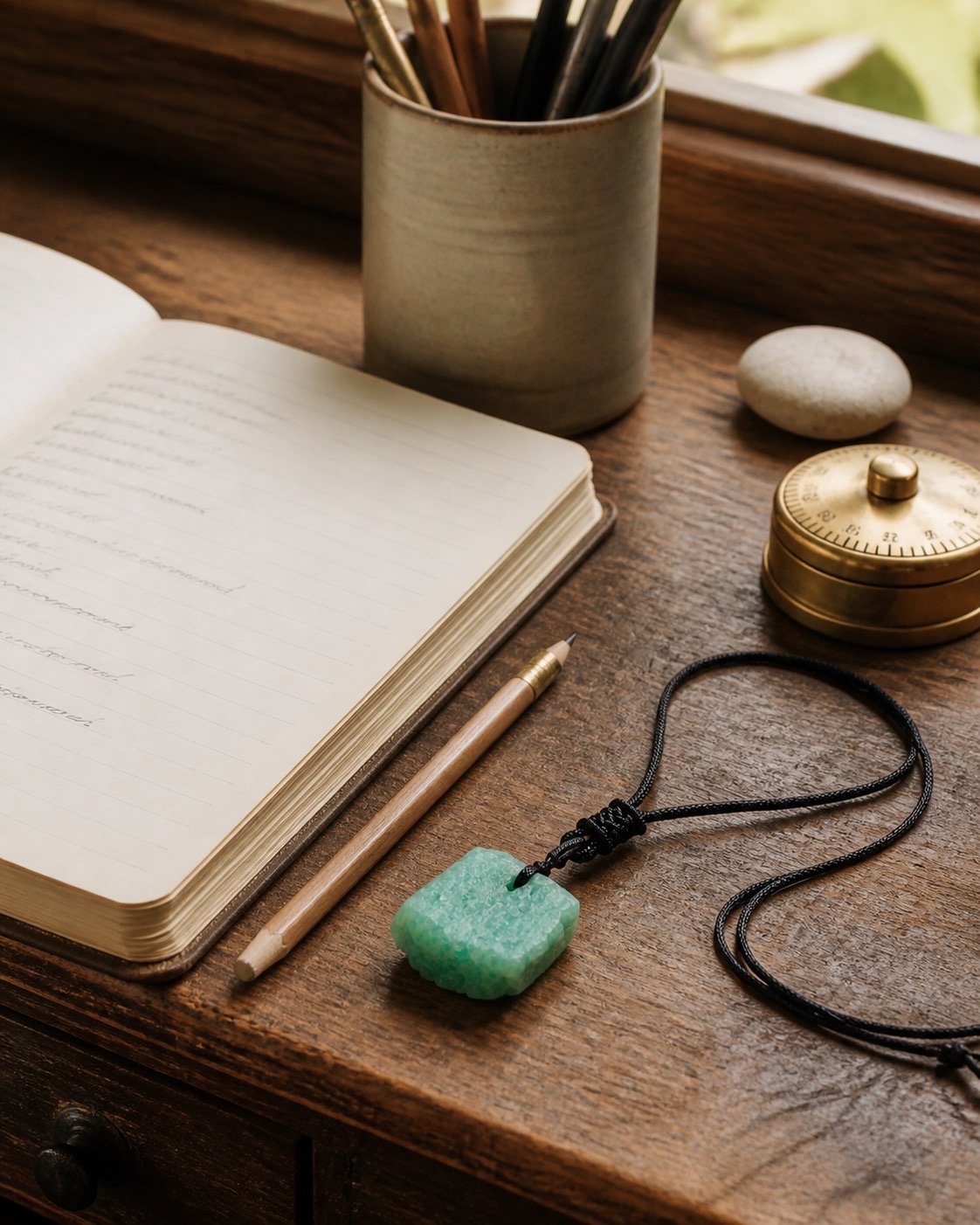
Choose one mineral with a distinctly different texture from the entryway piece: perhaps a blue kyanite blade, a small amber, or a milky quartz.
Pair it with the tool you use most—a pen cup, task card, or small timer. Its role is visual orientation, not a promise of productivity.
Practical role
Create one recognisable point that helps the eye return to the task area.
SURFACE 02 · ORIENTATION
03
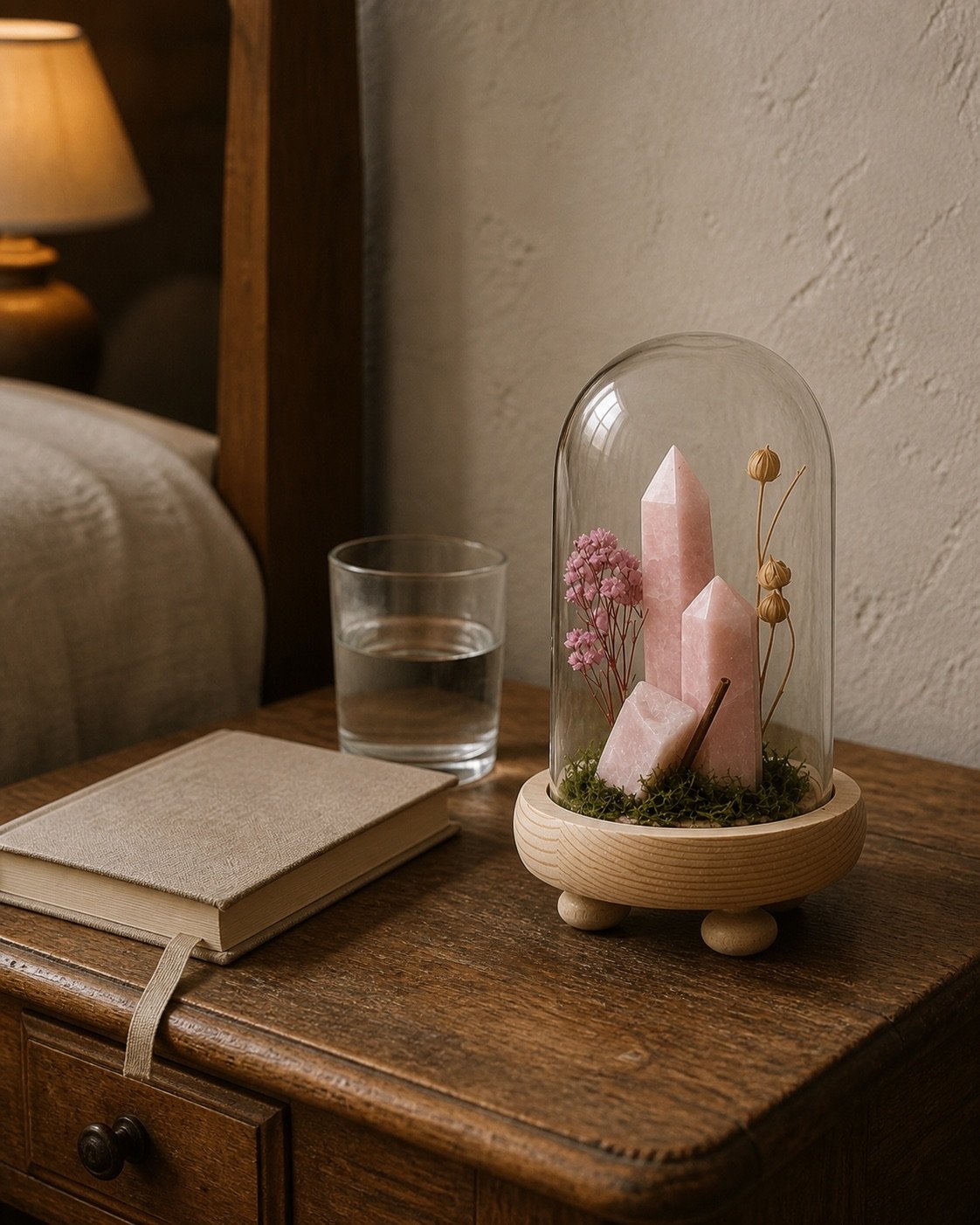
The resting surface
Keep the final composition quieter.
A moonstone under a cloche, a smooth rose quartz palm stone, or a small jade object beside a book is enough.
Avoid sharp, expensive, or emotionally loaded pieces next to where you sleep if they make the room feel performative.
Practical role
Let the surface signal less input: fewer objects, softer edges, and more empty space.
The editing rule
One in.
One out.
One out.
When you bring home a new mineral, decide which existing surface it replaces—or whether it belongs in storage. Rotation keeps objects visible without allowing every surface to become a collection.
Photograph the current arrangement before changing it.
Replace one object rather than adding a fourth focal point.
Live with the edit for a week before deciding which version feels clearer.
Use colour as vocabulary
Your home is not a colour chart.
Broad colour families can help you notice relationships between objects, but they are an editing vocabulary—not a mandate.
The most convincing crystal decor looks as though someone lives with it. It leaves room for keys, books, cups, pencils, and all the ordinary evidence of a home.
Source context: Original article synthesising colour categories from 庄乔伊, 能量宝石缤纷物语 (2013), with material awareness from 思逸, 能量宝石疗愈全书.
Home edit reference notes
A home edit works best when each surface supports a real daily habit. Keep the entryway useful, keep the work area clear, and let the resting surface reduce visual noise. For practical gemstone-material background, consult the Gemological Institute of America gem encyclopedia. Explore our crystal bracelets when one intentional piece can support a quieter home edit.