FREE SHIPPING OVER $200


Journal · Intentions & Rituals
The Pink Stone Friendship Table
A small weekly ritual for turning warm intentions into one thoughtful message, invitation, or repair.
Quick answer
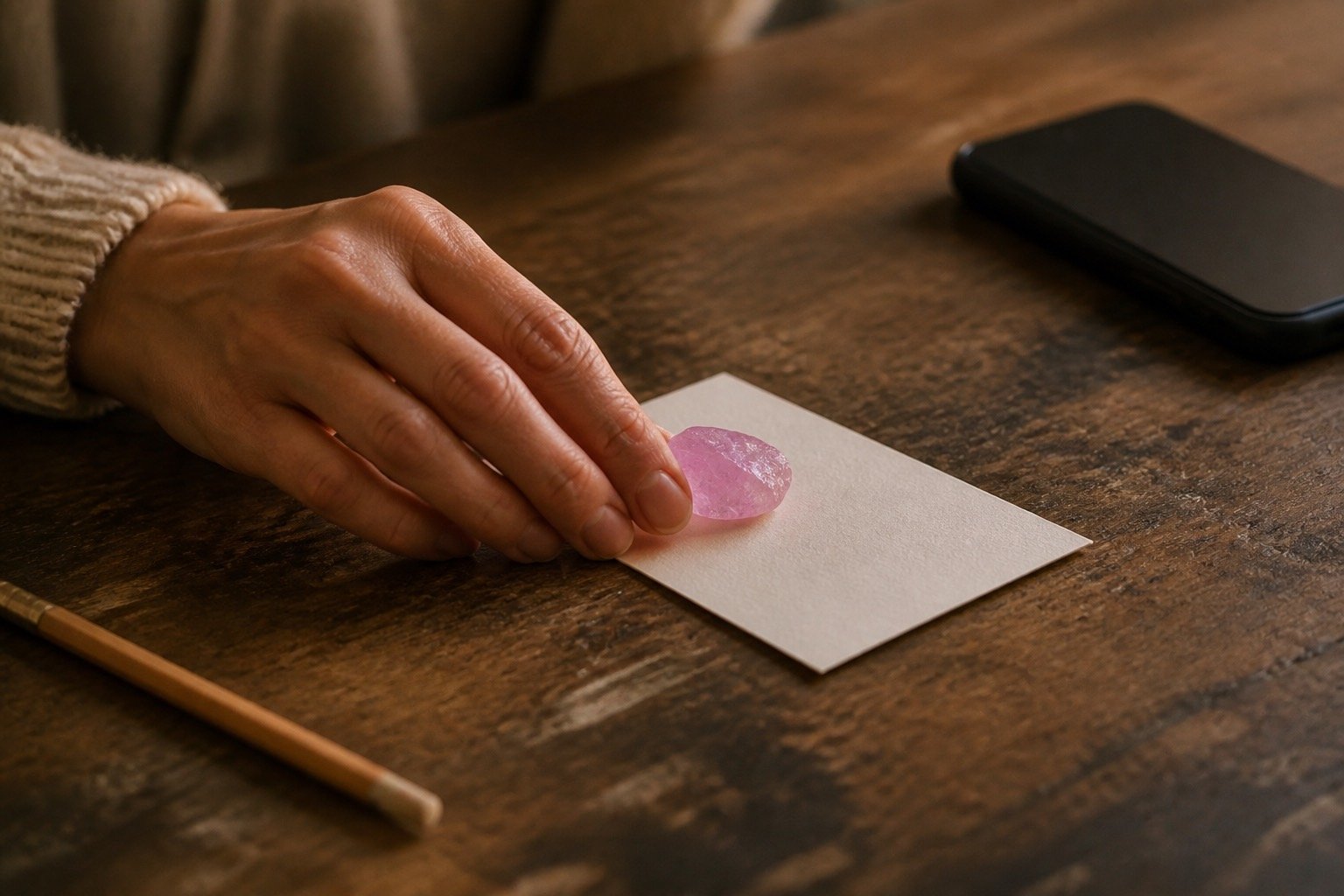
Place one pink stone beside three blank cards. Once a week, choose one friend and make one true gesture before affection becomes another unkept thought.
Friendship is a form of care
Let the pink stone point toward ordinary affection.
Pink stones are commonly linked with romance, but their gentler use may be friendship: the people who make ordinary weeks more livable.
A rose quartz, pink opal, morganite, kunzite, or rhodonite can sit beside an address book or stack of note cards and remind you to act on affection.
Keep the surface simple
Choose three objects and leave room to write.
Use a small surface near where you write, make tea, or charge your phone. Do not add a large display.
One tactile cue
01
One pink mineral
Its job is to remind you that care becomes visible through action.
Three chances to act
02
Three blank cards
Keep them ready for a memory, an invitation, or a clean repair.
Keep it ordinary
03
One pencil
The setup should feel like correspondence, not ceremony or pressure.
Once a week
Choose one name and make one true gesture.
01
Remember
Send a message that names a specific memory.
02
Invite
Suggest a low-effort plan with a clear date.
03
Repair
Offer a clean apology without making the other person manage it.

Act before attention moves
The card is a cue, not a script.
It is not a tool for manipulating closeness. It helps you make a true gesture while the feeling is still present.
“I went quiet. I’m sorry. I care about reconnecting.”
After you send it
Use a no-scorekeeping rule.
Put the card face down beneath the stone. Do not leave it out as a tally of who replied.
Care is offered; it is not an invoice.
Let the reply be real
Do not turn the ritual into evidence.
If the relationship needs a conversation, have one. If it has changed, allow that information to be real.
Clear the table monthly.
Let objects change roles
At the end of the month, clear the cards and choose whether the stone stays, travels to another room, or returns to storage. A collection becomes more meaningful when objects are allowed to change roles.
Source context: Original article inspired by the pink-and-red colour chapter themes in 庄乔伊, 能量宝石缤纷物语 (2013). Associations are used as reflective language, not as claims of effect. For mineral names and identification references, consult the Mindat mineral database; for objects that can support a small daily ritual, browse the Himalayan Ritual shop.
A pink stone friendship table works best when it stays modest and repeatable. Choose one person, one reason to reach out, and one action that can be completed today: a note, a voice message, or a specific invitation.
Avoid using the stone as a test of whether another person responds. Instead, use it to pause before a busy week turns care into an intention you meant to act on.
If a message needs repair, name your part plainly and leave room for the other person’s pace. At month end, clear the cards and decide whether the ritual is still serving a real relationship. This keeps the pink stone a cue for attention, boundaries, and follow-through rather than a promise of an outcome.