FREE SHIPPING OVER $200

✦ SYMBOLS & HIMALAYAN STORIES ✦
Thangka Art: What It Is—and What Modern Decorative Art Is Not
A respectful guide to the painted scroll, its visual language, and the honesty contemporary design requires.
A traditional thangka is more than a Tibetan-style picture: it is a portable painted or textile scroll made within a Buddhist visual and devotional context.
What is thangka art?
A thangka is a painted image on prepared cloth, usually mounted in brocade with a cover and rods so it can be displayed and rolled. It may portray Buddhas, bodhisattvas, teachers, protectors, mandalas, narratives, or lineages.
A visual language with rules
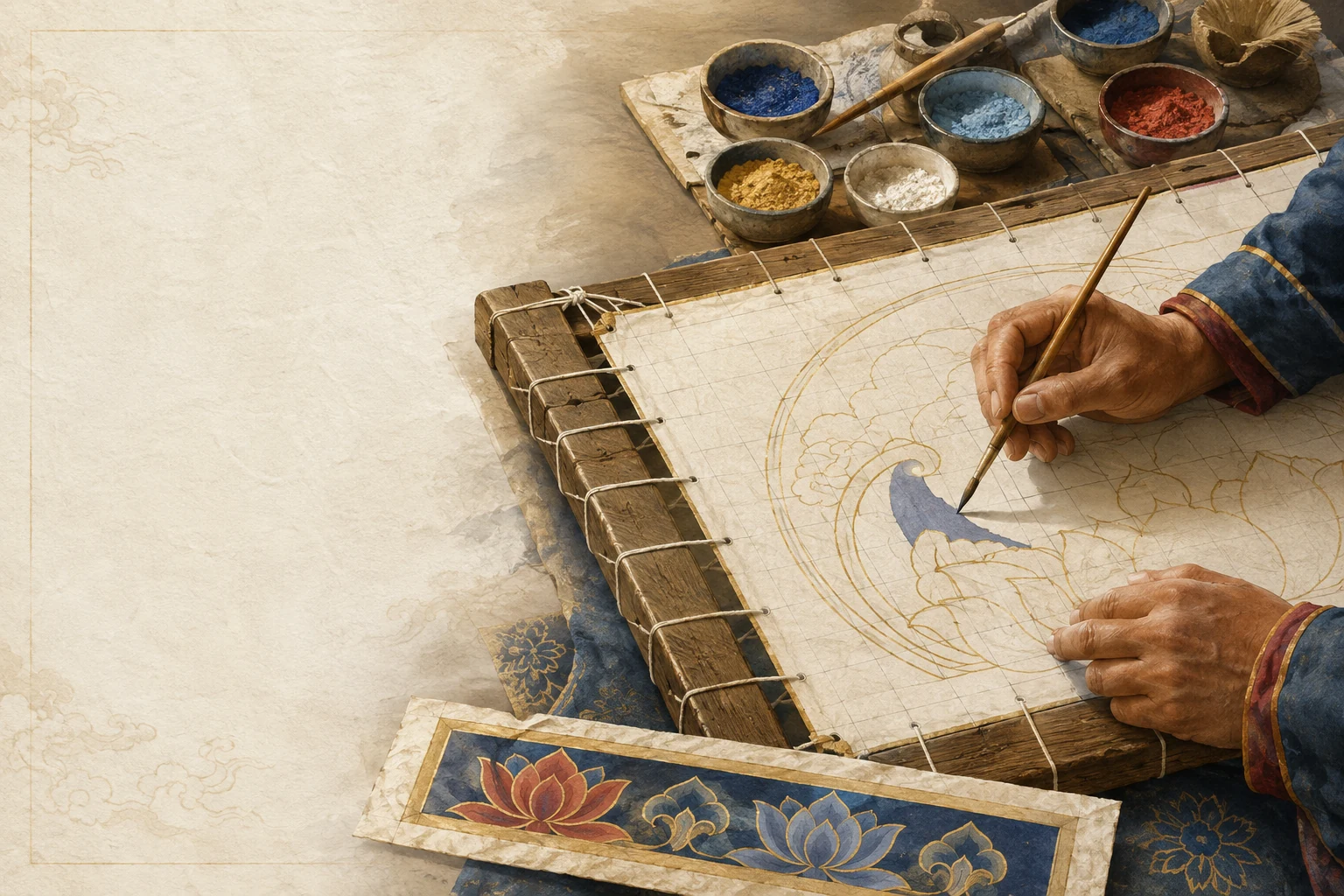
Traditional figure painting is guided by iconometry: proportional systems for bodies, faces, gestures, implements, and placement. The making process includes preparing cloth, drawing, painting, shading, line and gold work, then completing the eyes.
Reading figures with care
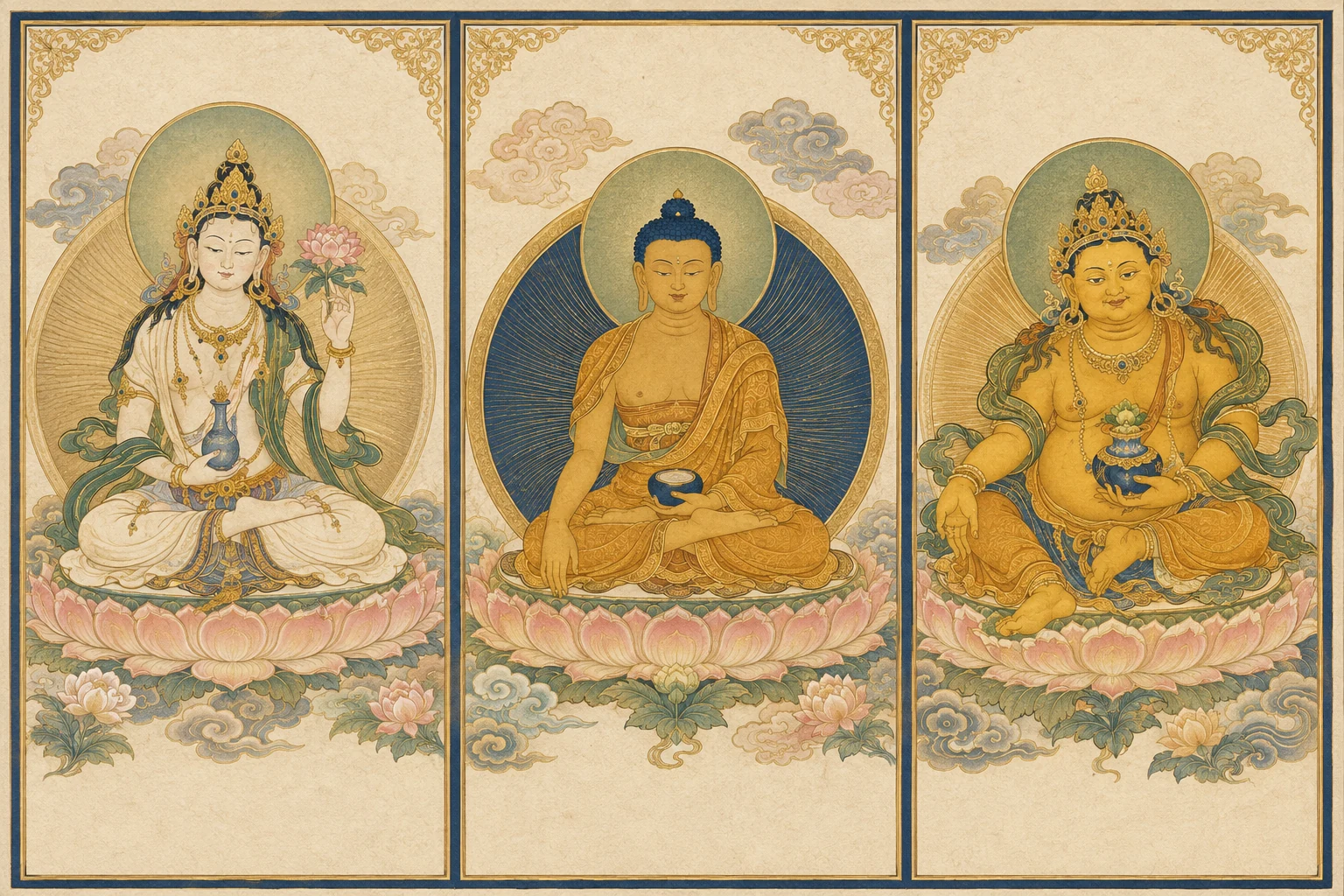
The illustration below is original contemporary educational artwork—not a traditional thangka and not a substitute for lineage-specific study.
Buddha
Composure, halo, hand gesture, throne, and setting can all carry meaning. A historical Buddha, Medicine Buddha, and a transcendent Buddha are distinct identities.
Avalokiteshvara
Avalokiteshvara appears in many Himalayan Buddhist forms, including the well-known four-armed form. Attributes, number of arms, color, and attendants help identify a specific form.
Yellow Jambhala
Yellow Jambhala is associated with wealth, generosity, and the removal of material hardship. This is symbolic language—not a promise that a product will produce financial results.
Traditional painting, reproduction, and modern art
| Category | What it is | Honest description |
|---|---|---|
| Traditional thangka | Painted or textile scroll made in a Buddhist visual and devotional context. | State materials, origin, period, subject, provenance, and documented ritual status. |
| Reproduction or print | A copy, poster, printed canvas, or relief based on thangka imagery. | Use “reproduction,” “print,” or “inspired”—never “antique” without evidence. |
| Contemporary art | New art, jewelry, or décor using related motifs. | Name its material and method; use “contemporary” or “inspired.” |
Three contemporary works, described honestly
These Himalayan Ritual pieces are contemporary products—not historical thangkas, consecrated ritual objects, or outcome-guaranteeing talismans.
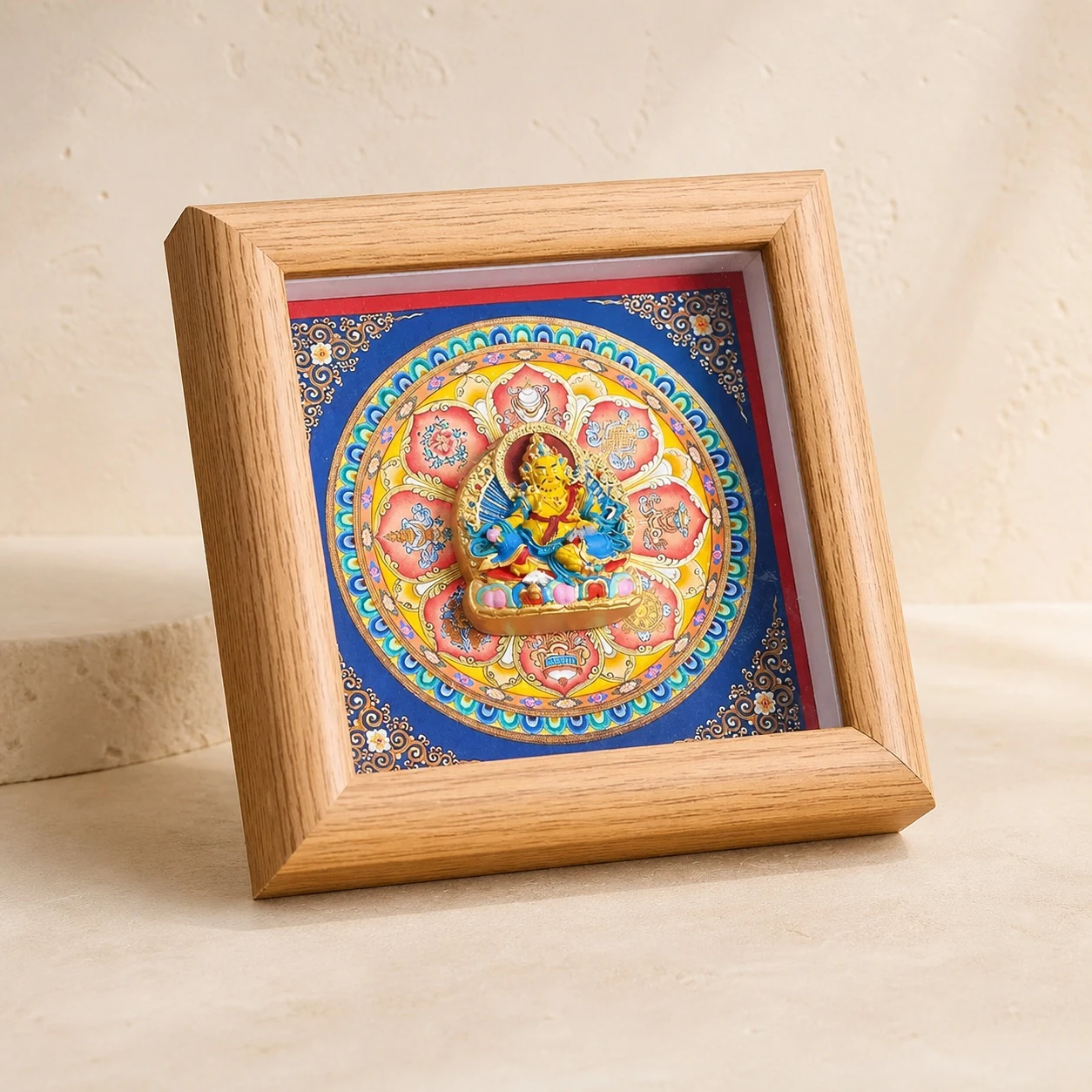
Framed Deity Relief Art
A raised-relief décor piece with thangka-inspired imagery for contemplative display.
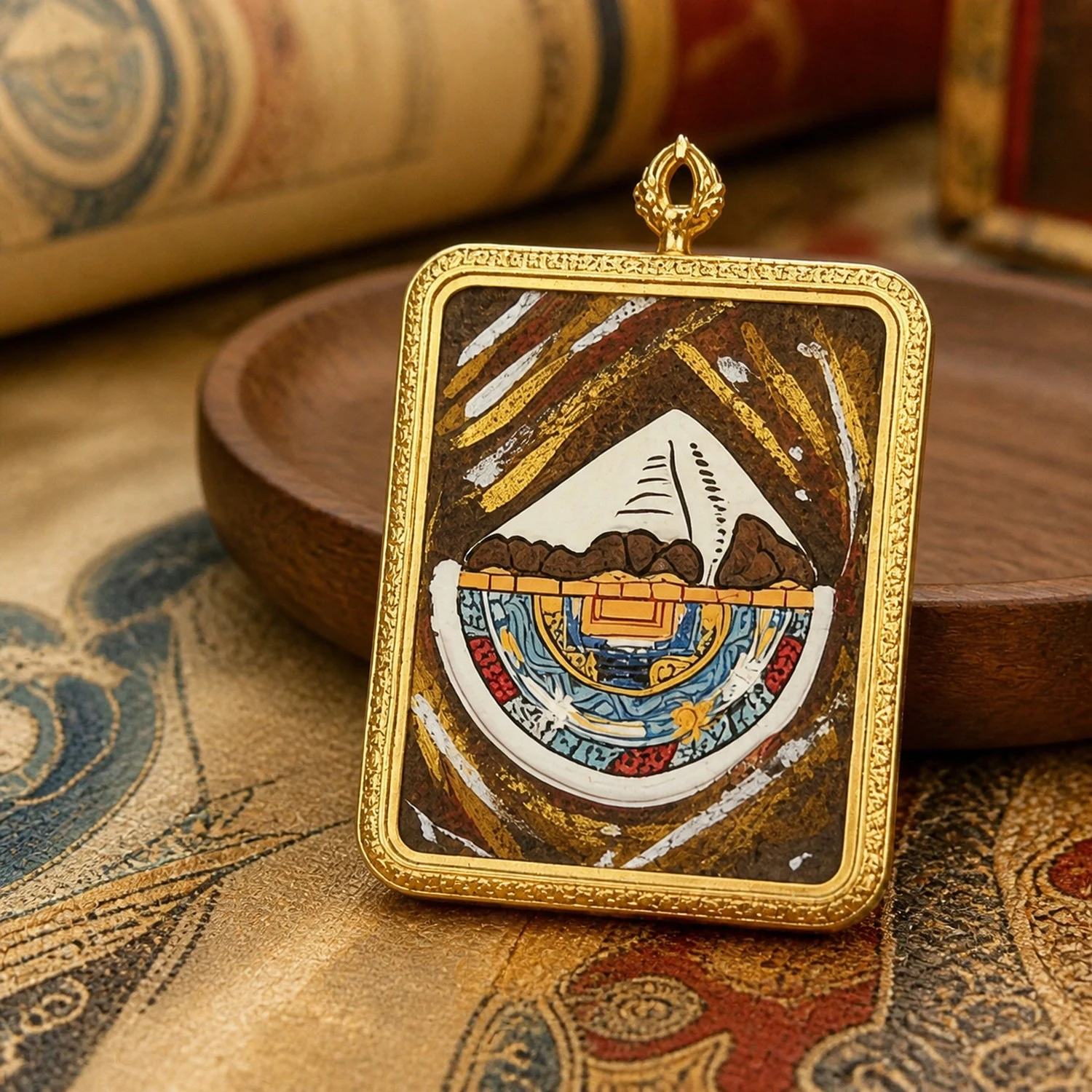
Mount Kailash Pendant
A miniature hand-painted, thangka-themed pendant: contemporary wearable handcraft.
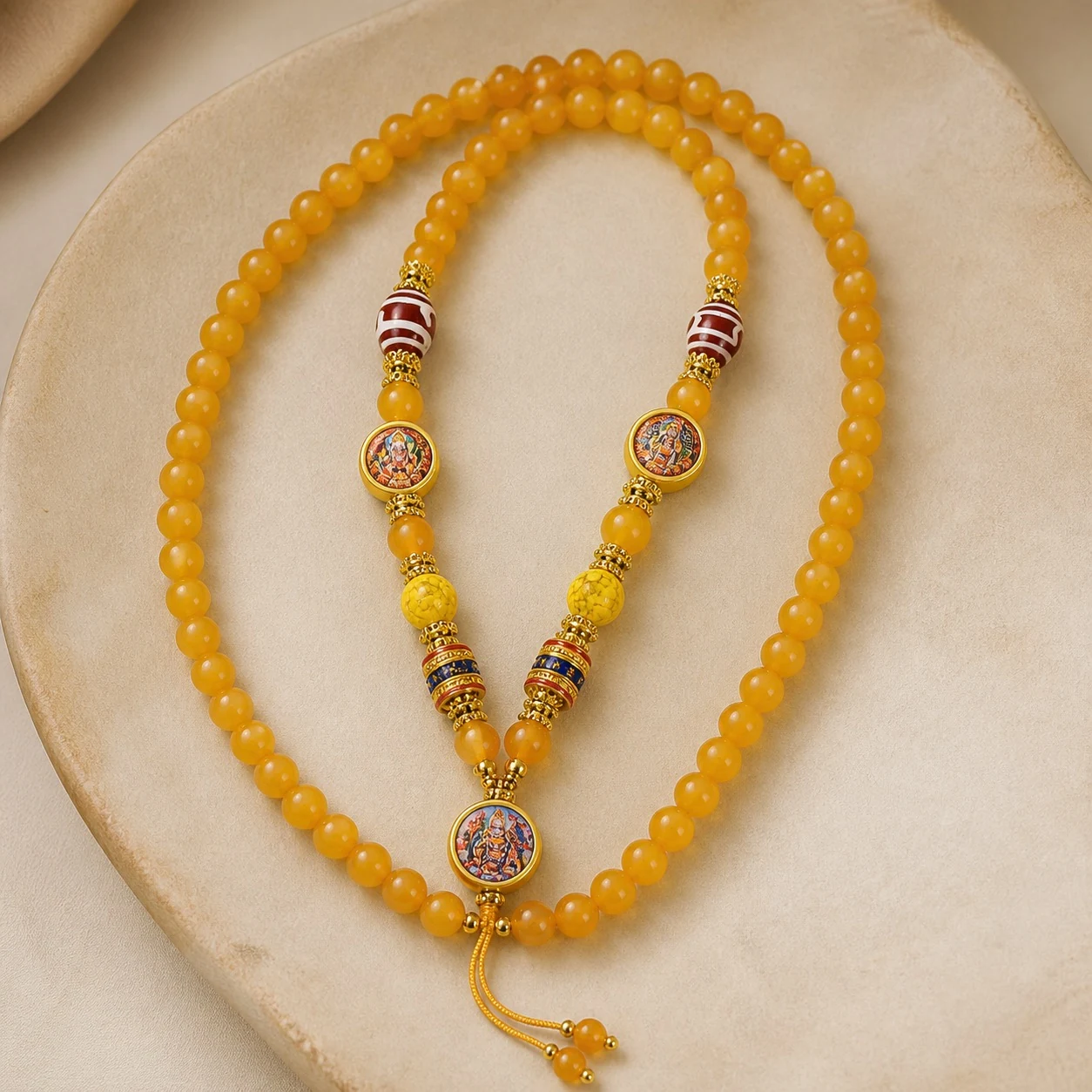
Yellow Agate Pendant Chain
A thangka-inspired medallion in jewelry form, not a guarantee of wealth.
A better way to look—and to buy
Ask what the object is made of, who made it, when it was made, and whether it is described as contemporary, reproductive, or historical. Respect begins with seeing the difference.
Sources & further reading
- Rubin Museum — Process of Thangka Painting
- Smithsonian — Shadakshari Avalokiteshvara
- The Met — Thangka with Buddha
- Thangka art is best approached with attention to both image and context. Before choosing a contemporary thangka-inspired work, read the description for its material, maker, and method rather than relying on a visual resemblance alone. A print, relief, pendant, or newly painted decorative piece can be meaningful in a home when it is described honestly and treated with care. Learning a little about thangka art also makes looking more rewarding: notice the placement of figures, the relationship between colour and gesture, and the difference between a historical object and a modern interpretation. When in doubt, use museum collections and specialist scholarship to continue the study. This approach supports appreciation without turning a sacred visual language into a generic promise or a costume.