FREE SHIPPING OVER $200

Symbols & Himalayan Stories · 10 min read
The Lotus in Himalayan Art
Purity, place, and a visual language that reaches far beyond a single flower.
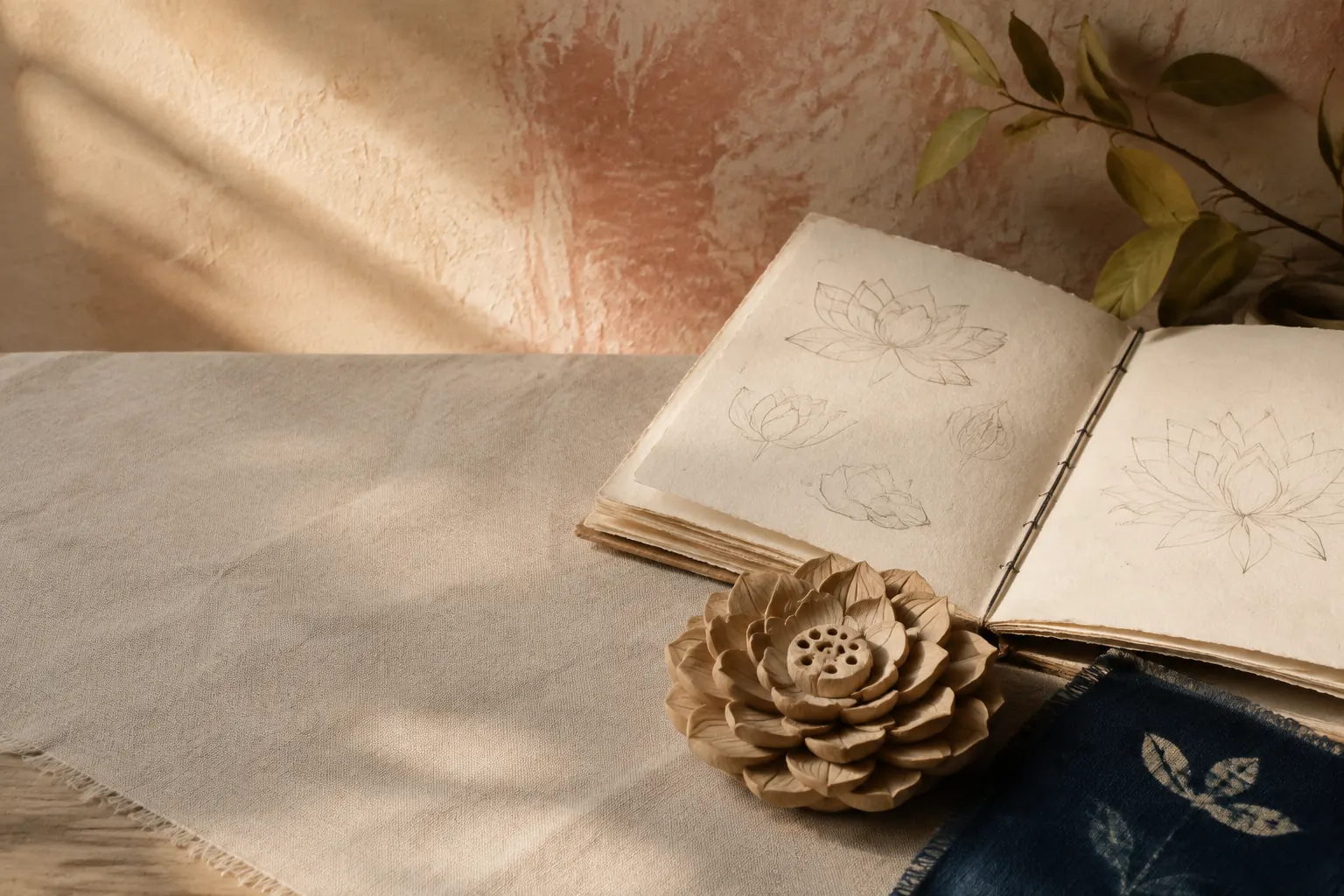
In Himalayan art, the lotus is not a generic sign of serenity. It is a visual language of emergence, a sacred ground for figures, and a structure through which painters and sculptors organize attention.
A lotus may be a place to sit, a sign to recognize, a field to enter with the eye, and a disciplined pattern that gives an image its quiet coherence.
Why the lotus became a Buddhist image
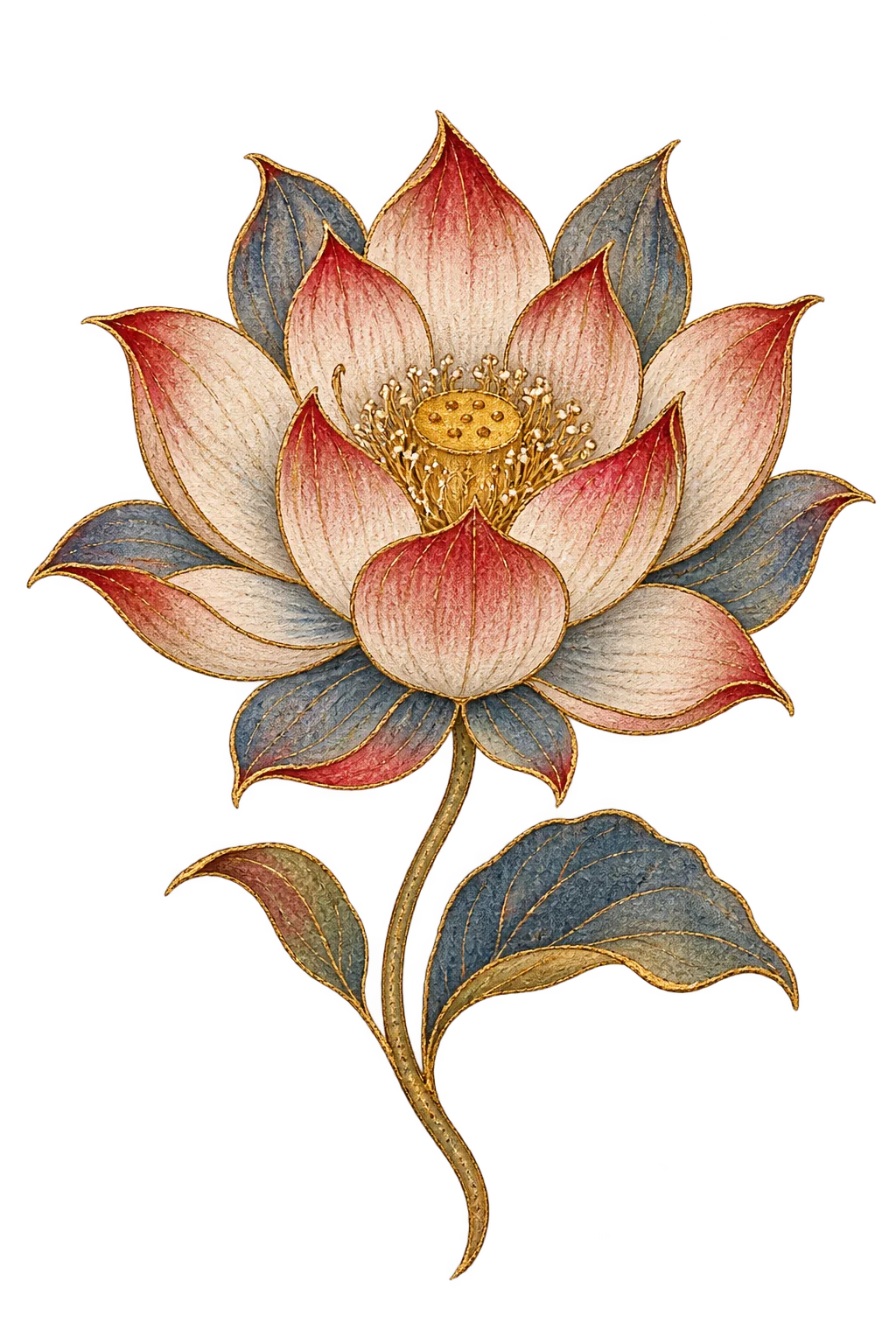
The lotus offers a clear image of emergence: rooted in the pond bed, rising through water, and opening above its surface. Buddhist literature and art have long drawn on that movement to speak about awakening and freedom from obscuration.
Across Asia, artists adapted the motif to local materials and visual habits. In Himalayan art, it became a throne, an attribute, a mandala-like environment, a mark of lineage—or all of these at once.
The lotus throne: a sacred place
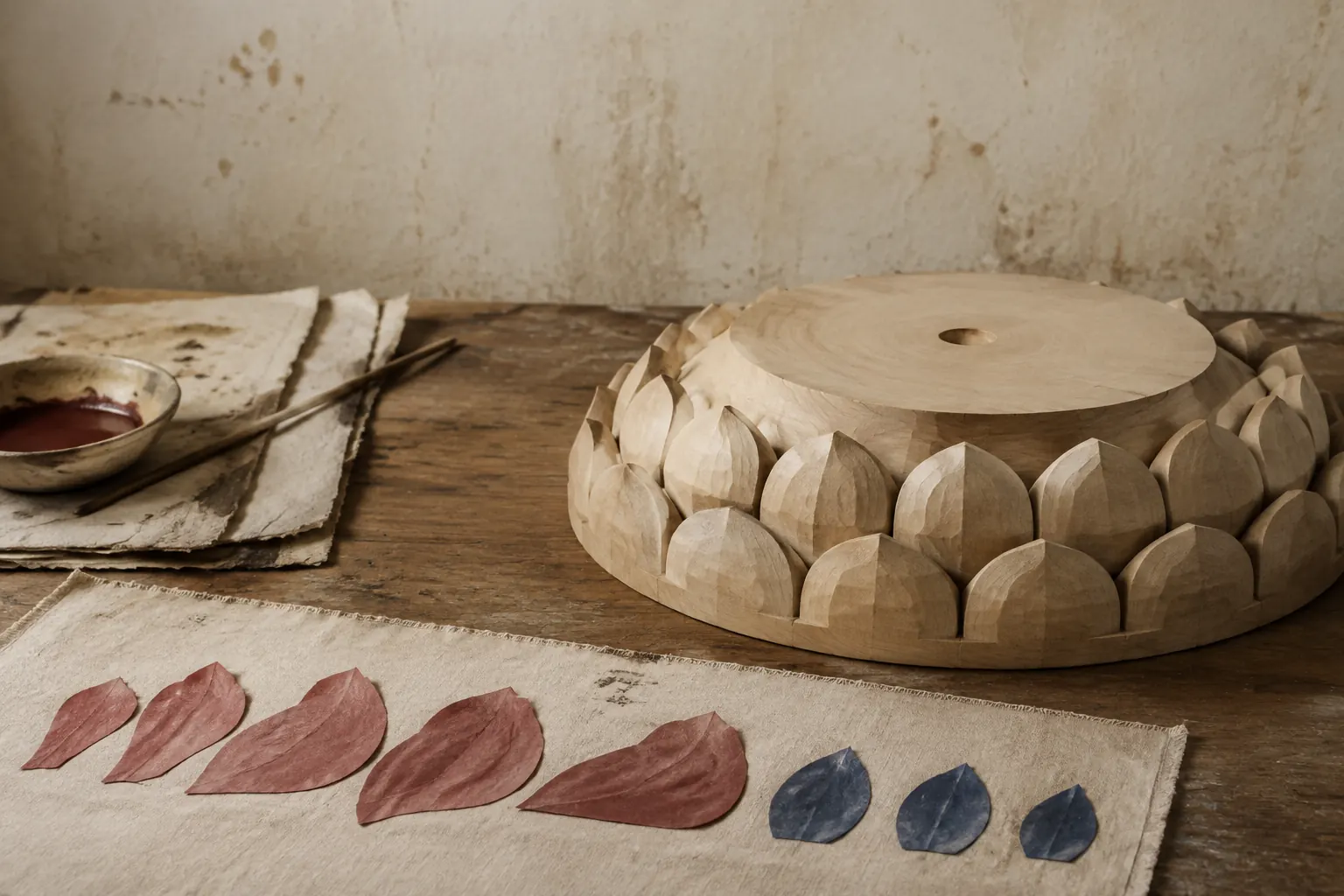
Buddhas, bodhisattvas, lineage teachers, and other sacred figures are often shown seated or standing on a layered blossom. Its radial structure centers the body, stabilizes a composition, and directs the eye upward toward face, gesture, and attribute.
A lotus in Tibetan Buddhist iconography
Padmasambhava: “Lotus-Born”
Padmasambhava—whose Sanskrit name means “Lotus-Born”—is among the most important figures in Tibetan Buddhism, especially within the Nyingma tradition. Images often place him on a lotus throne, making the name visible as well as verbal.
Avalokiteshvara and compassion
Avalokiteshvara is deeply connected with Tibet, and lotus imagery appears frequently in depictions of this compassionate figure. In the mantra om mani padme hum, padme means “lotus.”
Tara: a stem, a gesture, a presence
In many Himalayan images of Tara, lotus stems rise beside her shoulders and bloom near the head, creating a living vertical rhythm that helps identify an iconographic type.
From Indian sources to Himalayan visual worlds
Tibetan Buddhist art was never isolated. Artists, teachers, manuscripts, portable images, and pilgrimage routes connected the Himalayas with northeastern India, Nepal, Kashmir, and Central Asia. “Tibetan style” is not one fixed look.
The visual grammar
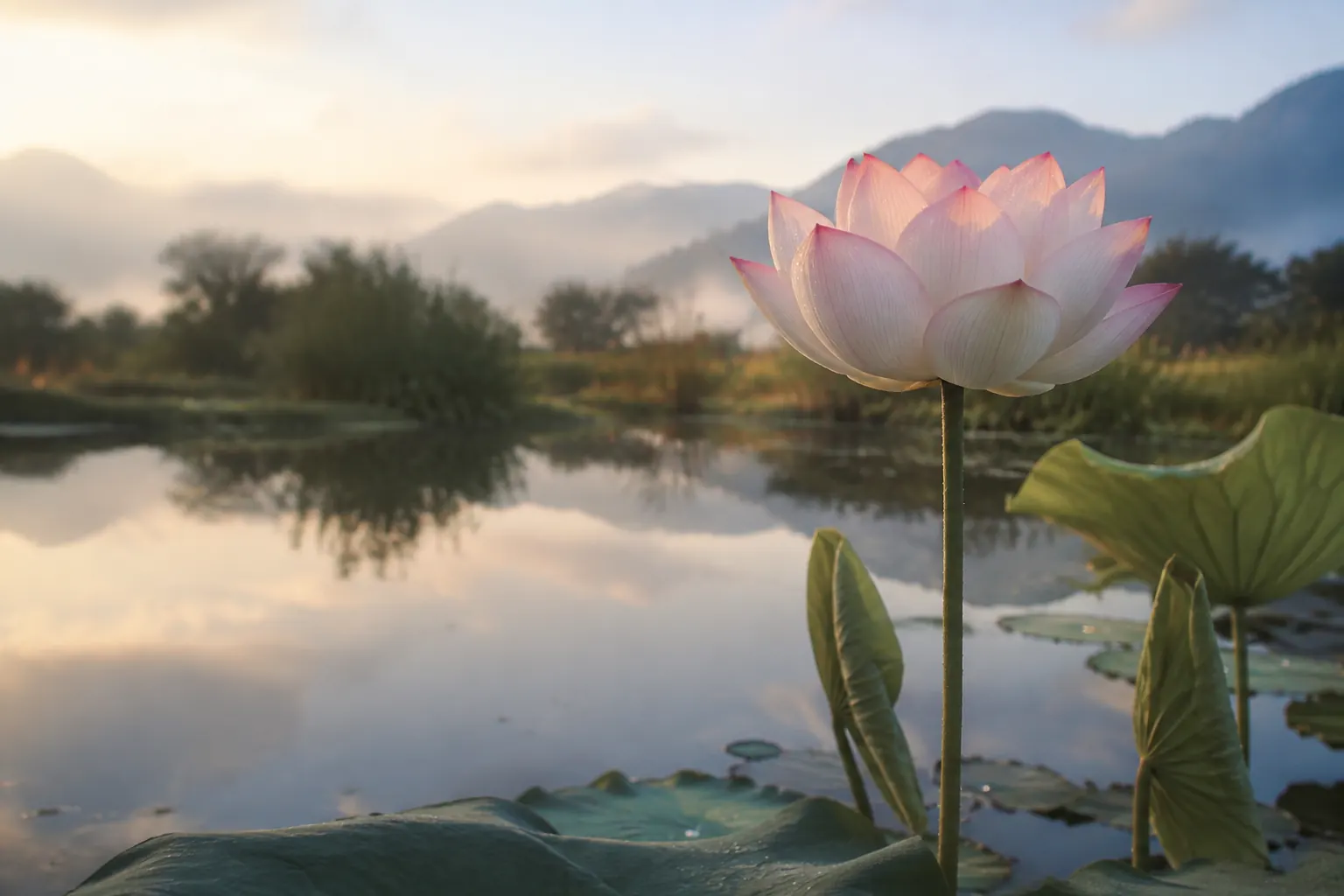
For contemporary design, the lotus is most useful as a visual grammar—not a borrowed spiritual guarantee.
- Radial order. Petals create a calm center and a natural hierarchy from core to edge.
- Layered depth. Overlapping petals turn repetition into volume.
- A rising line. A stem creates an elegant vertical connection between base and blossom.
- Soft symmetry. Balance without mechanical sameness.
- Restrained color. Mineral red, parchment, indigo, olive, and antique gold echo material sensibilities without imitating sacred images.
Designing with respect
There is a thoughtful difference between being informed by Himalayan art and making a generic “spiritual” aesthetic. For everyday design, choose abstraction over imitation: a simplified petal silhouette, a quiet radial setting, carved floral spacing, or color drawn from natural pigments.
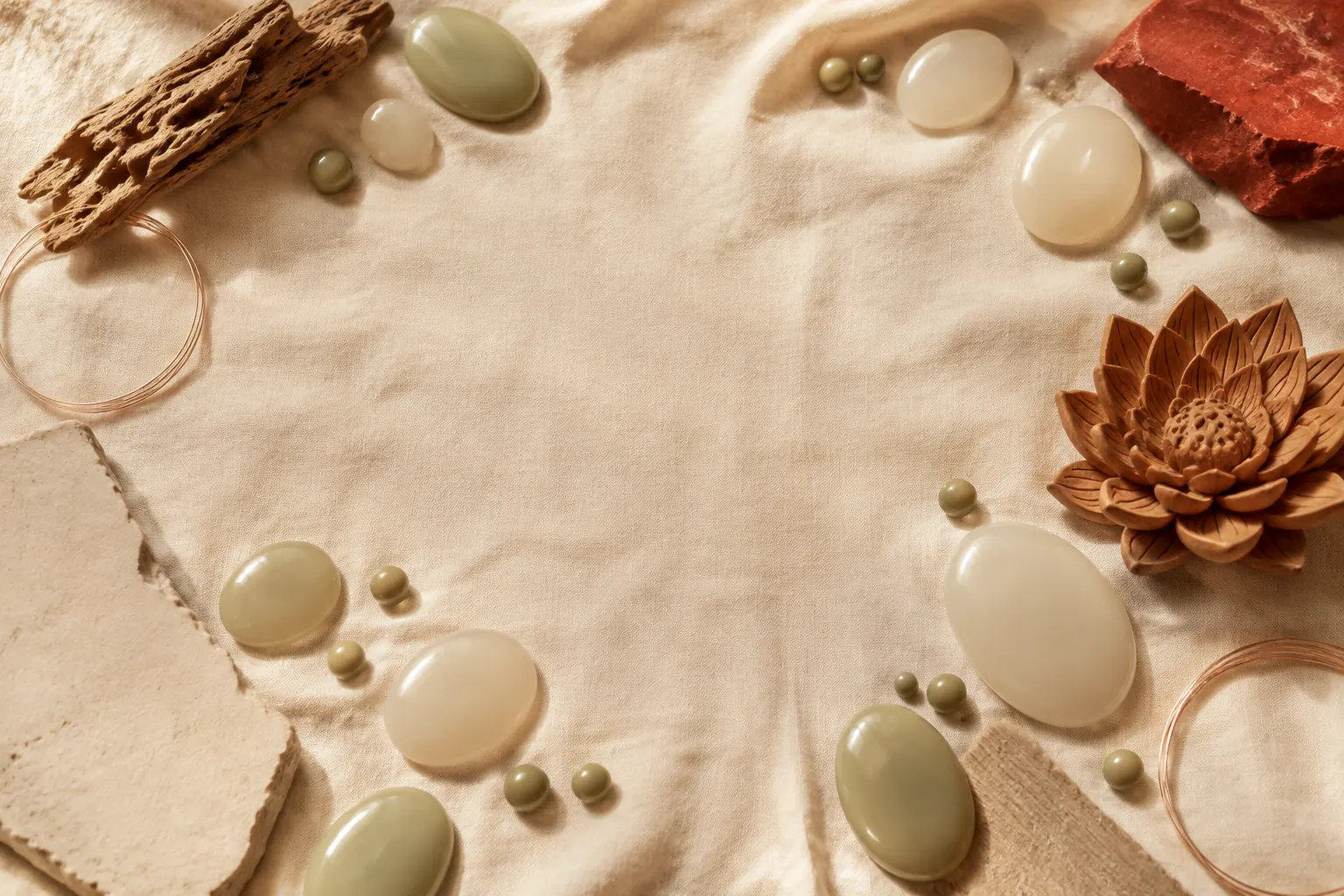
A contemporary interpretation
Shop the visual language
Two pieces chosen for layered petals, calm radial form, and material character—not as religious objects.
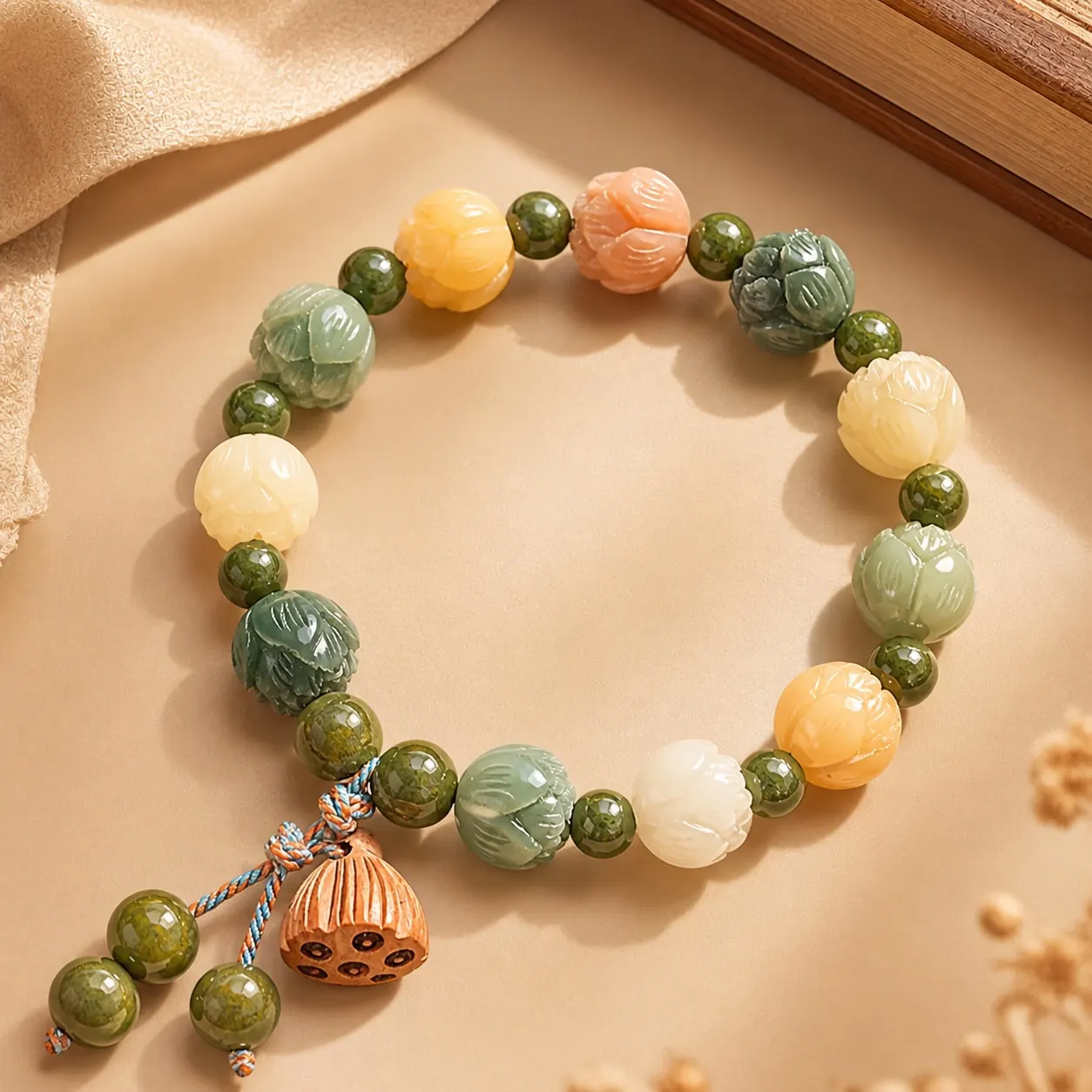
Carved form
Prosperity Lotus Moss Agate Bracelet
Carved floral beads, moss-green tones, and a tactile braided finish create a small study in layered rhythm.
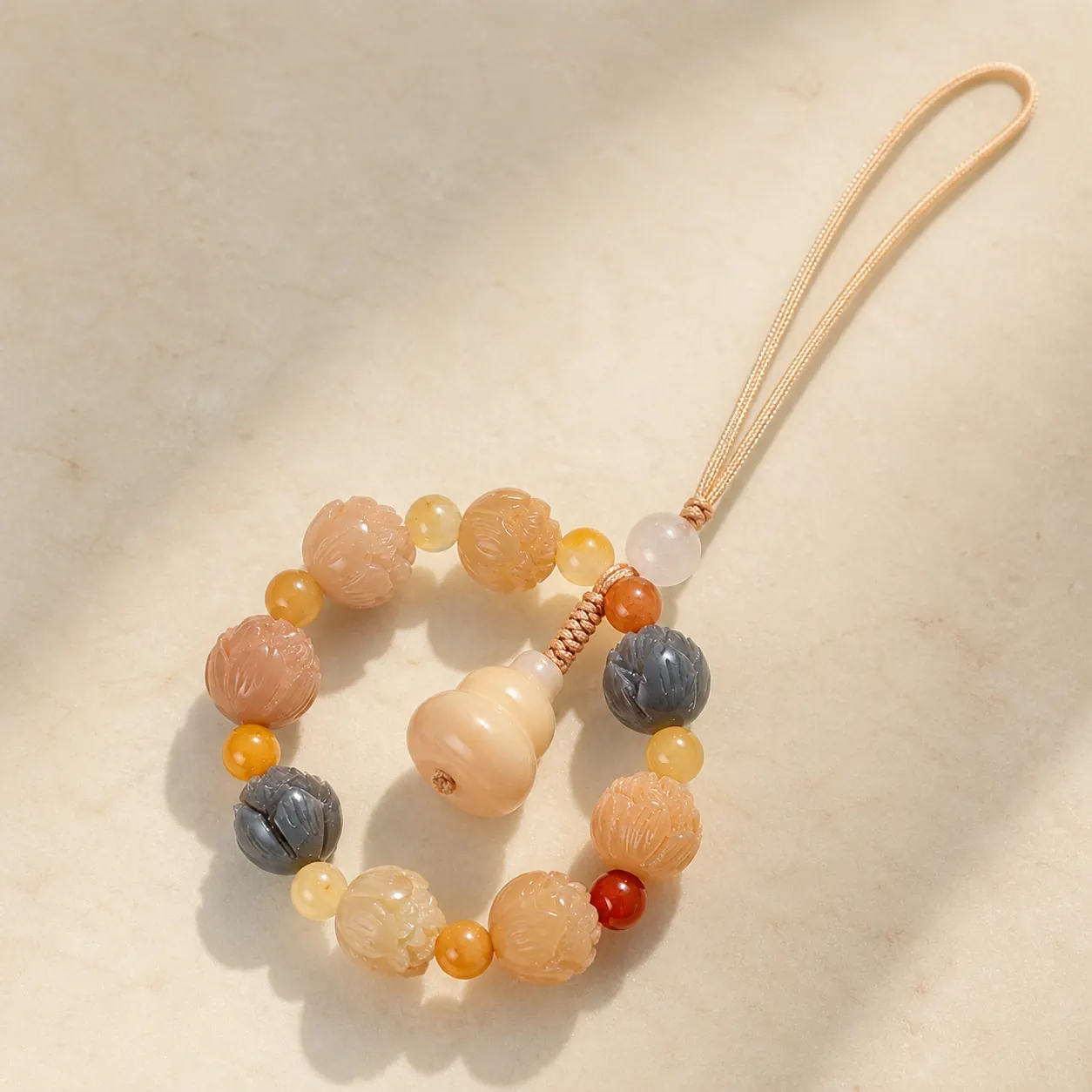
Lotus detail
Prosperity Lotus Moss Agate Pendant
Carved lotus beads in warm mineral tones form a compact pendant with a soft cord loop and layered detail.
Frequently asked questions
What does the lotus symbolize in Tibetan Buddhism?
It commonly relates to purity, awakening, transformation, compassion, and a purified sacred setting. Its precise significance changes with the figure, object, and iconographic context.
Why do Tibetan Buddhist figures sit on lotuses?
A lotus throne establishes an awakened or purified ground for the figure and places the body in a centered, elevated, visually balanced space.
Can modern jewelry use lotus motifs respectfully?
Yes—when a design draws on general visual qualities such as layered petals or radial symmetry, rather than copying sacred images or making spiritual claims.
Further reading
Rubin Museum of Himalayan Art: The Lotus Flower
National Museum of Asian Art: Lotus—Padmasambhava
The Metropolitan Museum of Art: Sadaksari-Lokeshvara