FREE SHIPPING OVER $200

Journal · Symbols & Himalayan Stories
The Eight Auspicious Symbols
A respectful guide to Buddhist motifs, their layered contexts, and the difference between cultural learning and a modern design reference.
✦
A careful starting point
Eight motifs, many contexts.
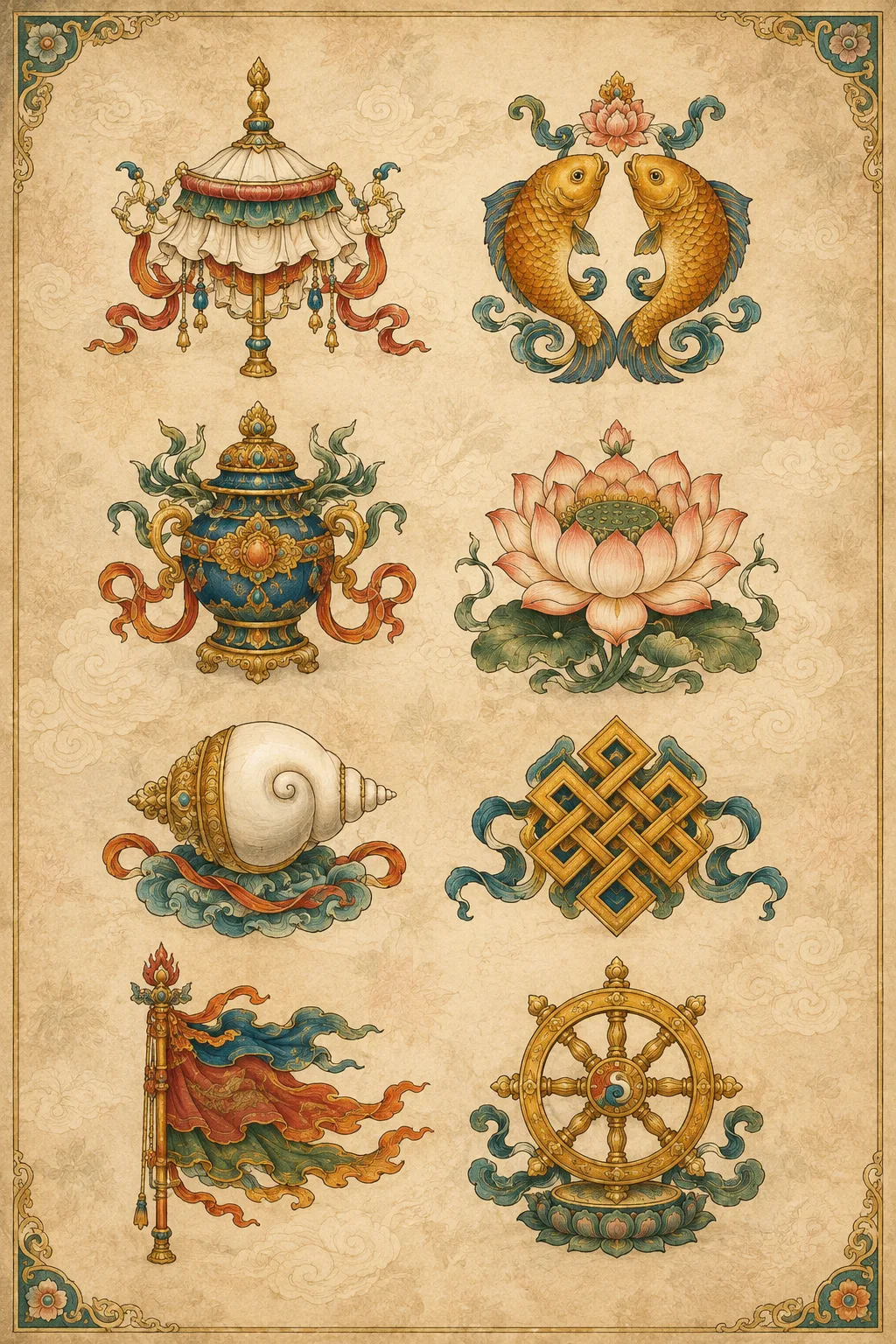
The Eight Auspicious Symbols are a recognized group of Buddhist motifs seen across Himalayan and East Asian art. Their meanings are rich, but not fixed. This guide begins with documented visual history, then makes room for variation.
An original editorial illustration
The visual guide
Parasol · Golden fish · Treasure vase · Lotus · Right-coiled conch · Endless knot · Victory banner · Dharma wheel
What is documented
Symbols that travel across objects and places.
Museum records document the eight-motif set on Tibetan, Mongolian, Chinese, and broader Asian material culture. They may appear as a complete set, one at a time, as prominent imagery, or as a small border detail. This circulation gives useful art-historical context—but not one universal meaning for every place or person.
Names are a beginning, not an endpoint.
The familiar English names help identify the forms. Language, lineage, region, object type, and use all shape how a motif is understood. Short symbolic lists are useful introductions; they are not complete theology.
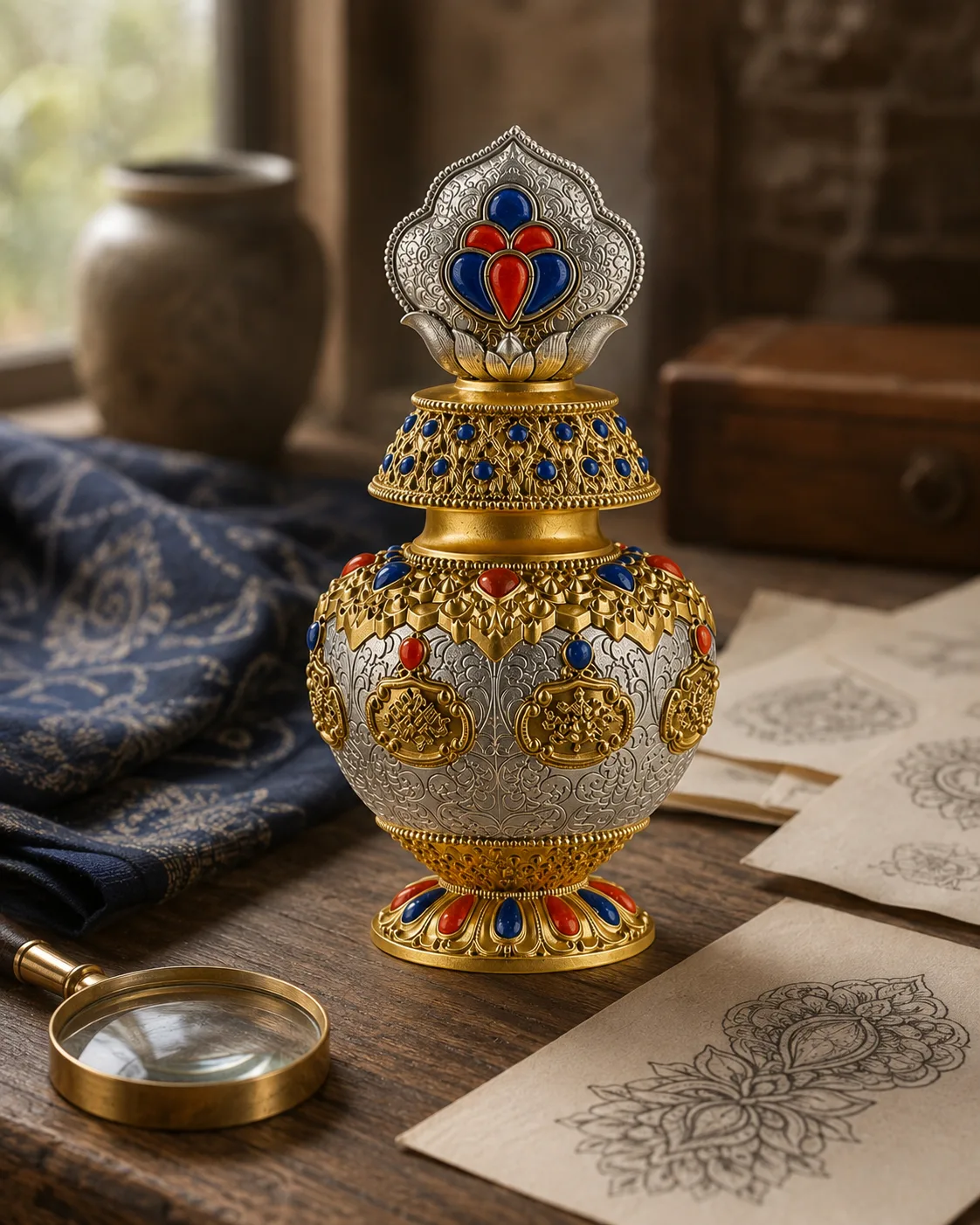
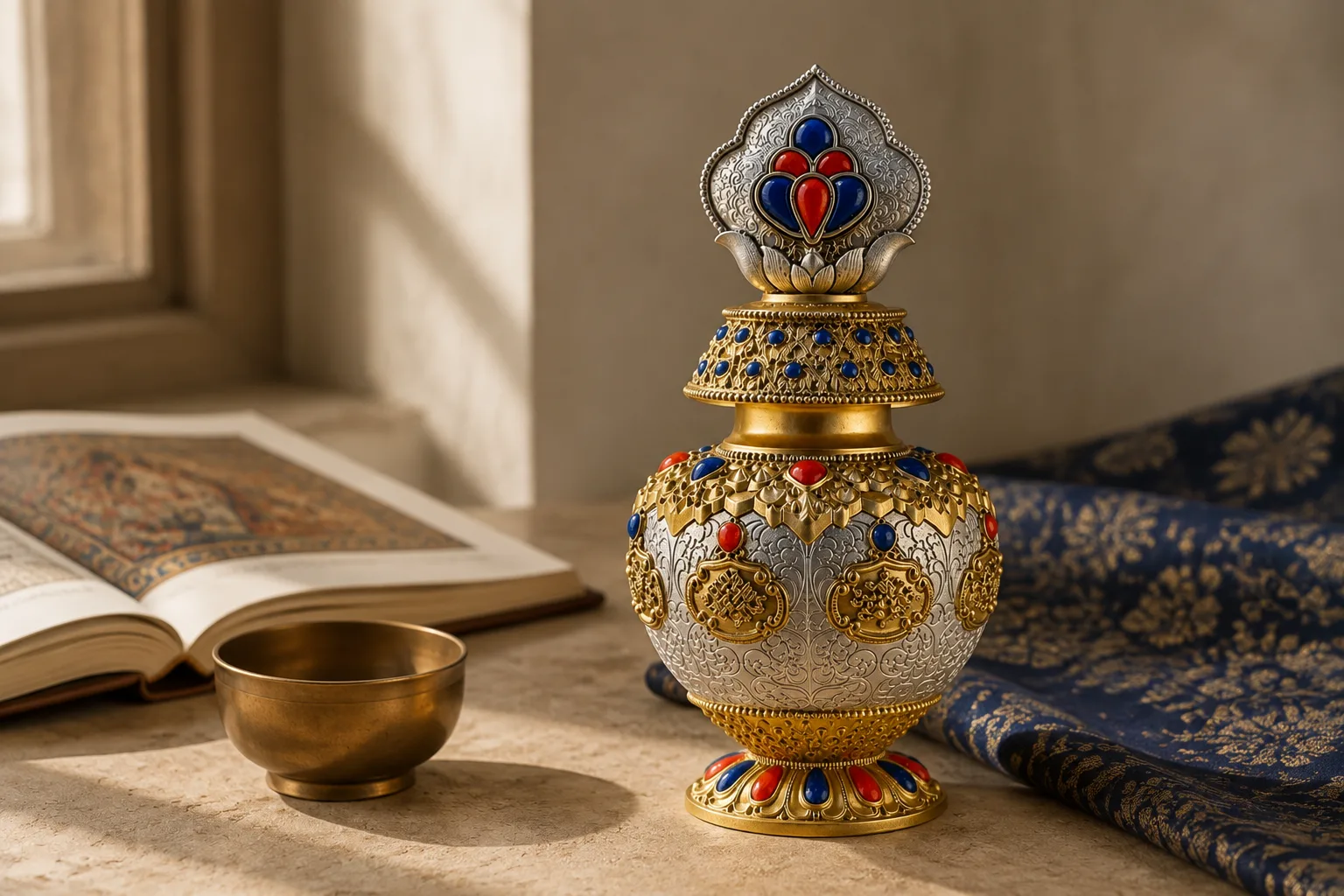 A careful reading also asks where a motif appears, what surrounds it, and how it relates to the object’s material and function. A lotus, wheel, or conch may form part of a larger composition rather than operate as a standalone emblem. Museum catalogues anchor interpretation in a specific object, date, place, and medium. Because visual forms are adapted across communities and periods, identifying a motif is not the same as explaining its use. For contemporary design, naming the source of inspiration clearly helps distinguish an art reference from a devotional object while respecting the living traditions that continue to shape these symbols.
A difference that matters
Respect is part of the design.
We do not assign unsupported organ correspondences, turn a motif into a sales promise, or describe commercial jewelry as a temple object. The modern use of a line, wheel, or lotus form is clearly labeled as a contemporary design reference.
Himalayan Ritual design note
Modern visual references, named plainly.
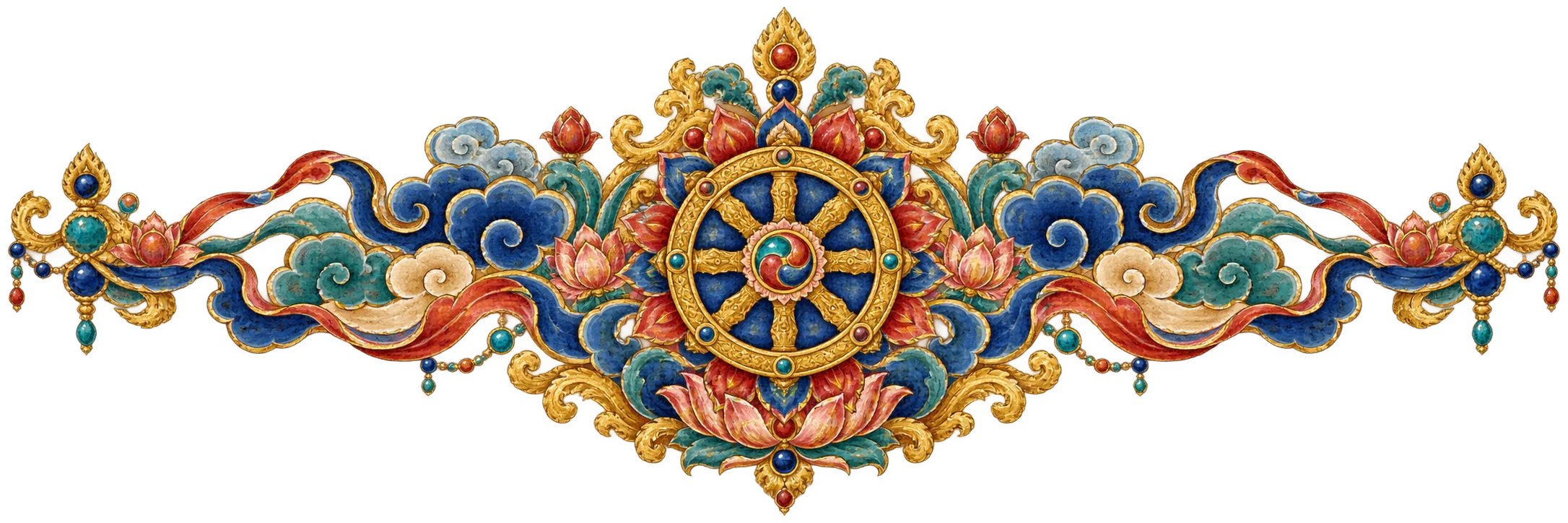
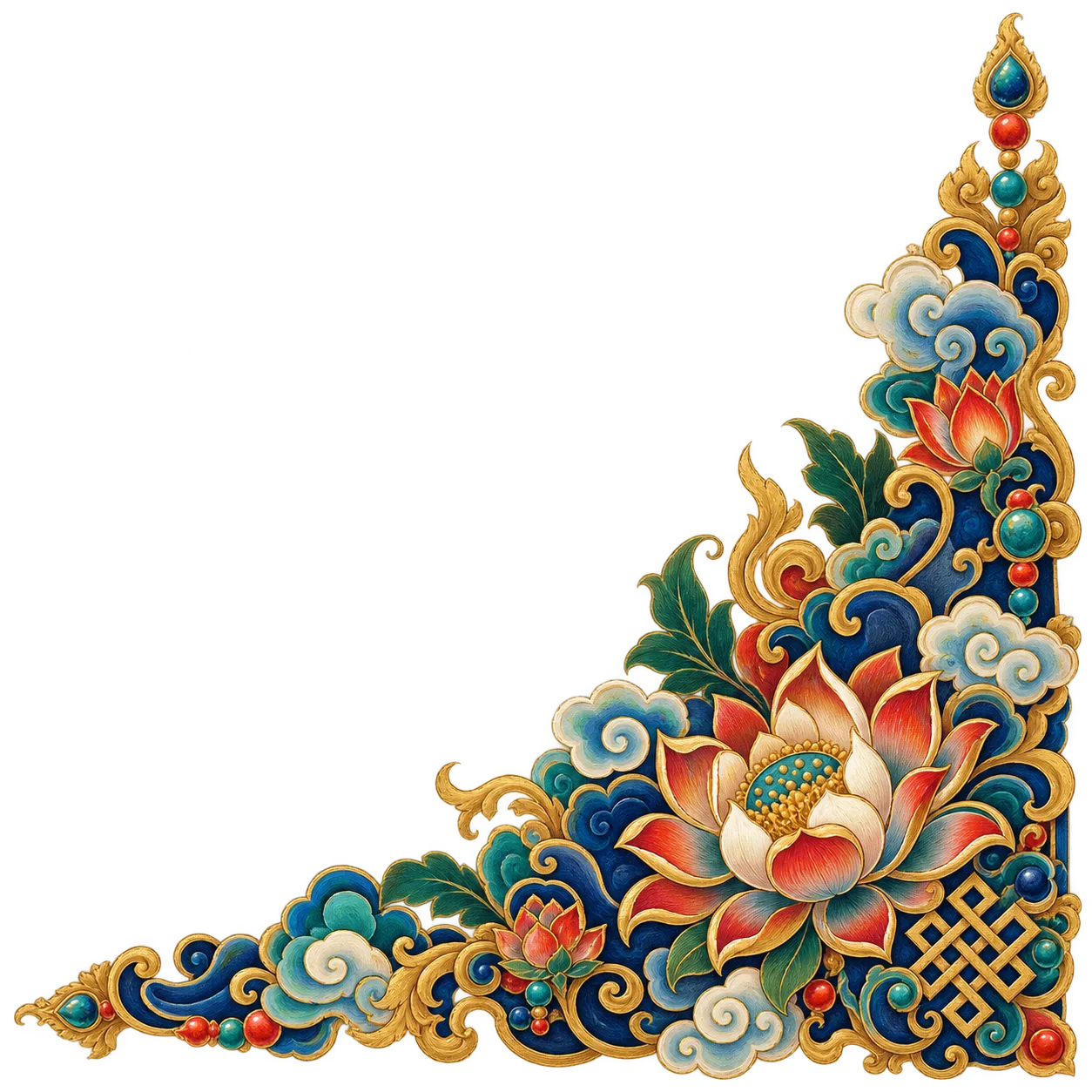
For this journal, the symbols are redrawn as original editorial icons in mineral teal, antique gold, soft brick, and cream. They are neither a copy of a historic thangka nor a ritual diagram. The purpose is recognition, context, and a gentler way to approach a living visual language.
Our commitment
We will not claim consecration, a temple source, artisan lineage, or sacred status unless we can document it for that specific piece.
Contemporary objects with a symbolic design language
Explore related objects.
These are contemporary decorative and jewelry pieces, offered as design references rather than religious artifacts.
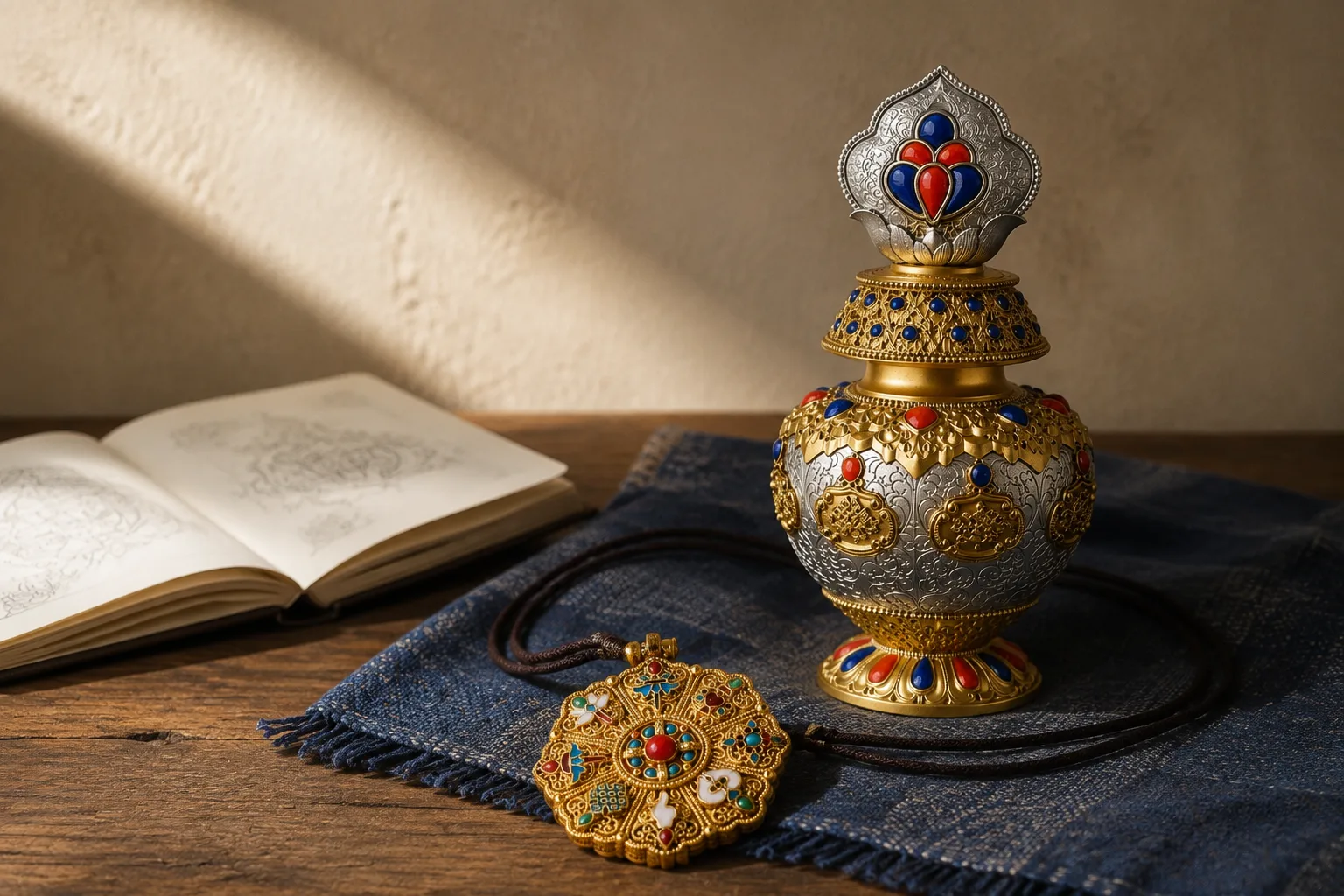
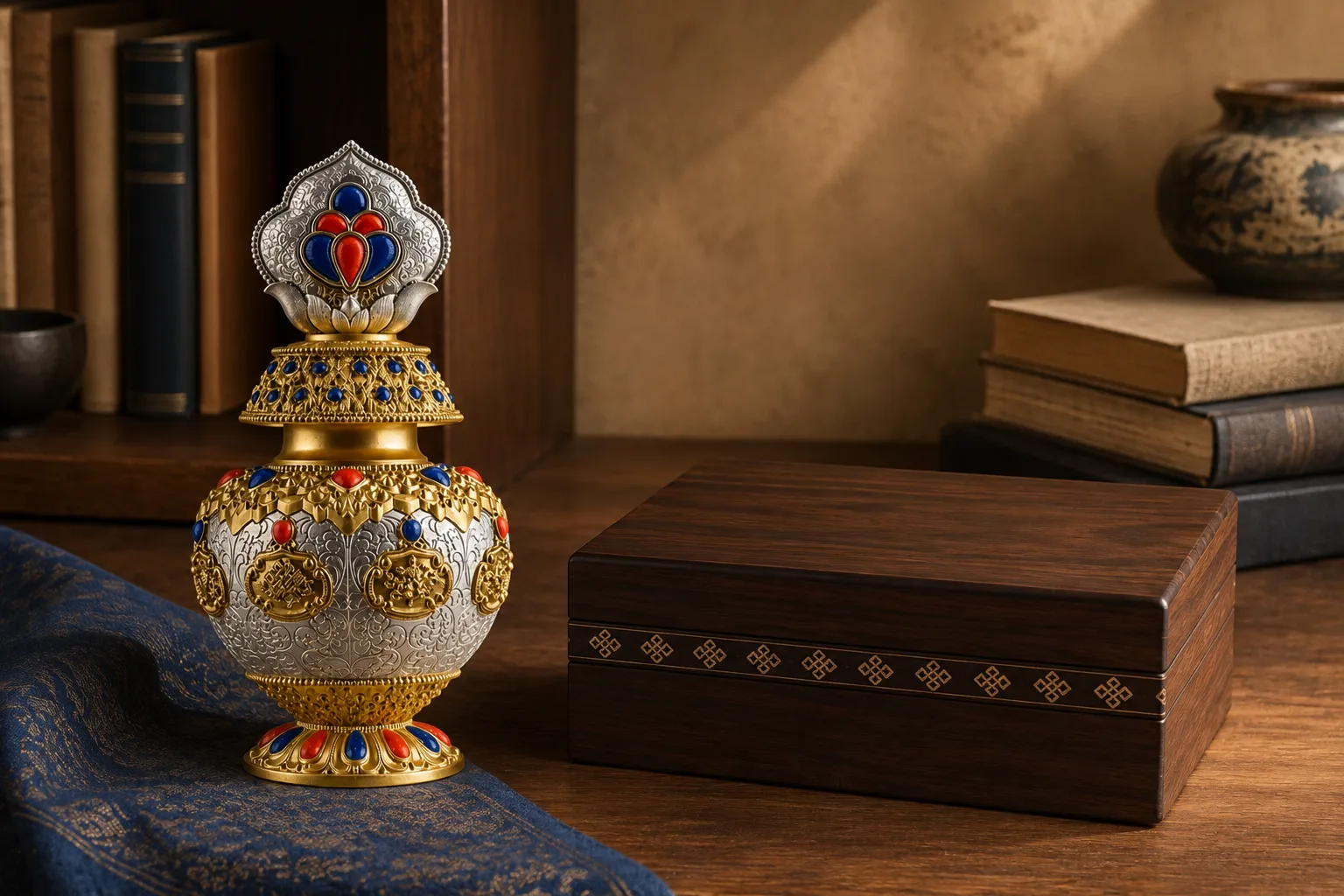
Tibetan Auspicious Treasure Vase
A contemporary decorative object with a layered visual vocabulary.
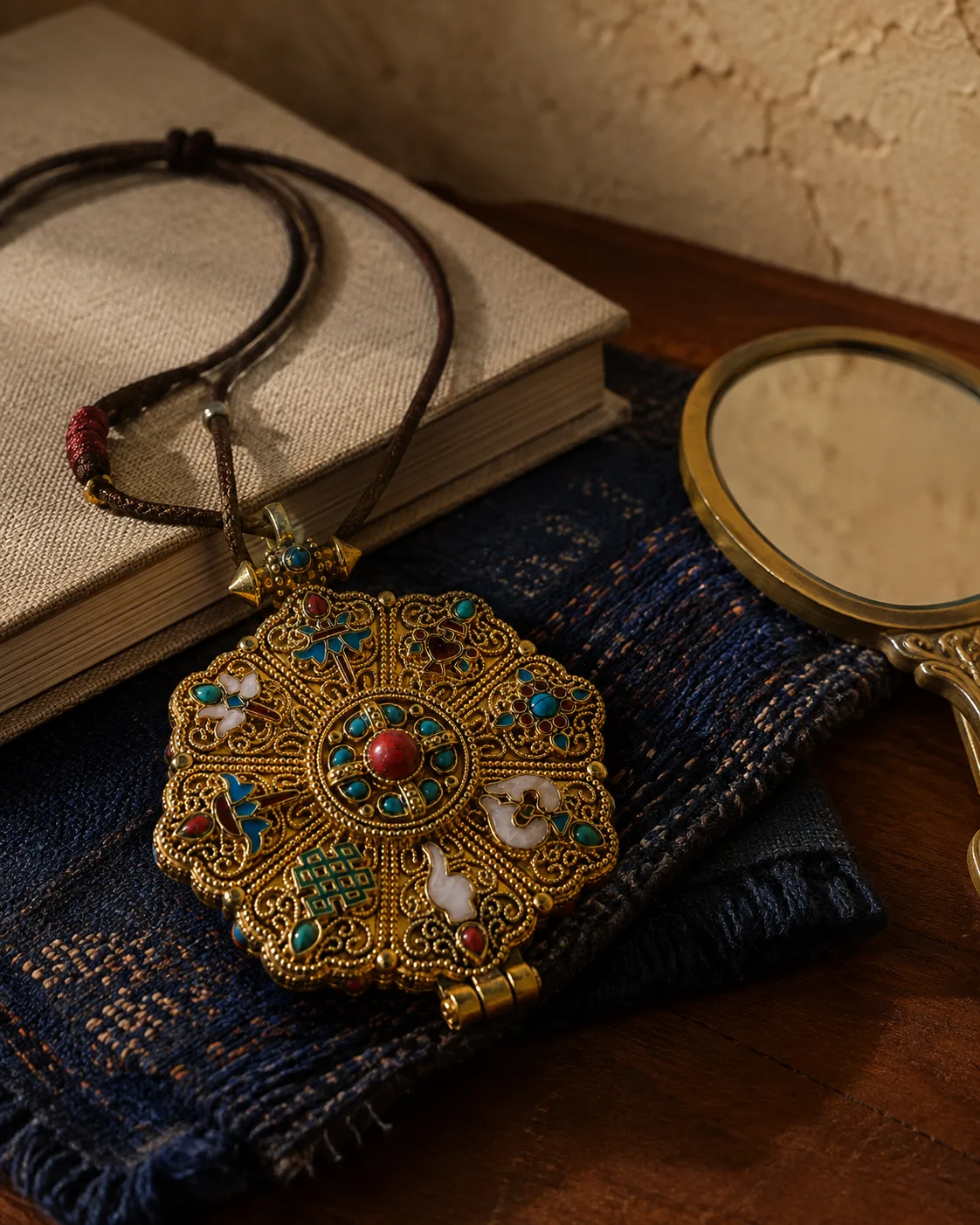
Tibetan Ghau Prayer Box Locket Pendant
A contemporary pendant whose ornament invites a closer look at pattern and form.
Common questions
FAQ
Are these symbols only Tibetan?
No. They are important in Himalayan Buddhist visual cultures and also appear in East Asian art and material culture. Their forms and meanings vary by region and tradition.
Does a symbol on jewelry guarantee a result?
No. We describe cultural and visual associations, not guarantees of luck, wealth, or protection.
Is a contemporary piece with a motif a religious artifact?
Not automatically. Unless a specific item has documented religious status or provenance, it is a contemporary design object.
Further reading
Sources
The Metropolitan Museum of Art: Quiver Decorated with the Eight Auspicious Symbols
Asian Art Museum: Eight Auspicious Symbols
The Metropolitan Museum of Art: The Decoration of Tibetan Arms and Armor