FREE SHIPPING OVER $200


Journal · Intentions & Rituals
A Water-Blue Conversation Cue
Prepare for the talk you keep delaying with one clear purpose, one concrete sentence, and one fair request.
Quick answer
A water-blue stone can become a reliable cue to prepare a difficult conversation. The colour is a signpost—not an authority: today, speak plainly.
Before emotion rises
Prepare the sentence before you need it.
Some conversations are delayed because we rehearse every possible reaction. A small aquamarine, turquoise, chrysocolla, blue topaz, or blue glass token can mark the moment to stop rehearsing and begin preparing.
The water-blue colour grouping is often placed around communication. Treat that as a creative prompt, not an external authority.
One card, three lines
Name the purpose, the sentence, and the request.
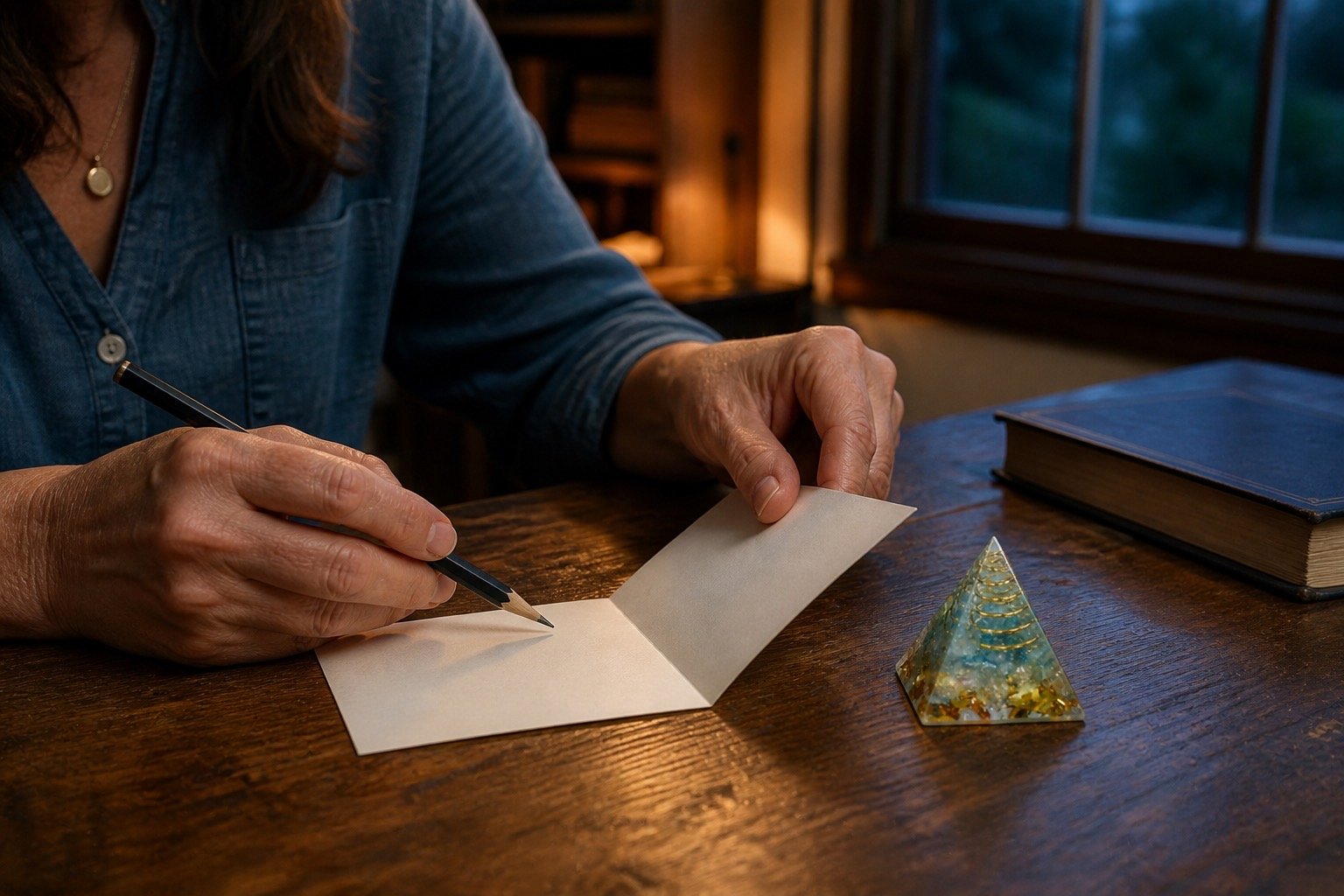
Place the water-blue object beside a blank card. Complete each line concretely, without preparing an argument for every possible response.
Purpose
01
“I want this conversation because …”
Keep the reason close to the relationship or practical outcome you want.
Specific sentence
02
“The specific thing I need to say is …”
Name what happened or what needs to change without expanding the story.
Fair request
03
“A fair request from me is …”
Choose something the other person can understand and answer.
Concrete is answerable
Turn a broad need into one clear request.
Important, but vague
“I need more respect.”
The need matters, but the other person may not know what action would meet it.
Specific and answerable
“Please do not change the deadline without telling me.”
A concrete request gives the conversation somewhere useful to go.

Invite a real reply
Open the conversation without performing it.
“Is now an okay time to talk about something practical?”
Then make the request in one breath. Pause. Do not use the stone to collect proof that you are right; use it to remember the purpose of speaking.
Close the loop
Use a water-blue cue to record what happened.
Afterward, turn the card over. A short factual record protects you from rewriting the interaction later.
01
What was understood?
02
What needs a follow-up?
03
What did you learn about your own tone?
Keep it human.
A note on limits
Communication problems may need boundaries, mediation, or professional help. A mineral object is only a small anchor for preparation. Its usefulness comes from the clarity you practise around it.
Source context: This reflective water-blue stone practice treats colour and objects as prompts for attention, not as claims of effect. For mineral names and identification references, consult the Mindat mineral database. Browse the Himalayan Ritual shop for objects that can support a simple daily cue.
Before a difficult conversation, place a water-blue stone beside a blank note and write one sentence that names the point you need to make. Keep it concrete: describe the event, the impact, and the request. Avoid rehearsing an entire argument or predicting the other person’s reply.
During the conversation, let the object remind you to slow down. Ask one open question, then leave a genuine pause. If emotion rises, return to the sentence on the card instead of adding new accusations or explanations.
Afterward, record one next step while it is still clear. This might be a date for checking in, a boundary you agreed, or a task that belongs to you. The purpose is not to make the stone responsible for the outcome; it is to help you prepare, listen, and follow through with care.