FREE SHIPPING OVER $200

JOURNAL · INTENTIONS & RITUALS
The Three-Point Focus Map
A CRYSTAL GRID FOR ONE REAL DECISION · UPDATED AUGUST 26, 2026
QUICK ANSWER
Crystal grid: use three points as a visual map for a decision—one stone for facts, one for values, and one for the next experiment. It is not meant to predict the future. It slows a crowded question until one practical action becomes visible.
Crystal grids are often presented as elaborate diagrams built for attraction, protection, or abundance. Their visual appeal is real, but the most interesting part may be simpler: arranging objects in a pattern gives thinking a shape.
This ritual is designed for choices that cannot be solved by a single yes or no: whether to take a class, change a routine, start a project, or address a conversation you have delayed.
Crystal grid at a glance
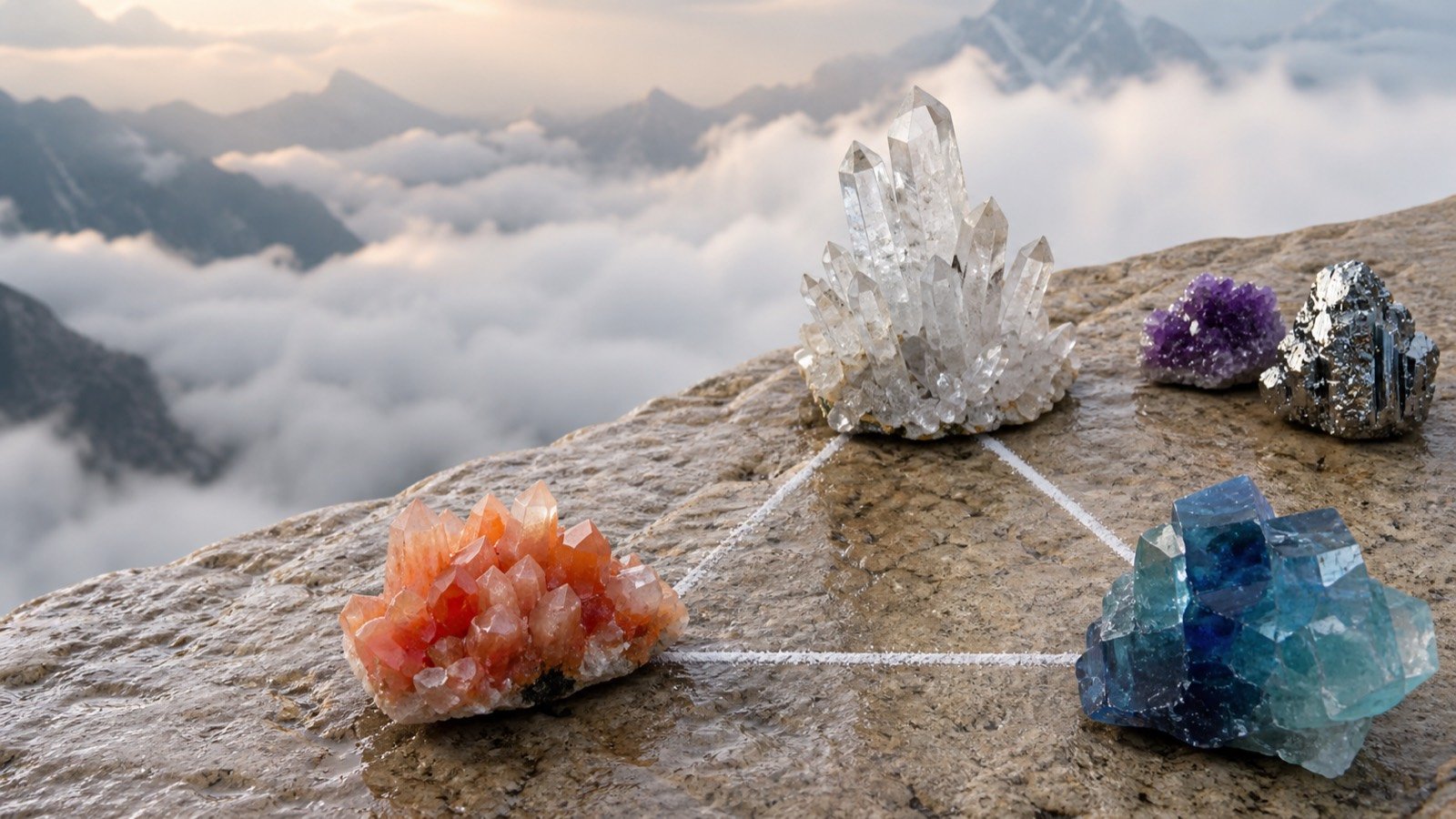
Arrange three stones in a triangle. They do not need to match, and they do not need to be quartz points.
ONE QUESTION · THREE CLEAR VOICES
01 · TOP
Facts
What do I actually know?
02 · LOWER LEFT
Values
What matters even if it is inconvenient?
03 · LOWER RIGHT
Experiment
What can I test without a permanent promise?
The triangle is not a mystical machine. It is a boundary: it prevents every feeling, fear, and possibility from trying to speak at once.
| Position | Prompt | What belongs here |
|---|---|---|
| Top: Facts | What do I actually know? | Deadlines, money, availability, evidence |
| Lower left: Values | What matters even if it is inconvenient? | Rest, honesty, craft, family, learning |
| Lower right: Experiment | What can I test without making a permanent promise? | A call, a draft, a trial week, a budget |
A 15-MINUTE DECISION RITUAL
Set up the focus map
The aim is not certainty. It is a question small enough to move and an experiment gentle enough to begin.
BEGIN WITH LANGUAGE
Choose a decision small enough to move.
“What is the next honest step toward…?”
Avoid questions that demand certainty about another person or the future. Replace “Will this business succeed?” with “What information do I need before I spend money on this idea?”
01
FRAME
Write one movable question
Keep it observable and within your influence. The clearer the question, the less pressure the objects have to carry.
02
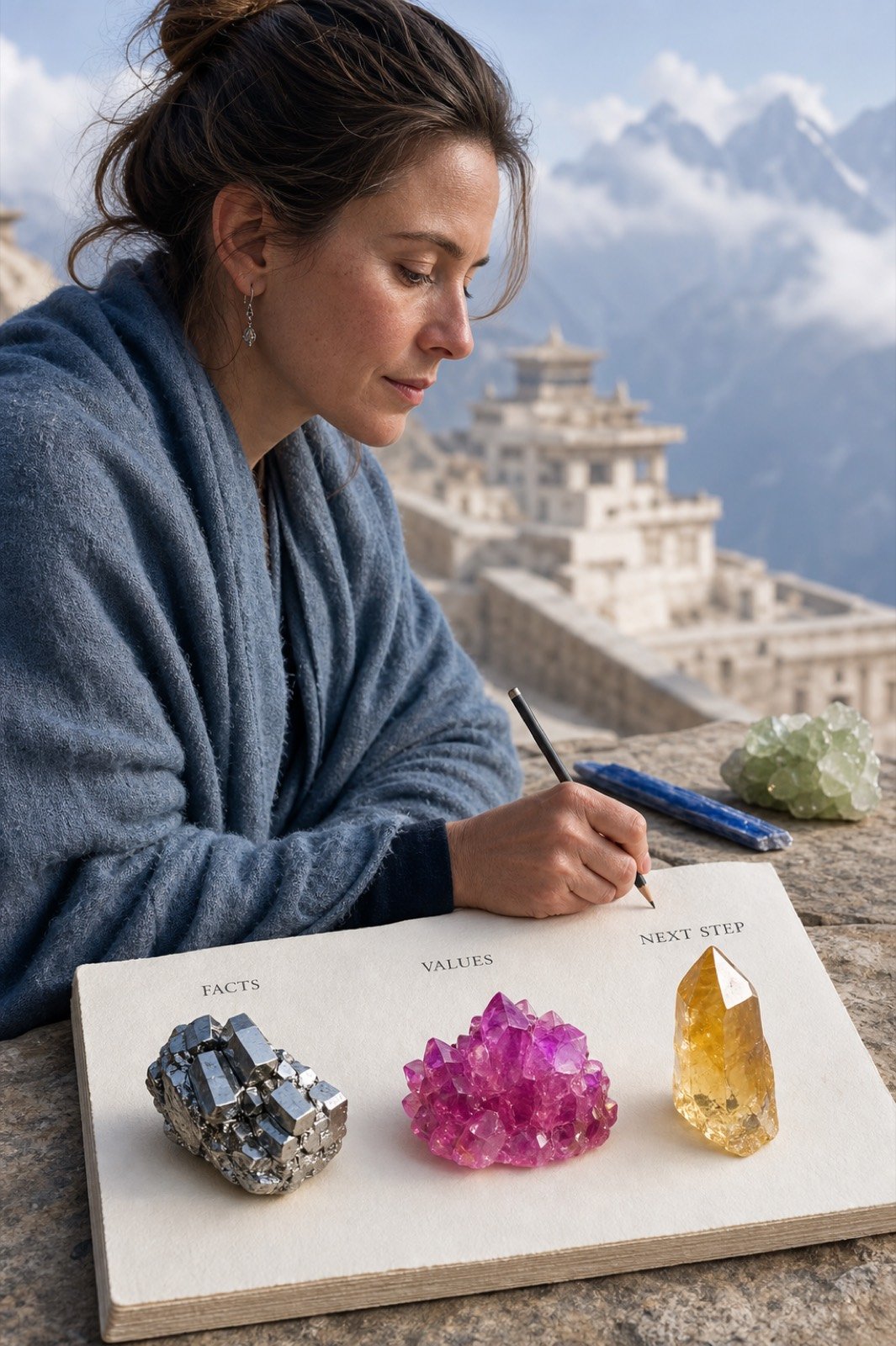
FACTS
Place the facts stone
Put the first stone at the top of the triangle. List three facts on paper: a date, number, policy, or conversation already held. If you have no facts, your next step is research—not a ritual answer.
03
VALUES
Place the values stone
Put the second stone at the lower left. Name one value the decision should honor. “Integrity” might mean telling someone the timeline. “Rest” might mean refusing a plan that depends on chronic exhaustion.
04
EXPERIMENT
Place the experiment stone
Put the third stone at the lower right. Design an experiment that takes less than seven days and does not require you to become a different person overnight.
- Ask two people for an informational conversation.
- Spend 30 minutes making a rough version.
- Track the real cost of a habit for one week.
- Take one no-buy day before a symbolic purchase.
05
READ
Read the triangle clockwise
Start at facts, move to values, then experiment.
“I will not use hope to replace information, or information to erase what matters.”
This keeps intuition in conversation with evidence rather than setting them against each other.
06
CLEAR
Clear the grid after the experiment
At the end of seven days, take the stones apart and review what happened. Did the experiment produce useful data? Did it reveal resistance, relief, or a missing fact? Rebuild only if the question is still alive.
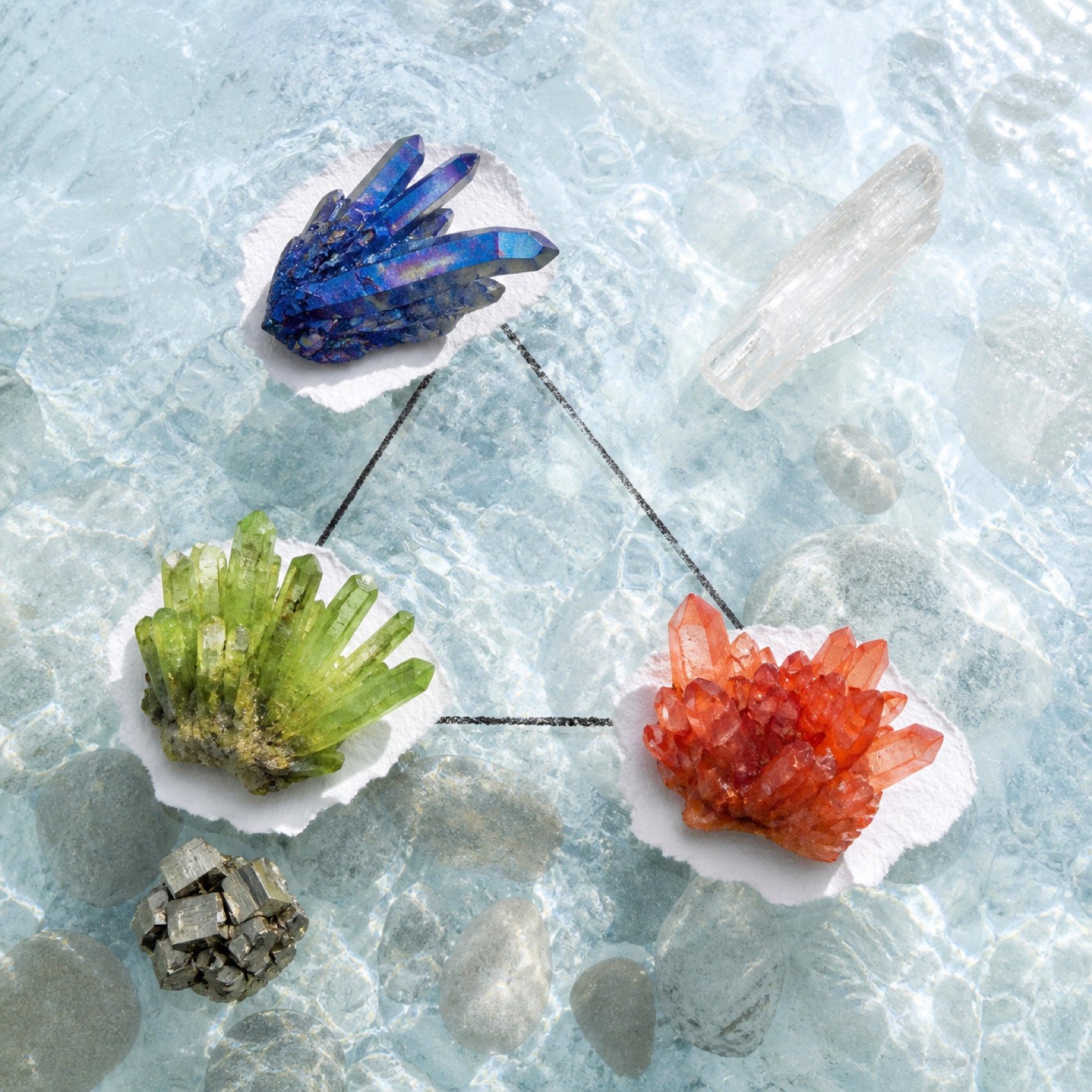
USE WHAT IS ALREADY NEAR YOU
Choosing stones without turning it into a shopping list
Use color as a private visual language: clear for facts, warm for values, dark for experimentation. But you do not need a special mineral to think clearly. A pebble, coin, or three small pieces of glass can do the same structural work.
QUESTIONS, PLAINLY ANSWERED
FAQ
Should the crystals point inward or outward?
Orientation is optional. The written prompts matter more than the direction of a crystal point.
Can I use it with another person?
Yes. Each person should write their own facts, values, and experiment. Do not use a shared grid to pressure agreement.
What if the answer is “do nothing yet”?
That is a valid experiment. Define what information or capacity you are waiting for, and choose a date to reassess.
Source note
This original decision-making ritual was inspired by Ember Grant’s use of geometric arrangement, number, and crystal points in grid work. For mineral names and reference images, consult the Mindat mineral database; browse tactile objects in the Himalayan Ritual shop.
A crystal grid is used here as a visual decision tool: write the facts, name a value, then choose one low-risk experiment. The facts–values–experiment framework and all wording are new.
Sources: Grant, Ember. The Book of Crystal Spells (2013), chapter 10; and The Second Book of Crystal Spells (2016), chapter 5.
Editorial note: This reflection tool cannot replace professional advice for high-stakes medical, legal, financial, or safety decisions.
CONTINUE YOUR RITUAL
Give one real decision a visible shape.
Choose three objects, one honest question, and an experiment you can complete this week.