FREE SHIPPING OVER $200

Journal · Symbols & Himalayan Stories
Tibetan prayer flags: color, craft, and respectful context.
A visual guide to five-color systems, cloth-making, and the line between a living religious tradition and a contemporary decorative textile.
A direct answer
What are Tibetan prayer flags?
They are printed cloth banners used in Himalayan Buddhist cultural contexts. Their colors, imagery, and texts are part of living traditions—not a universal promise of luck or protection.
In English, “prayer flag” covers more than one form. Local terms, formats, settings, and meanings vary.
Search-ready summary
Blue, white, red, green, and yellow are commonly linked to space, air, fire, water, and earth in Tibetan Buddhist teaching resources. The sequence belongs to wider systems of visual symbolism, so no one color should be sold as a standalone spiritual “effect.”
Five colors, read together
A sequence, not a sales promise.
The associations below are a useful introduction. They are not a complete account of regional or religious interpretation.
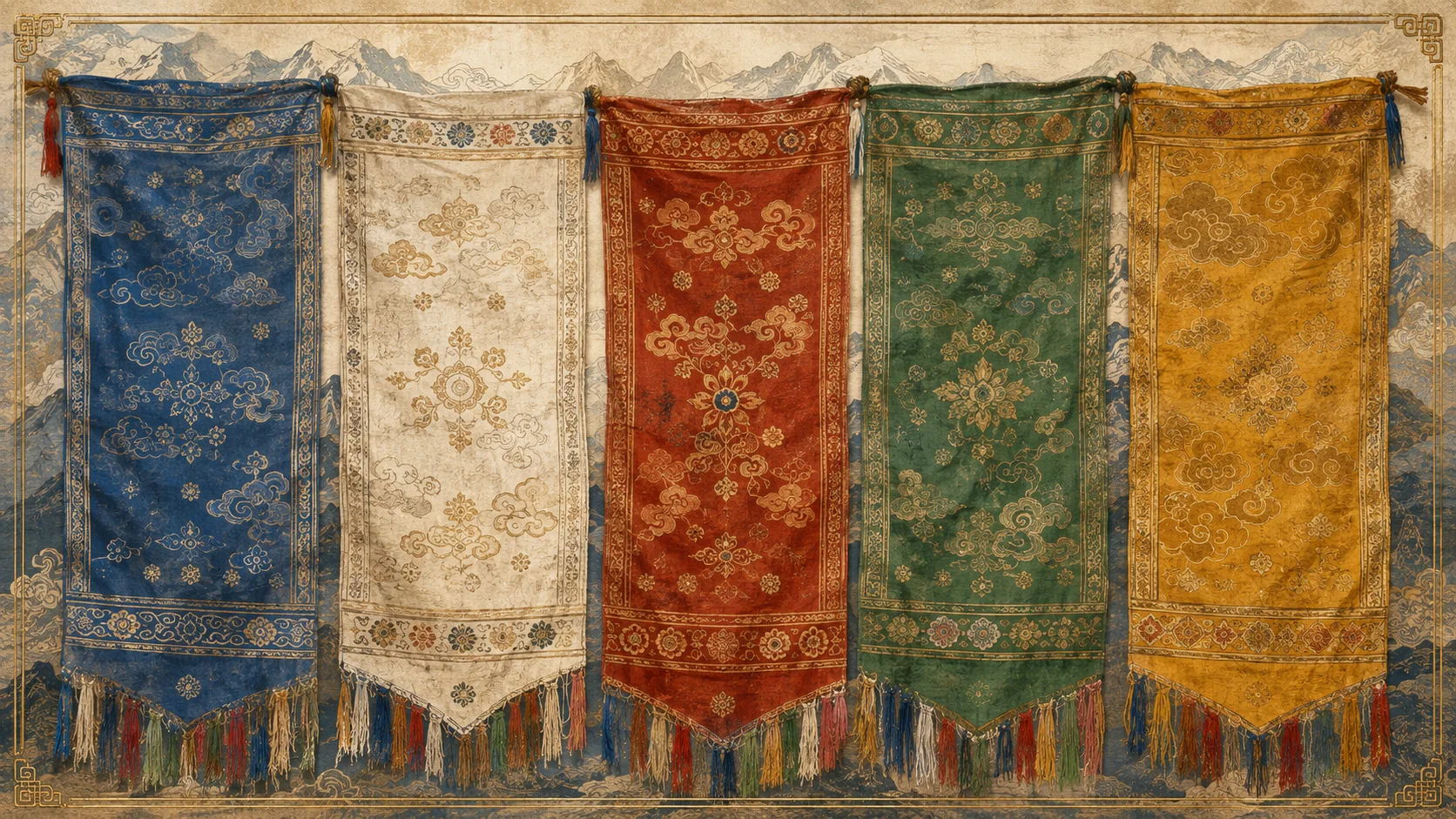
BlueSpace / sky
WhiteAir / wind
RedFire
GreenWater
YellowEarth
Cloth as a record
Craft leaves a visible trace.
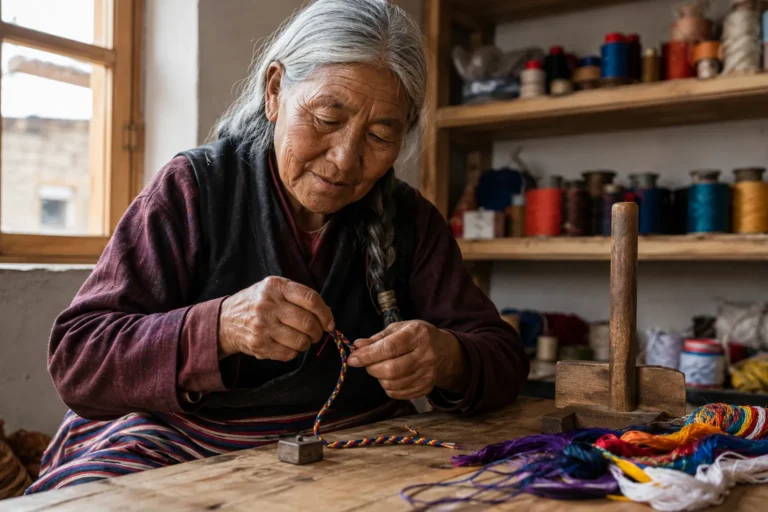
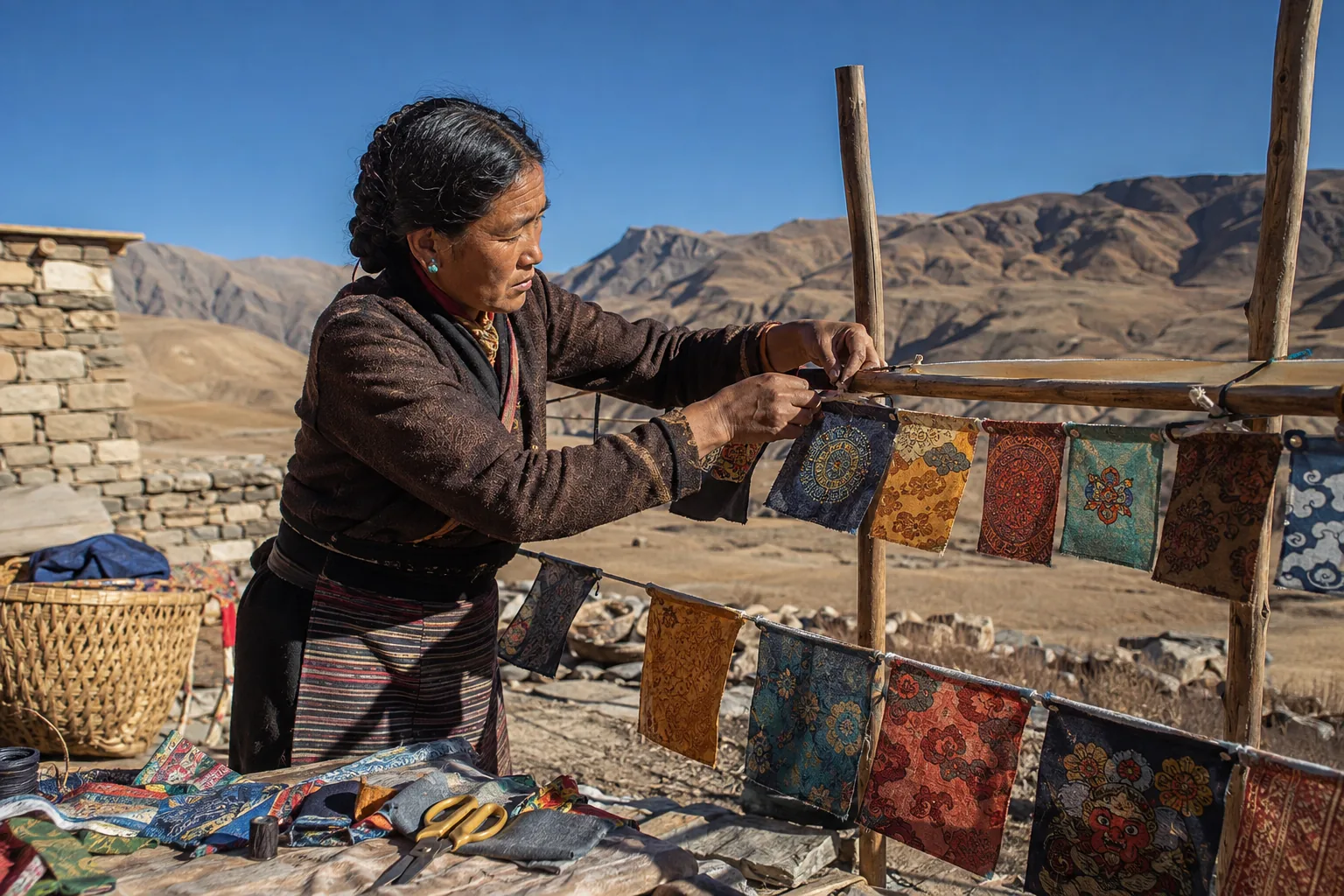
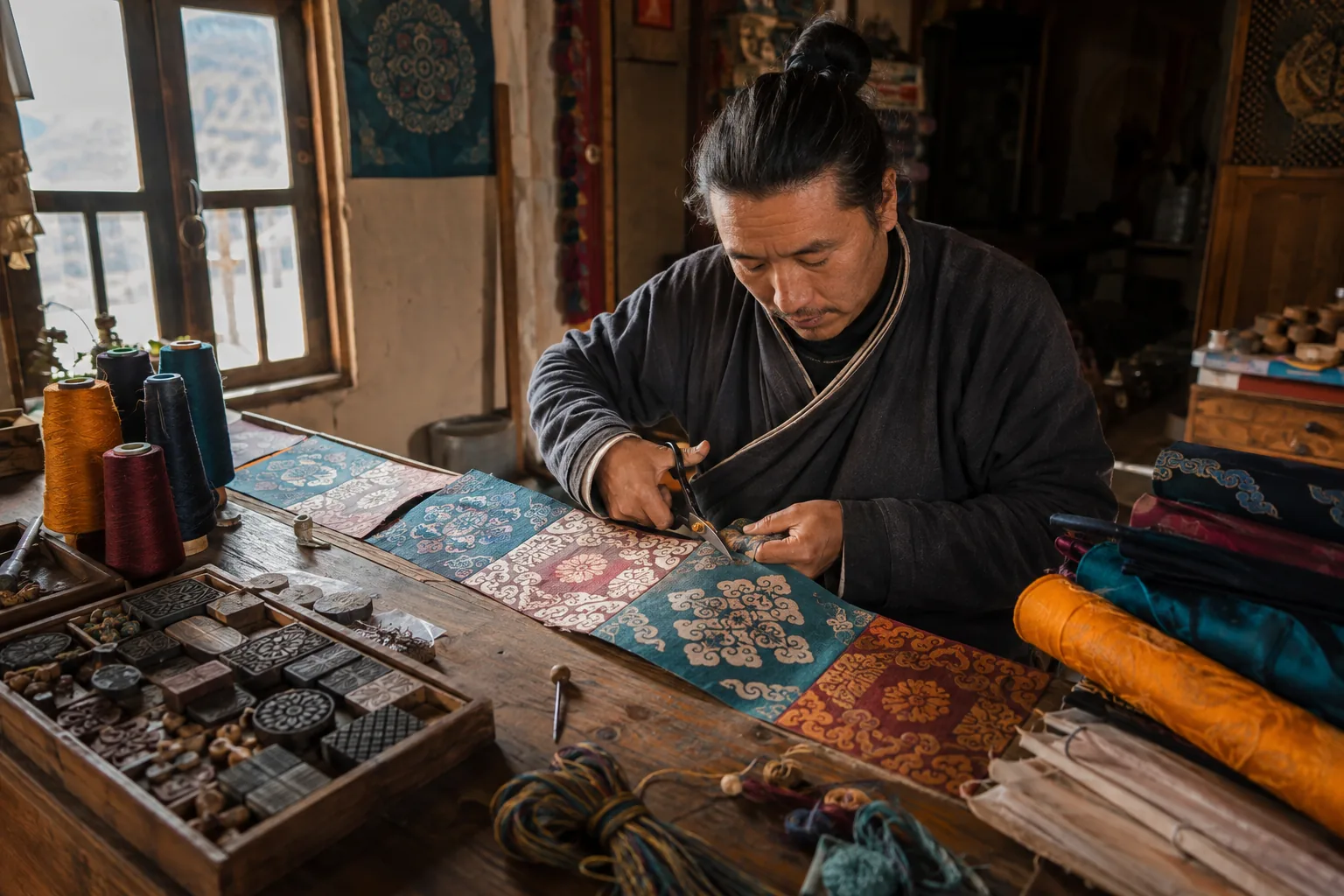
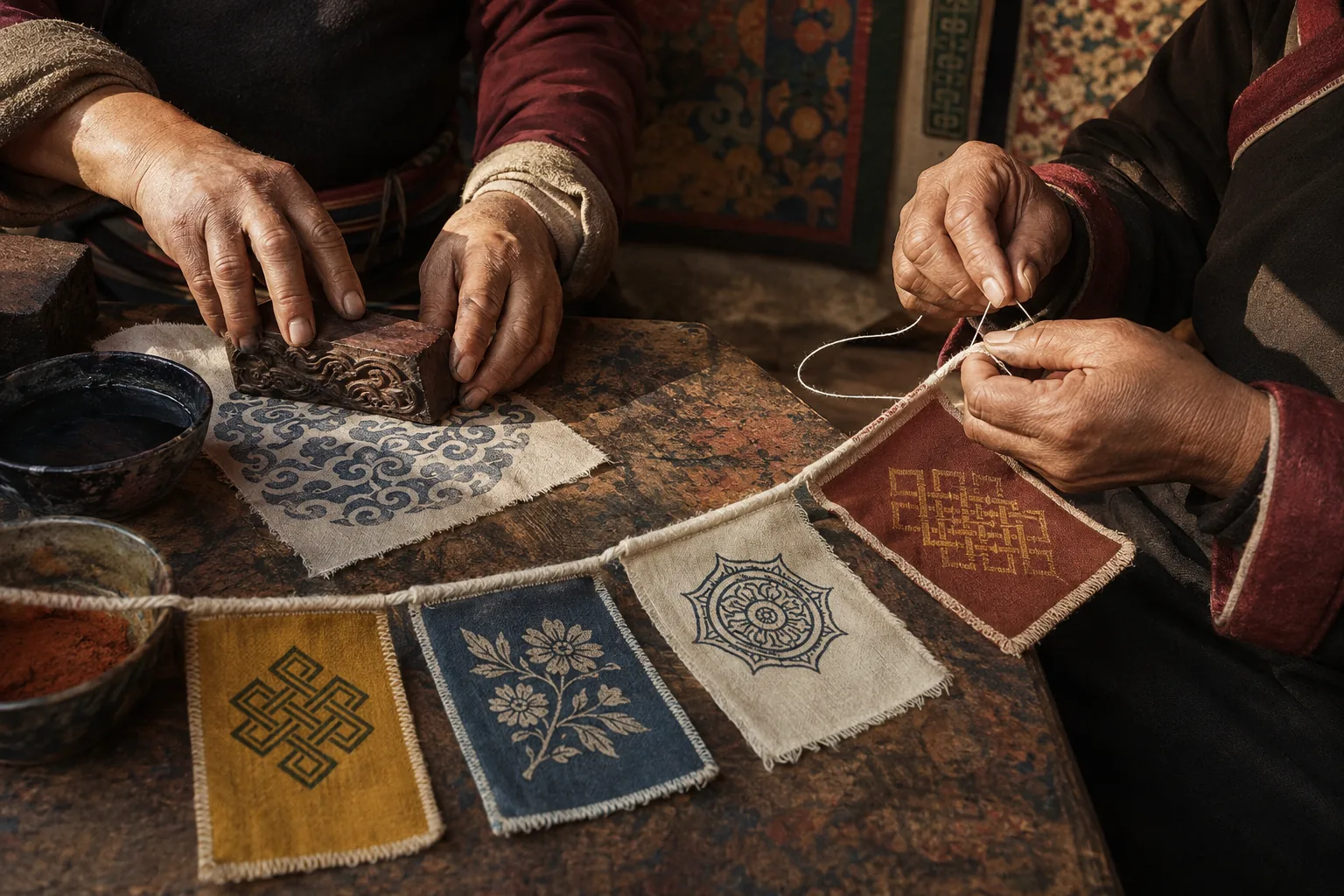
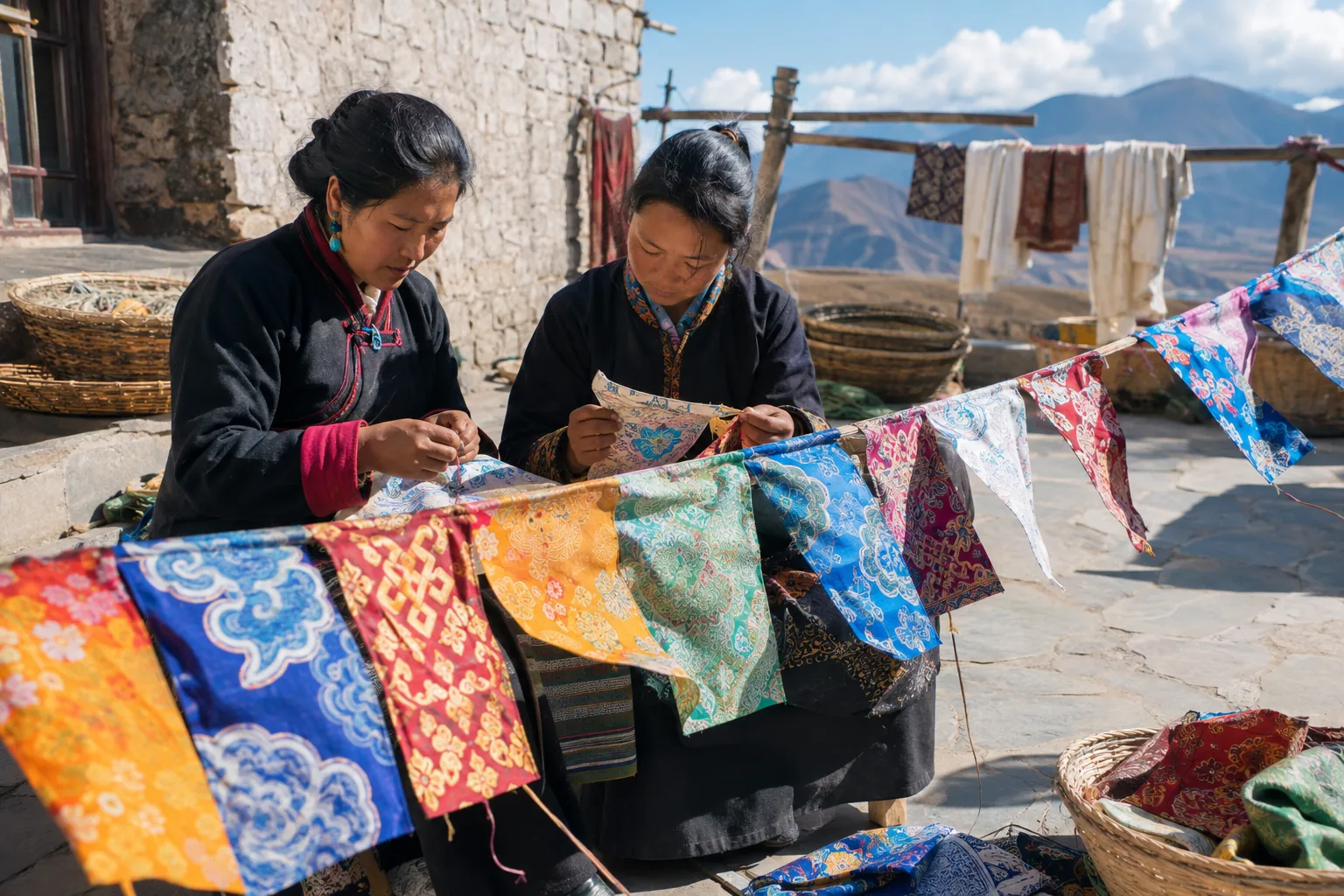
Woodblock printing, dye, stitching, cloth weight, wind, and sun all leave their mark. That material life is part of the subject—not an imperfection to be erased.
Respect before aesthetics
A home can hold a contemporary textile—when it is named honestly.
Contemporary fabric garlands can bring texture and color to a shelf, a window, or a gathering table. They should not be represented as consecrated objects, temple objects, or substitutes for religious practice.
- Choose original, non-sacred patterns instead of copying mantras or deity imagery.
- Describe materials and construction clearly.
- Do not remove, step on, or repurpose existing prayer flags encountered in living contexts.
Modern textile studies
Color belongs in ordinary life, too.
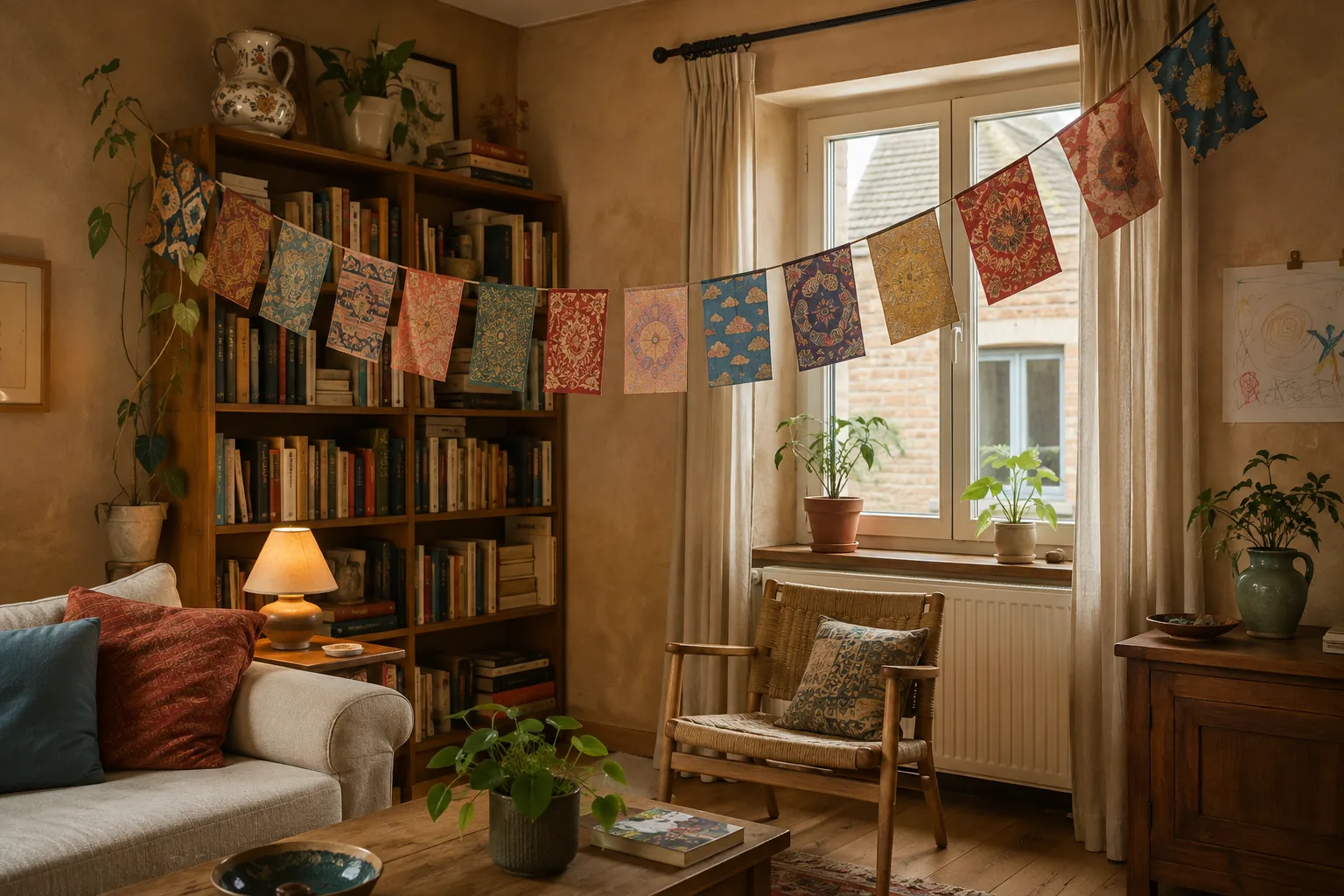
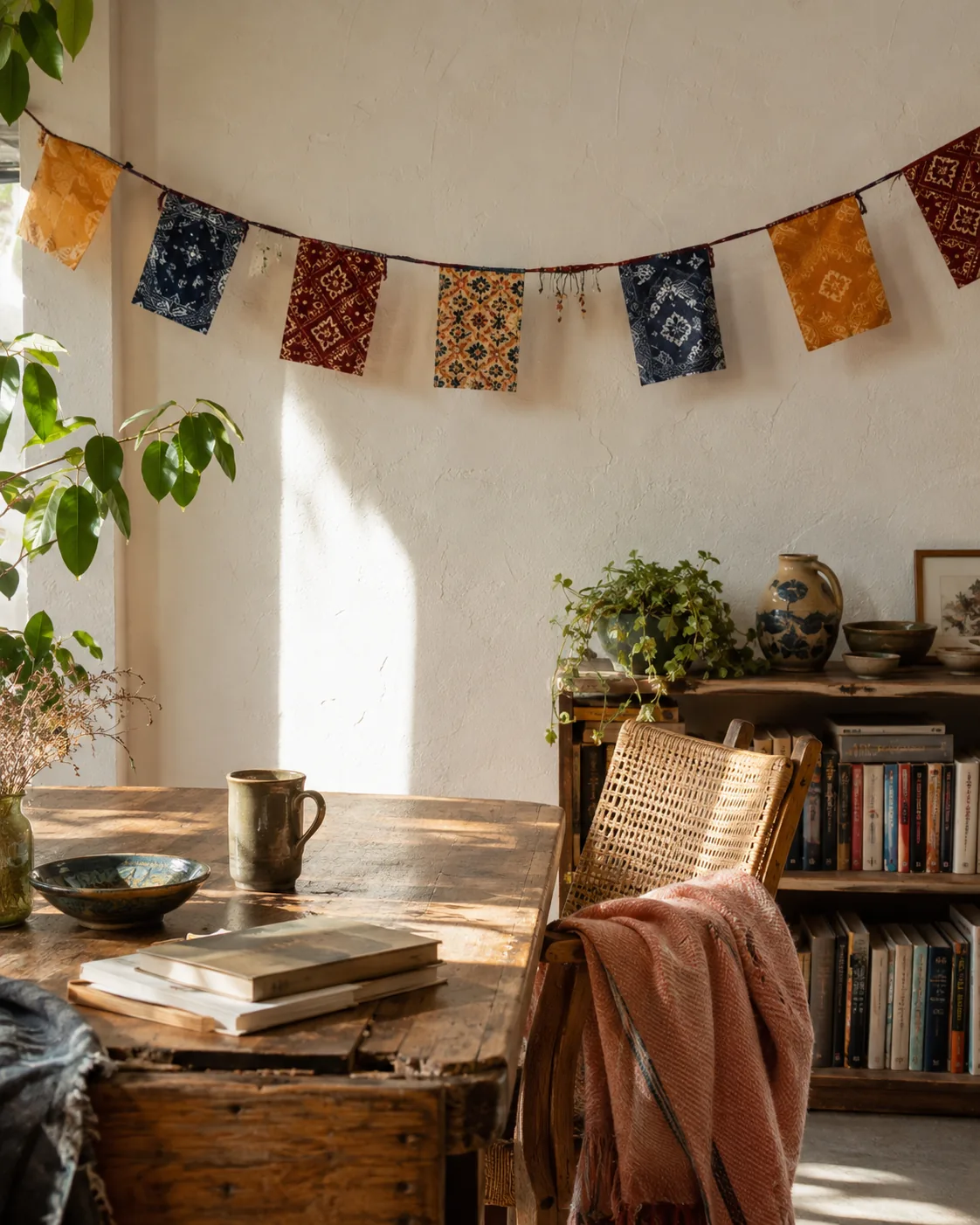
These images show original decorative fabric studies in domestic settings. They reference handcraft and linked panels, not religious artifacts.
Himalayan Ritual design note
Inspired by textile rhythm, named plainly.
Our Himalayan-inspired fabric flag garland is a contemporary decorative textile study. Varied cloth, hand-finished edges, and linked panels draw on a broad appreciation of Himalayan textile craft. It is not presented as a prayer flag, a consecrated object, or a religious artifact.
Contemporary home textile
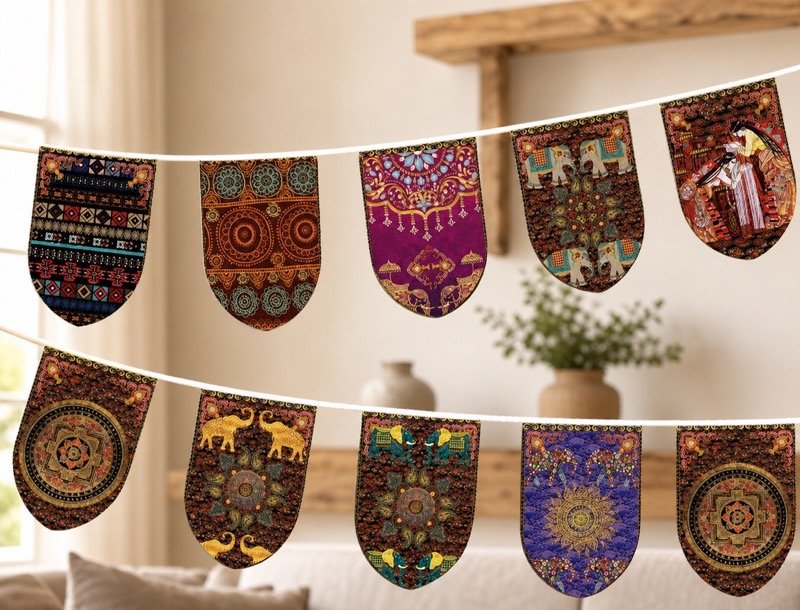
Himalayan Artisan Fabric Flag Garland
A patterned fabric garland for windows, shelves, studios, and seasonal displays. It is offered as Himalayan-style home décor—not as a ritual object or a substitute for religious practice.
Common questions
FAQ
Are all five-color fabric strings Tibetan prayer flags?
No. Colors alone do not define an item. Meaning depends on printed content, setting, use, and community context.
What does lungta mean?
It is often translated as “wind horse” and is associated with a horizontal type of flag string. The English label “prayer flag” is broader and less specific.
Can a contemporary fabric garland be used in a home?
Yes—when it is honestly framed as decorative textile design and does not make claims of ritual efficacy or sacred status.