FREE SHIPPING OVER $200

JOURNAL · CRYSTAL RITUALS
Seven Chakras and Crystals
A color-led guide to choosing a crystal, asking a better question, and creating a small ritual that feels like your own.
What are the seven chakras?
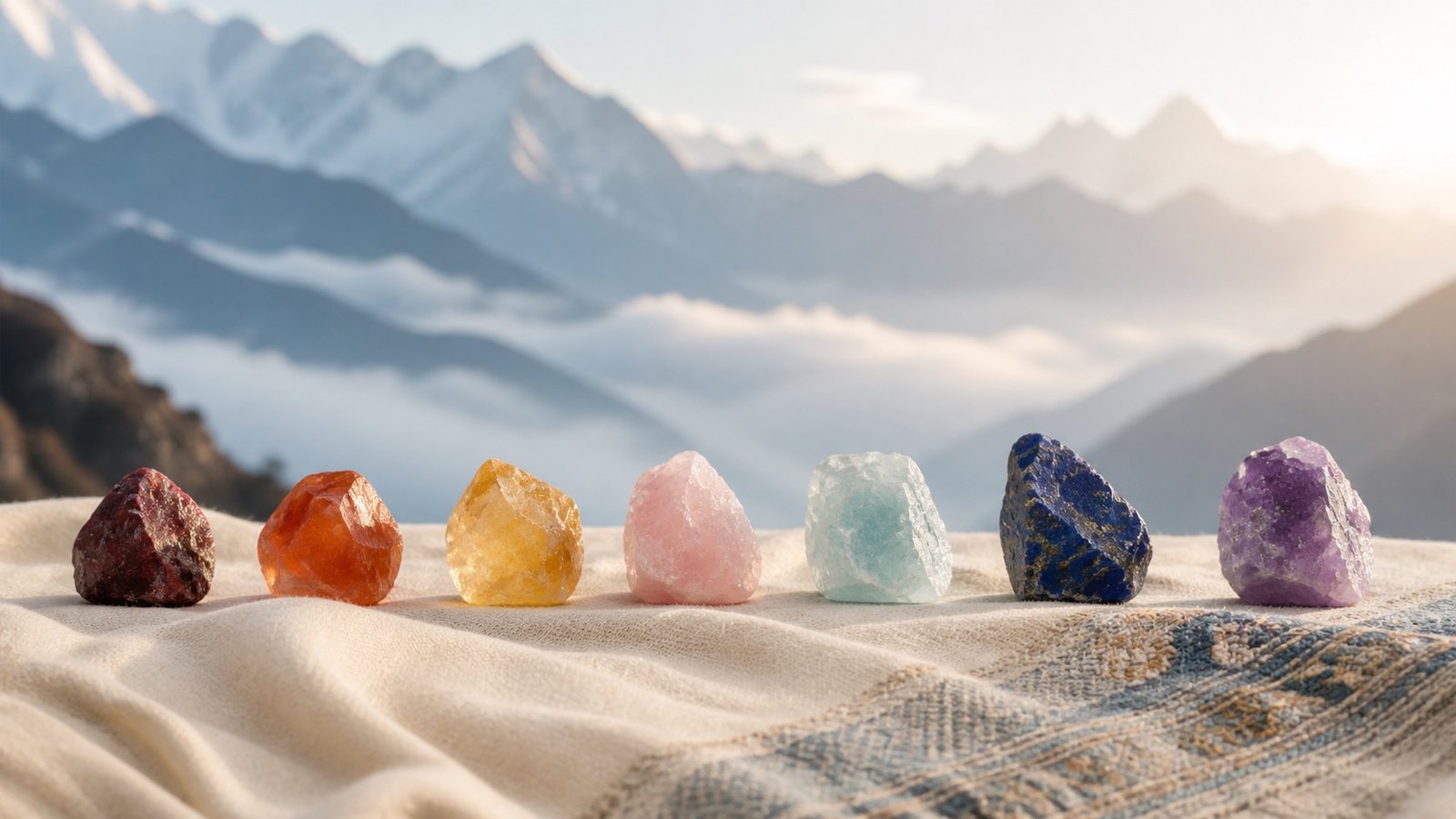
The seven chakras and crystals are traditionally explored as a symbolic map of energy centers running from the base of the spine to the crown of the head. Each chakra is associated with a color, a life theme, and crystals often used as visual reminders during meditation or reflection.
You do not need all seven stones. Begin with the color or intention that feels most useful today. For a concise cultural overview, see Encyclopaedia Britannica’s introduction to chakras.
The seven chakras and crystals at a glance
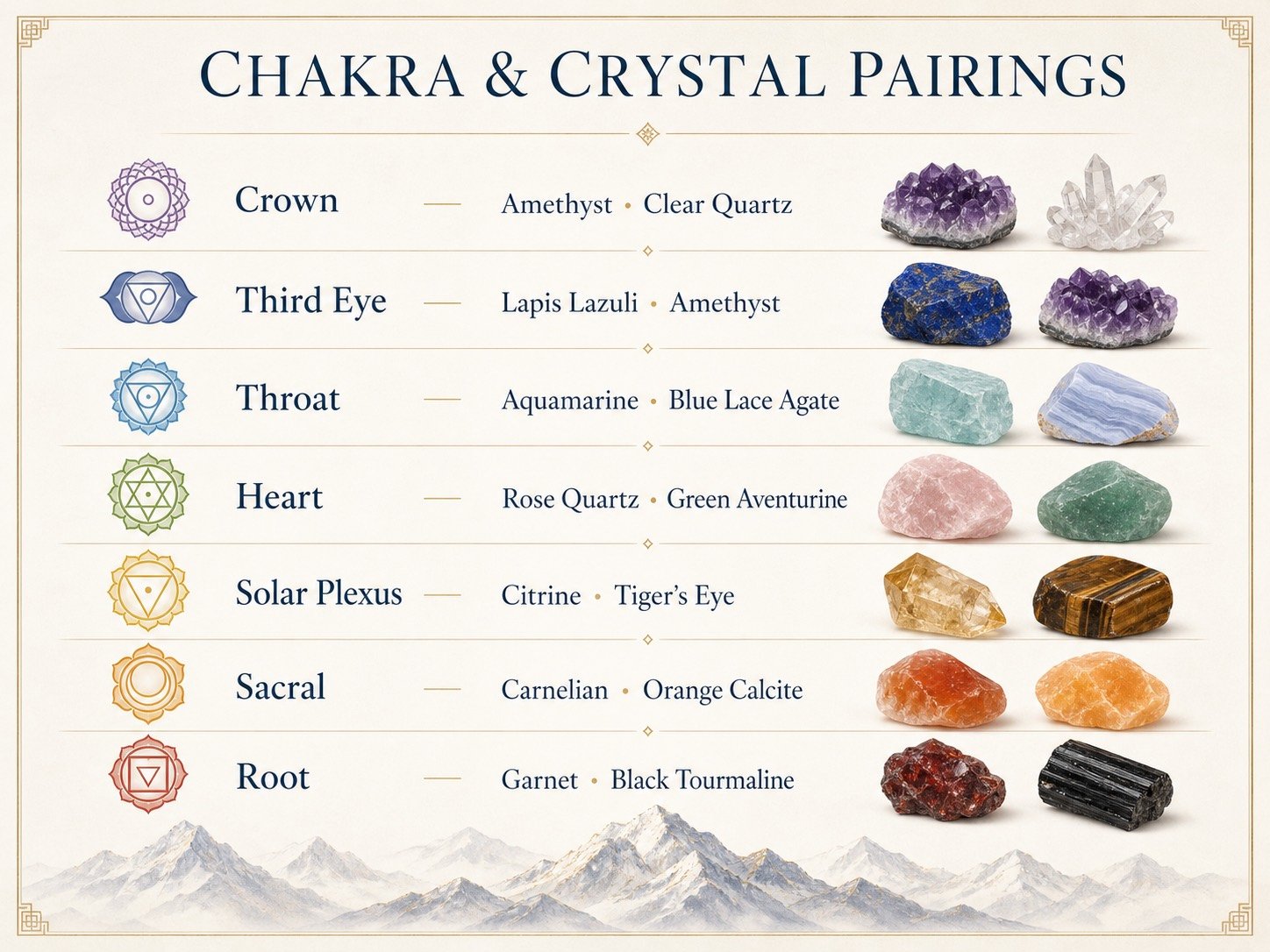
| Chakra | Color | Intention | Crystals |
|---|---|---|---|
| Root | Red, brown, black | Grounding and steadiness | Garnet, Red Jasper, Hematite |
| Sacral | Orange | Creativity and feeling | Carnelian, Orange Calcite, Amber |
| Solar Plexus | Yellow, gold | Choice and confidence | Citrine, Tiger’s Eye, Yellow Calcite |
| Heart | Green, soft pink | Compassion and connection | Rose Quartz, Green Aventurine, Rhodonite |
| Throat | Blue | Honest expression | Aquamarine, Sodalite, Blue Lace Agate |
| Third Eye | Indigo, violet | Intuition and reflection | Lapis Lazuli, Labradorite, Amethyst |
| Crown | Violet, clear, white | Perspective and awareness | Clear Quartz, Selenite, Amethyst |
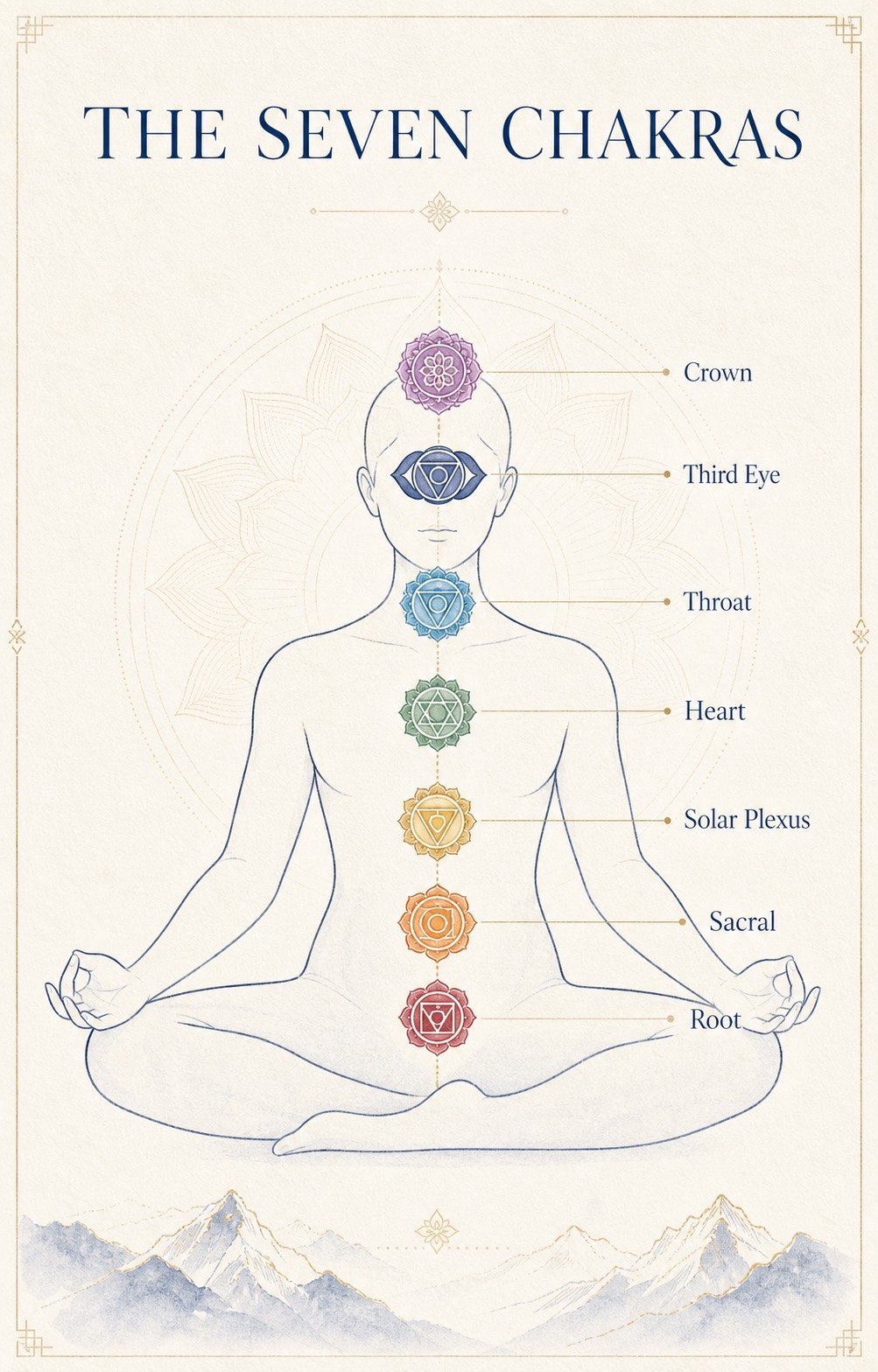
Root to crown: a simple way to read the map
- Root: What helps me feel supported?
- Sacral: What wants to move or be created?
- Solar Plexus: What choice is mine to make?
- Heart: Where can I soften without losing my boundaries?
- Throat: What needs to be expressed clearly?
- Third Eye: What pattern am I beginning to notice?
- Crown: What larger perspective might help?
You do not need seven answers. You only need one honest place to begin.
How to choose a chakra crystal
When choosing among the seven chakras and crystals, choose for the practice you can sustain—not for a promised outcome.
- Start with intention. Name one quality you want to return to: calm, courage, clarity, compassion, or focus.
- Notice color. Let the traditional color map guide you, then choose the stone you genuinely enjoy seeing and holding.
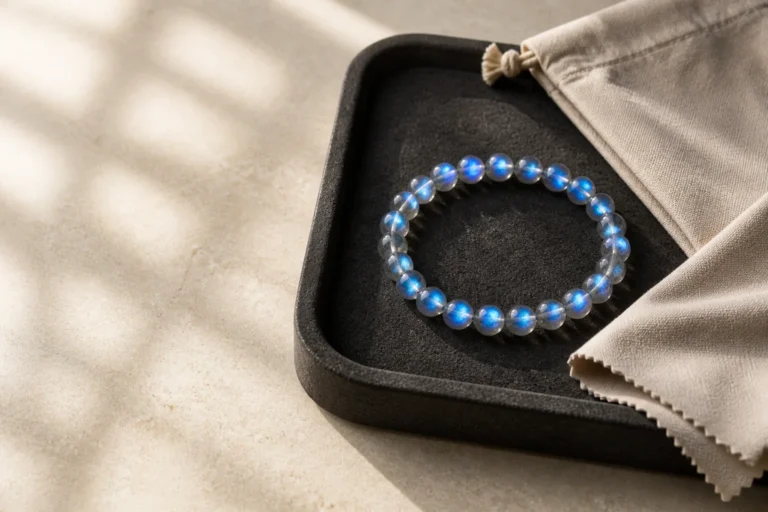
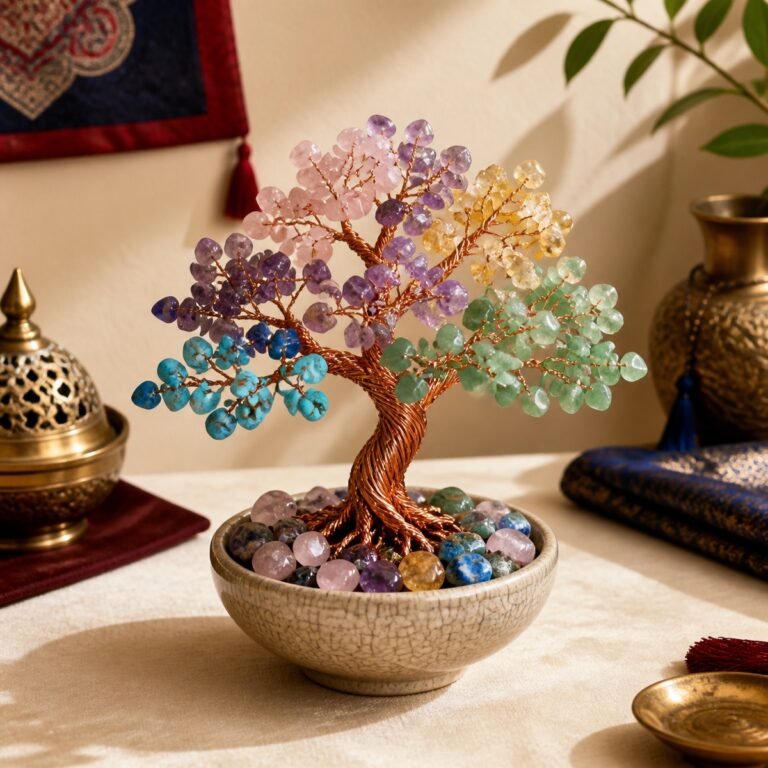
- Choose a useful form. A bracelet travels with you; a palm stone suits quiet pauses; a small specimen can anchor a desk or ritual space.
- Keep the meaning personal. A crystal can be a cue for attention, not a test you need to pass.
A seven-minute chakra crystal ritual
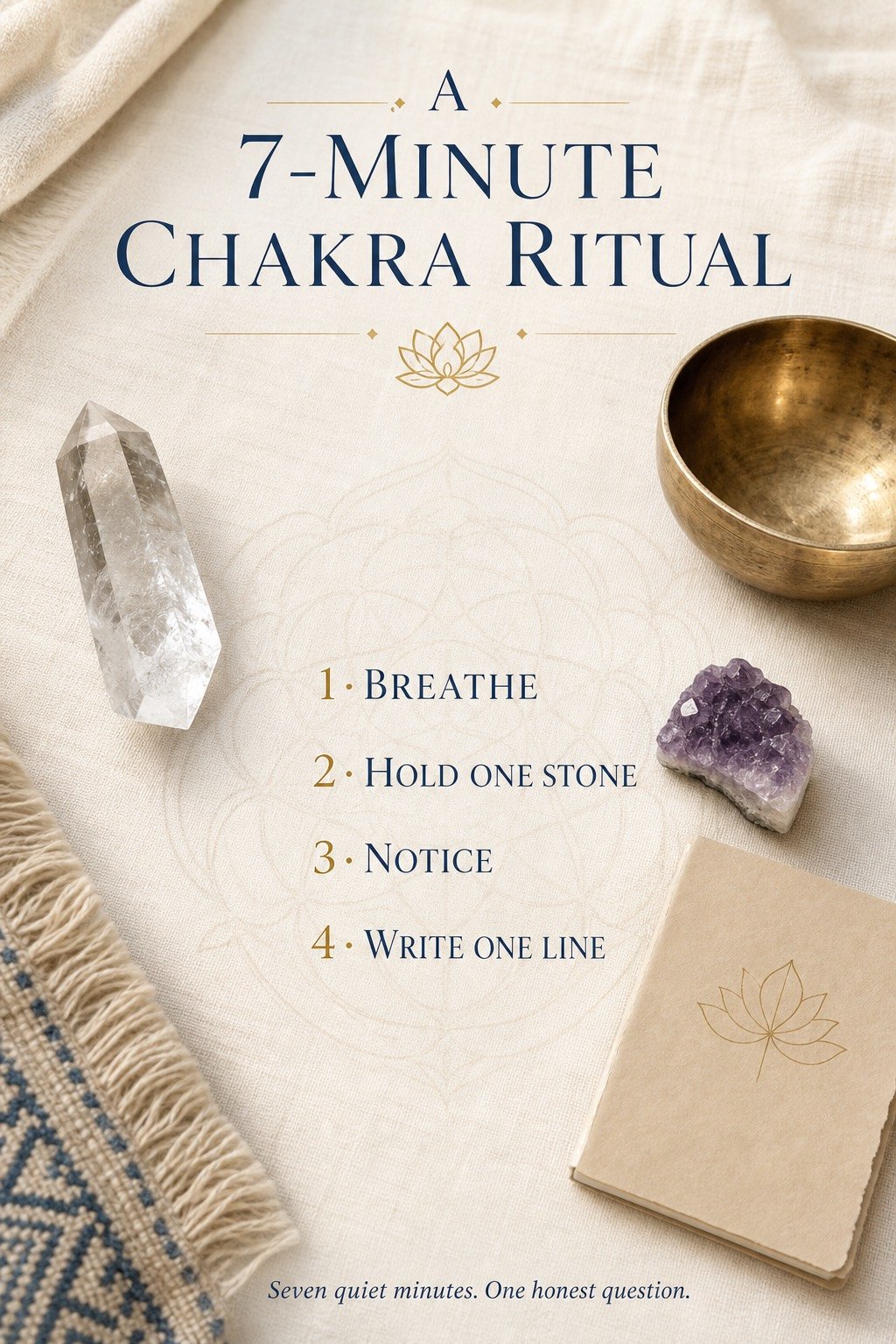
- Place one stone where you can see it.
- Take a slow breath and feel your feet on the floor.
- Choose the chakra theme that fits the day.
- Write one honest sentence in response to its question.
- Keep the stone nearby and return to that sentence later.
The value of a seven chakras and crystals ritual is in the pause: a small moment of attention, a clearer intention, and a ritual you can repeat.
Frequently asked questions
Which crystals are commonly used for the seven chakras?
Common pairings include Garnet or Red Jasper for the Root, Carnelian for the Sacral, Citrine for the Solar Plexus, Rose Quartz for the Heart, Aquamarine for the Throat, Lapis Lazuli for the Third Eye, and Clear Quartz or Amethyst for the Crown. Associations vary across teachers and traditions.
Can one crystal be used for more than one chakra?
Yes. Many stones appear in more than one chakra guide, and personal meaning can matter as much as tradition. Clear Quartz and Amethyst are common examples. Use the stone as a reminder of the intention you have chosen.
Are chakra crystals a form of medical treatment?
No. Chakra and crystal practices are spiritual or reflective tools, not medical treatment. They should not be used to diagnose, treat, or replace professional physical or mental health care.
Begin with one stone
Choose the crystal you will enjoy seeing every day. Let the seven chakras and crystals guide be a small, beautiful reason to pause.
Editorial note: Chakra meanings and crystal correspondences vary among traditions. This guide offers a grounded starting point for personal reflection.