FREE SHIPPING OVER $200

Himalayan Ritual · Cultural Guide
Eight Guardians. Twelve Signs.
Explore the Chinese zodiac guardian Buddhas associated with the twelve signs, approaching their imagery with curiosity, care, and cultural respect.A guide to Benmingfo · 本命佛
What is Benmingfo?
A birth-year association, not a prediction
The popular Chinese zodiac guardian Buddha tradition pairs the 12 zodiac animals with eight Buddhist figures. Often called Benmingfo (本命佛, “birth-year Buddha”), these figures are approached as devotional or symbolic companions.
In brief: this is a regional folk-Buddhist tradition—not a horoscope, a universal Buddhist doctrine, or a promise of protection. “Guardian figure” is more exact because the group includes Buddhas, bodhisattvas, and one wisdom king.
The Eastern zodiac
How to calculate your Chinese zodiac sign
The Chinese zodiac is a repeating 12-year cycle: Rat, Ox, Tiger, Rabbit, Dragon, Snake, Horse, Goat, Monkey, Rooster, Dog, and Pig. Your sign normally follows the zodiac year in which you were born—not your birth month as in the Western zodiac.For a quick year-based calculation, subtract 4 from your birth year and divide the result by 12. The remainder identifies the animal below. Because the traditional year does not begin on January 1, people born in January or February must also check that year’s Lunar New Year date.
Step 01Birth year − 4Example: 1990 − 4 = 1986.
Step 02Divide by 121986 ÷ 12 leaves a remainder of 6.
Step 03Match the remainder0 Rat · 1 Ox · 2 Tiger · 3 Rabbit · 4 Dragon · 5 Snake · 6 Horse · 7 Goat · 8 Monkey · 9 Rooster · 10 Dog · 11 Pig.
Year-based calculator
Enter your birth year
This gives a quick result for most birthdays. January and February births need the date check described beside the result.Your sign will appear here
and its commonly associated guardian
This tool uses the birth year only. If your birthday falls before Lunar New Year, your sign may belong to the preceding zodiac year.
The 12 animals at a glance
These are familiar cultural associations found in popular zodiac storytelling. They are not scientific personality categories, and no person is limited by a birth-year symbol.Rat 鼠
Often associated with alertness, adaptability, and finding a path through changing circumstances.Ox 牛
A symbol of patience, reliability, grounded effort, and strength built over time.Tiger 虎
Linked in popular culture with courage, directness, vitality, and an independent spirit.Rabbit 兔
Often read through gentleness, sensitivity, tact, discernment, and quiet resilience.Dragon 龙
An auspicious emblem of energy, aspiration, transformation, and imaginative power.Snake 蛇
Commonly associated with observation, intuition, patience, and considered movement.Horse 马
Evokes liveliness, freedom, momentum, sociability, and the desire to move forward.Goat 羊
Often connected with gentleness, creativity, harmony, empathy, and appreciation of beauty.Monkey 猴
A popular symbol of curiosity, invention, humor, agility, and resourceful intelligence.Rooster 鸡
Associated with attentiveness, candor, order, diligence, and greeting the day with purpose.Dog 狗
Often represents loyalty, sincerity, protectiveness, fairness, and dependable friendship.Pig 猪
Linked with generosity, warmth, openness, enjoyment, and an uncomplicated good heart.The eight guardian figures
Find the image connected with your sign
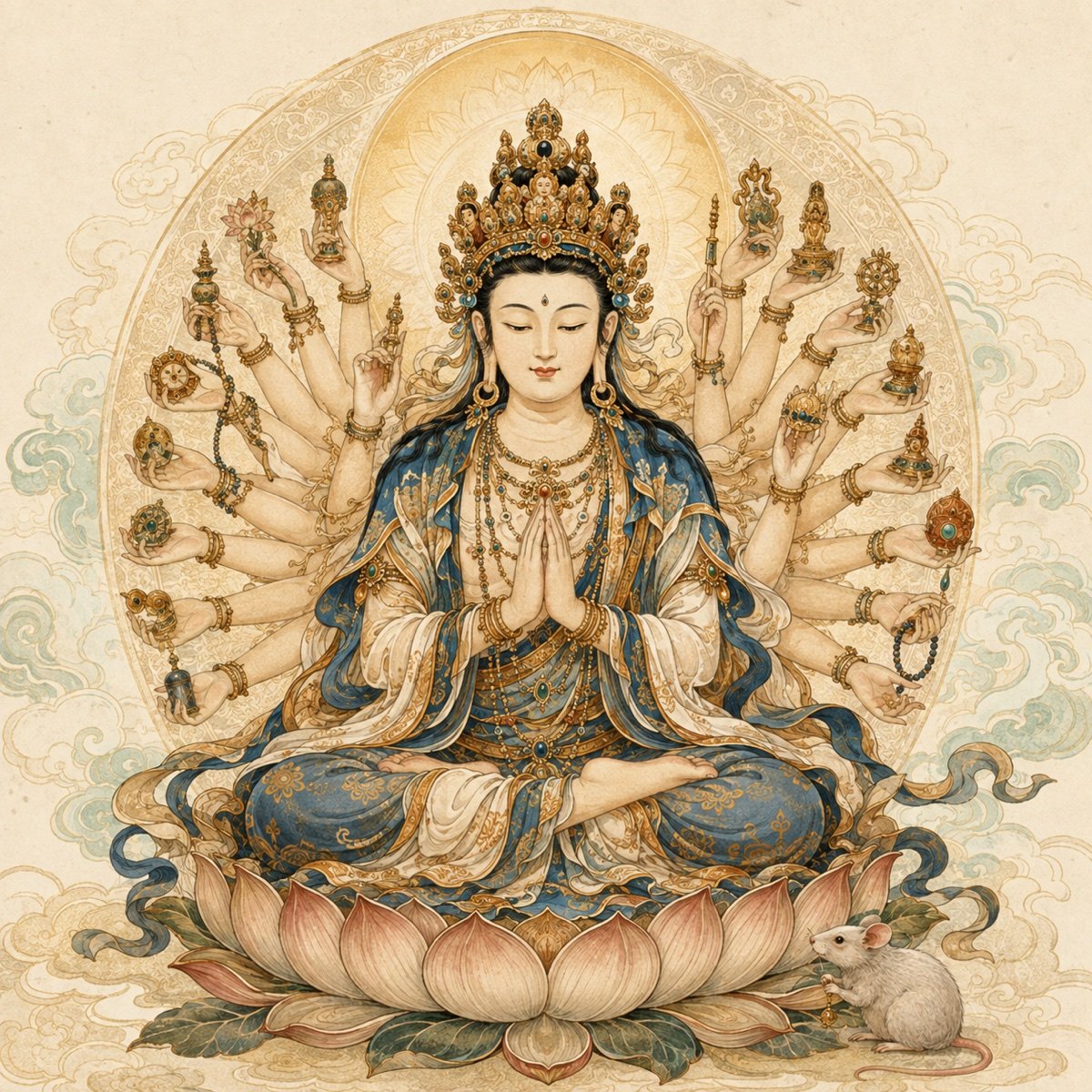 01Rat · 鼠
Thousand-Armed Avalokiteshvara
千手观音Compassion that notices—and responds.
The many arms visualize an expansive capacity to perceive suffering and offer practical care. A reminder that compassion becomes real through attention and action.
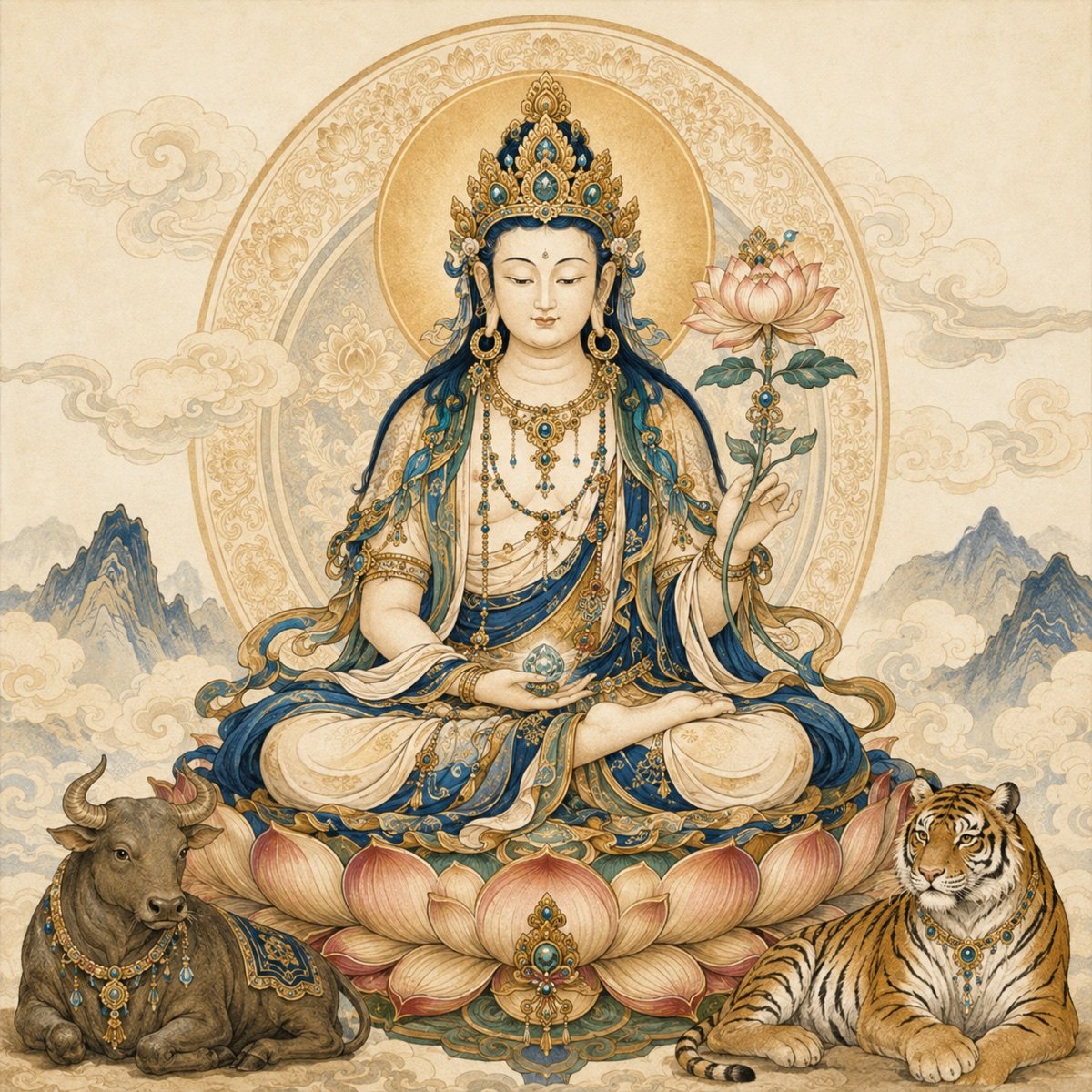 02Ox & Tiger · 牛虎
Akashagarbha
虚空藏菩萨Wisdom as spacious as the sky.
Associated with learning, memory, and the vastness of awakened qualities. A prompt to keep studying, widen the view, and leave room for what is not yet known.
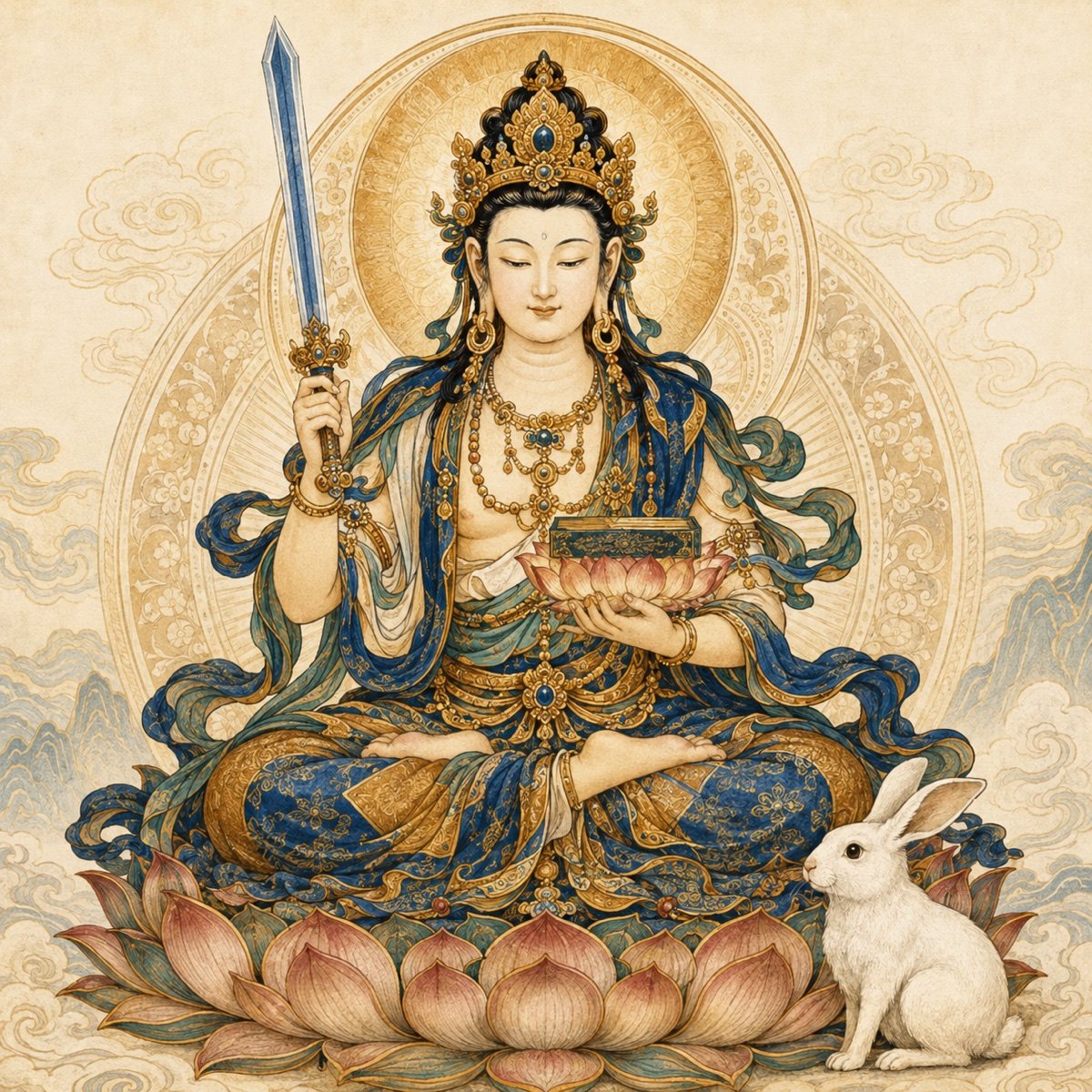 03Rabbit · 兔
Manjushri
文殊菩萨Clarity before choice.
Manjushri’s sword symbolizes wisdom cutting through confusion. The image invites discernment: seeing the situation clearly before deciding how to move.
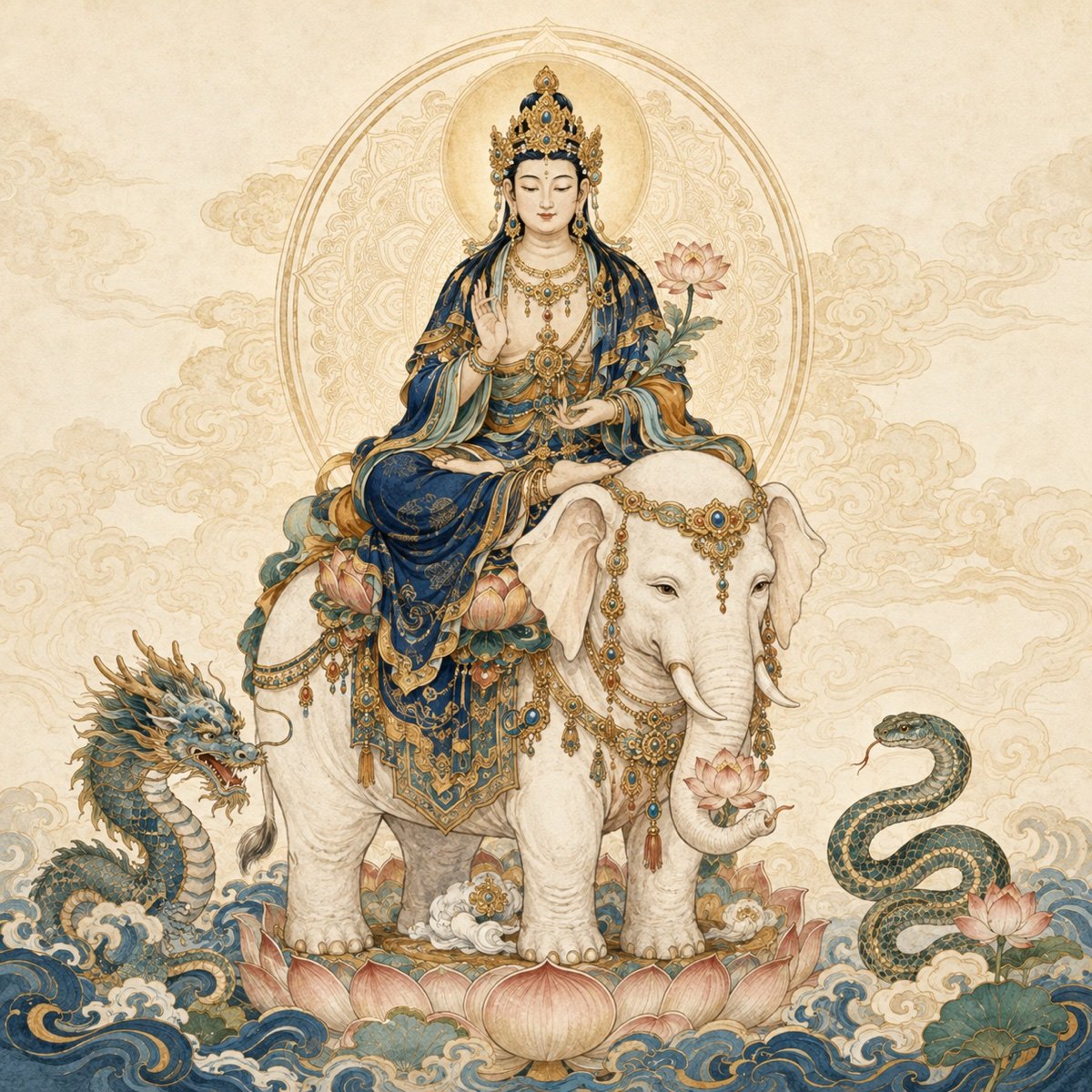 04Dragon & Snake · 龙蛇
Samantabhadra
普贤菩萨A vow carried into daily life.
Closely connected with practice, vows, and compassionate action. A reminder that a beautiful intention gains meaning when it becomes steady conduct.
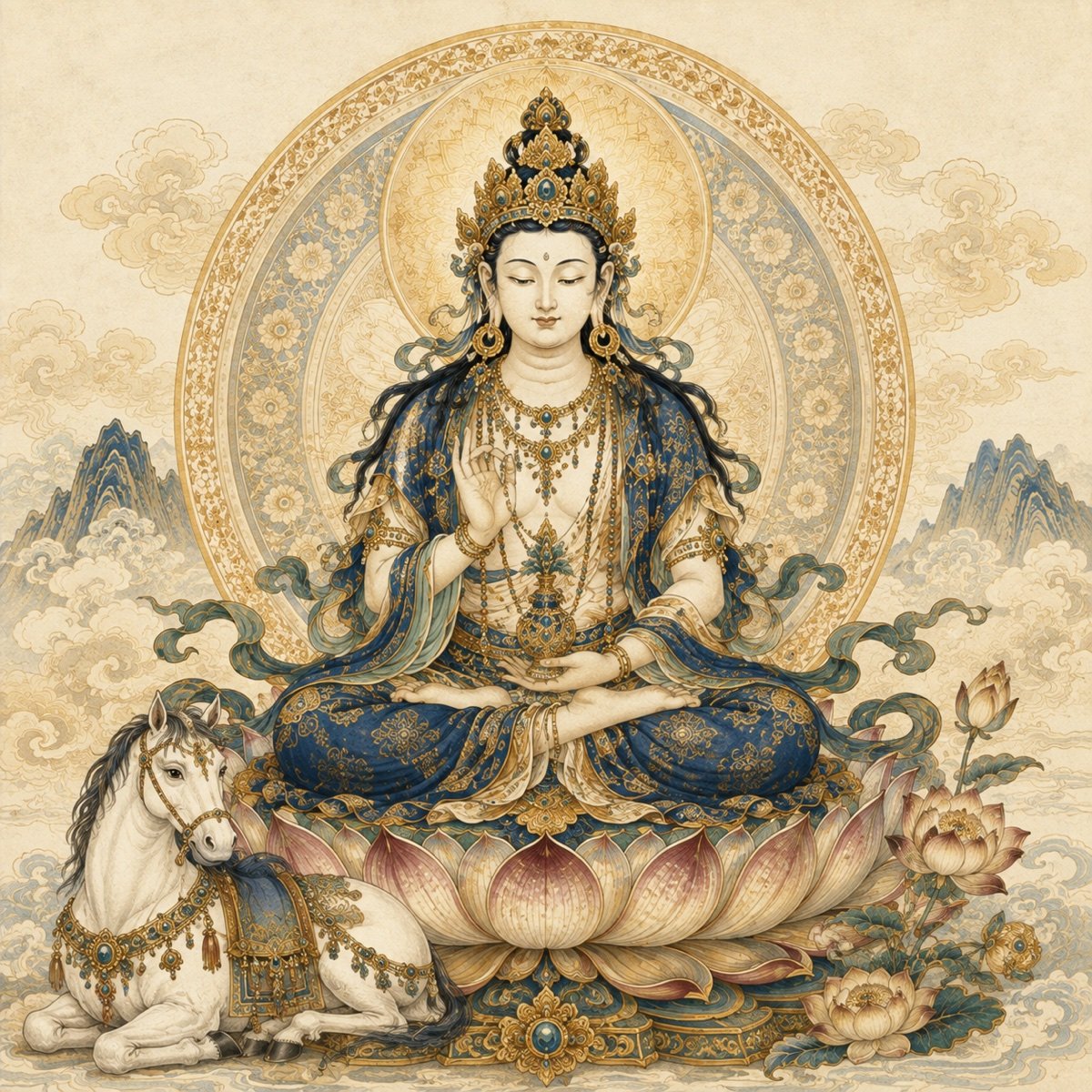 05Horse · 马
Mahasthamaprapta
大势至菩萨Strength guided by awareness.
Associated with wisdom and mindful attention in Pure Land traditions. A reflection on directing energy with steadiness instead of being carried away by haste.
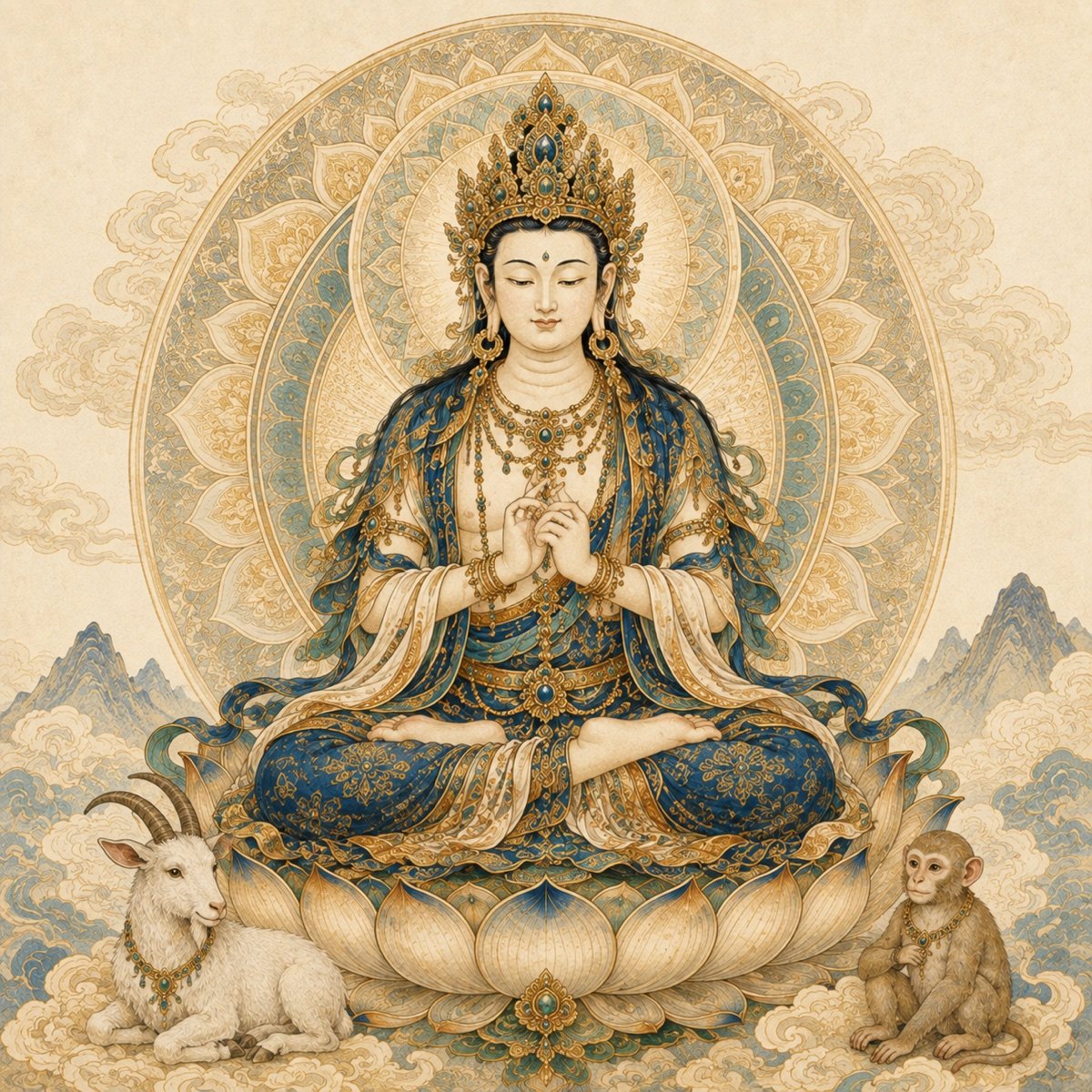 06Goat & Monkey · 羊猴
Vairocana
大日如来Illumination beyond the separate self.
The luminous cosmic Buddha points toward interdependence and a wider field of awareness—the possibility of seeing beyond a narrow idea of “me.”
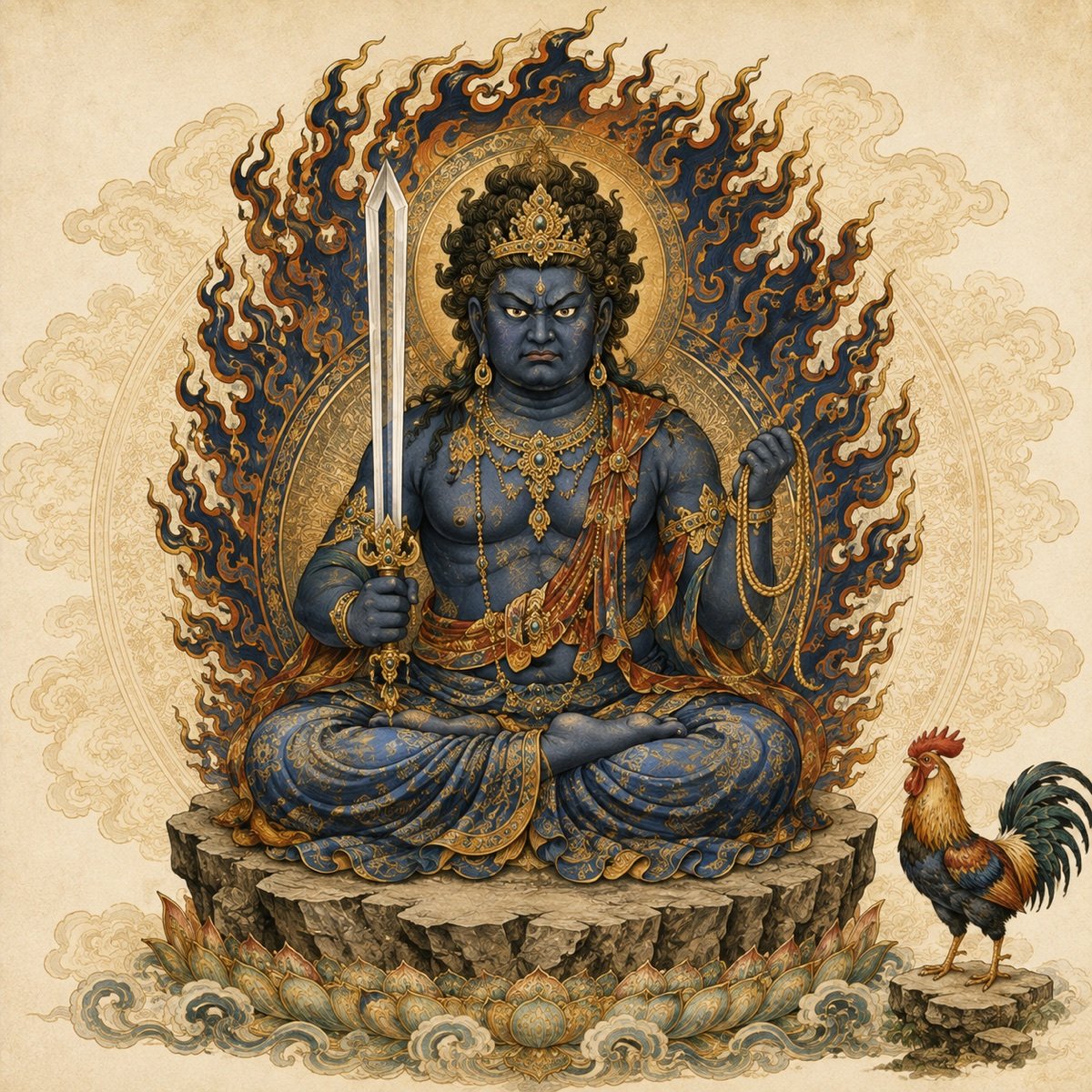 07Rooster · 鸡
Acala · Fudo Myoo
不动明王Resolve that remains unmoved.
The fierce face, sword, and lasso symbolize cutting through ignorance and holding firm to practice. The imagery expresses awakened resolve, not aggression.
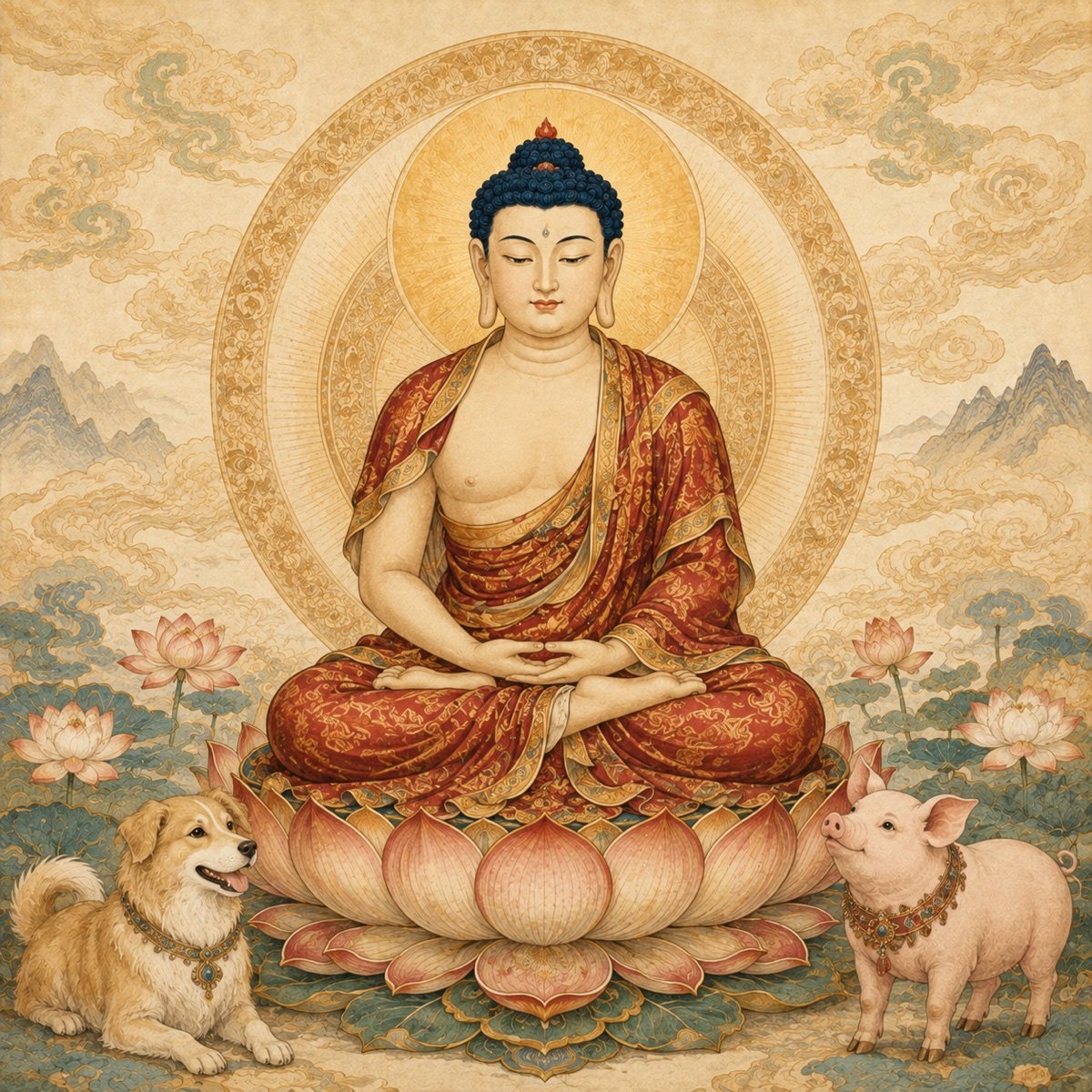 08Dog & Pig · 狗猪
Amitabha
阿弥陀佛Infinite light, compassion, and trust.
Central to Pure Land Buddhism, Amitabha can be approached as a reminder to meet others—and one’s own inner life—with openness and compassion.
A note for winter birthdays
Born in January or February?
Do not assume your zodiac animal changed on January 1. Check the Lunar New Year date for your birth year. Some astrological systems instead use Lichun, the beginning of spring, so people born near the boundary should note which calendar convention their source follows.Once you know your animal, return to the twelve-sign guide above to find the commonly associated guardian figure.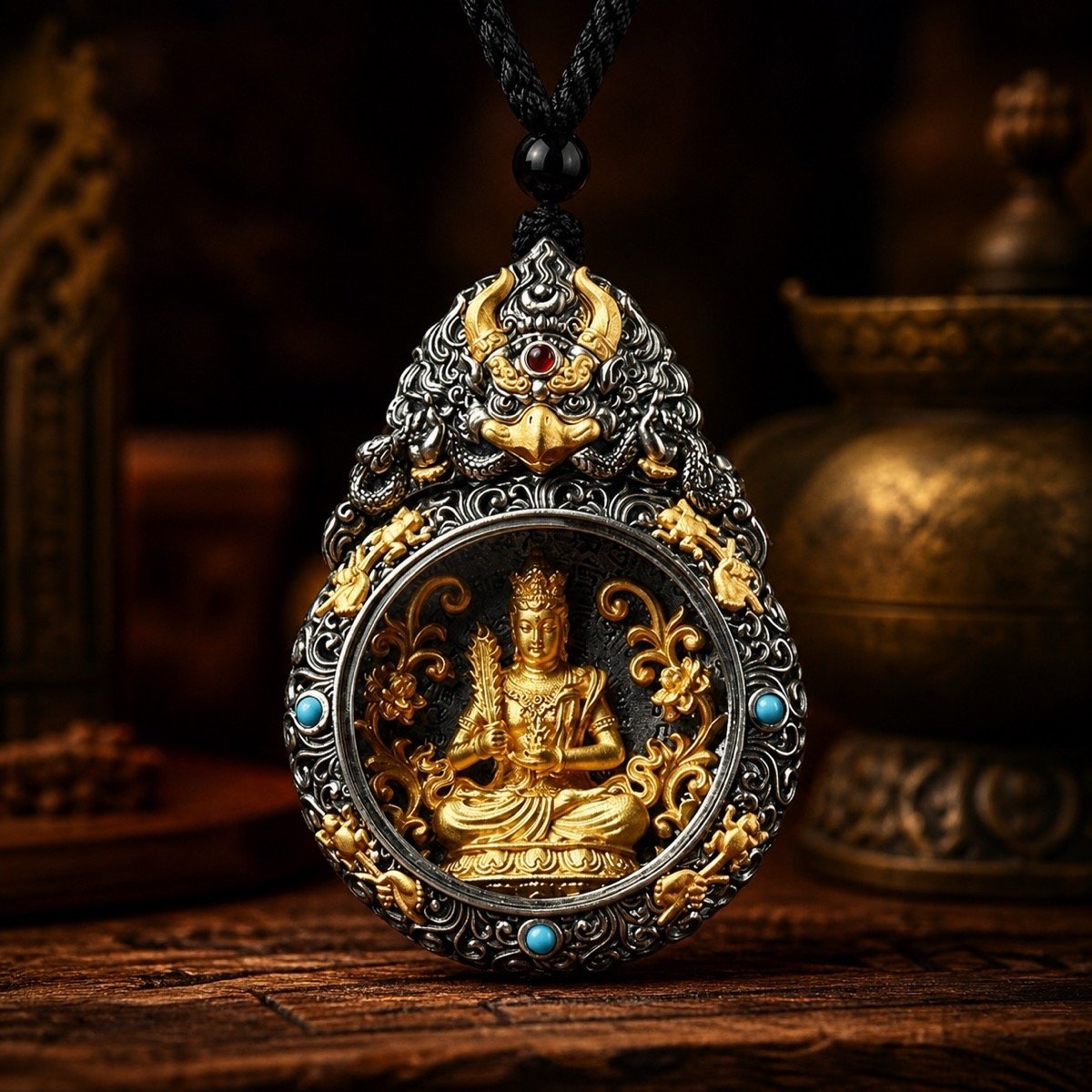
Himalayan Ritual · 12 designs
A wearable reminder of your intention
The Eastern Zodiac Guardian Deity Rotating Amulet Necklace pairs a raised guardian relief with antique silver-and-gold-tone detail, turquoise-color accents, a braided cord, and a rotating reverse disc.Choose the design connected with your birth-year sign—or the figure whose symbolism you wish to study more deeply. The association is offered as cultural and personal symbolism, never as a guarantee of supernatural results.Explore the necklace →Questions, answered with care
Which guardian Buddha belongs to my sign?
Use the twelve-sign navigation above. The signs are paired with eight commonly listed Buddhist figures, so four guardians are shared by two signs.Why are they all called “Buddhas”?
“Birth-year Buddha” is a convenient popular translation. The group actually includes Buddhas, bodhisattvas, and Acala, a wisdom king, so “zodiac guardian figure” is often more precise.Is Benmingfo a universal Buddhist teaching?
No. It is a regional folk-Buddhist and devotional association found in parts of East Asia, not a rule accepted by every Buddhist school.Does wearing a guardian image guarantee protection?
No. Sacred imagery can support devotion and reflection, but no object can guarantee safety, health, wealth, luck, or a particular future.Research notes
Culture before claims
The guardian mapping is presented as a living regional tradition. The short “meaning” lines are editorial reflections—not fixed doctrine, fortune-telling, or personality predictions.This cultural guide does not offer divination, medical advice, or a promise of spiritual or material outcomes. The original illustrations were created for Himalayan Ritual’s educational presentation and should not be treated as canonical iconographic references.