FREE SHIPPING OVER $200

Journal / Himalayan Heritage
Before You Buy a Tibetan Ritual Object
A beginner’s guide to context, care, and respect.
By Himalayan Ritual Editorial · 8 minute read · Updated August 2026
IN THIS GUIDE
- Begin with context
- Four objects, four relationships
- Ten objects to know
- Five questions before you buy
- Care, provenance, and responsibility
- Questions, answered
Begin with context
The first question is not “What does it bring?”
A Tibetan or Himalayan object is not simply “spiritual décor.” A mala, gau, vajra, bell, or sacred image may belong to a living practice, a family history, an artisan tradition, or a specific ritual setting.
Before asking what an object might do for you, ask what it is, where it comes from, and what kind of relationship it asks of its keeper. Context turns collecting into care.
Four objects, four different relationships
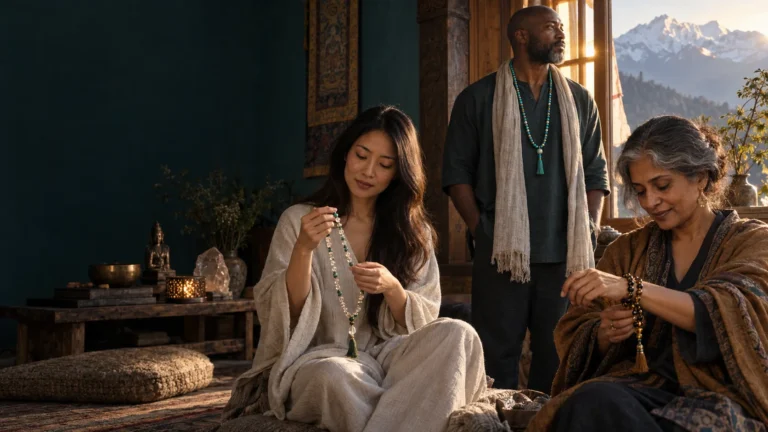
Mala beads
A tool for counted recitation and steady attention—not just a necklace.
Gau
A portable amulet box that may carry sacred contents, memory, or lineage.
Vajra & bell
Paired ritual implements whose meaning comes from practice and instruction.
Sacred images
Focal points for devotion and offering, not generic decoration.
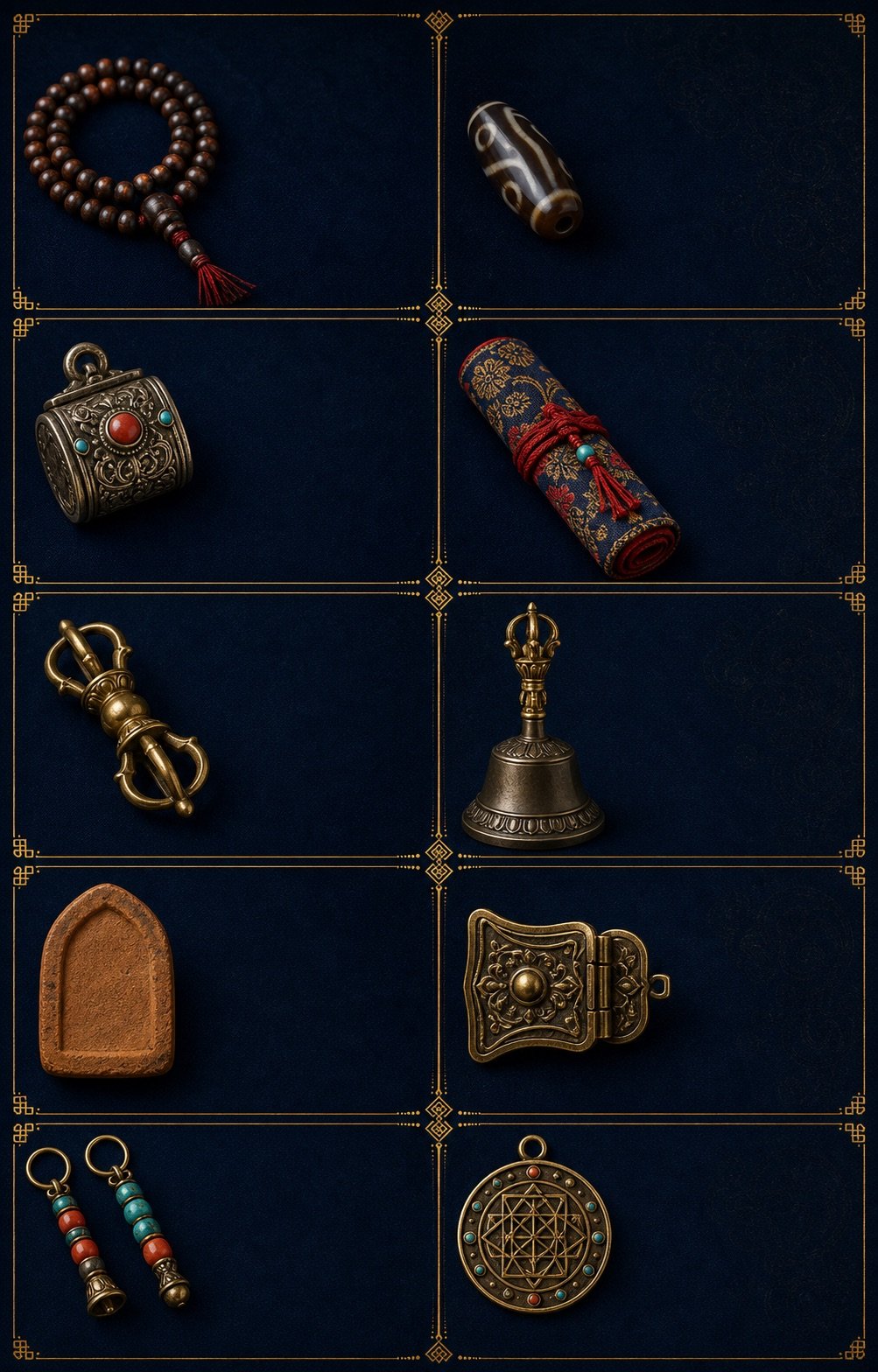
10 Tibetan & Himalayan Objects to Know
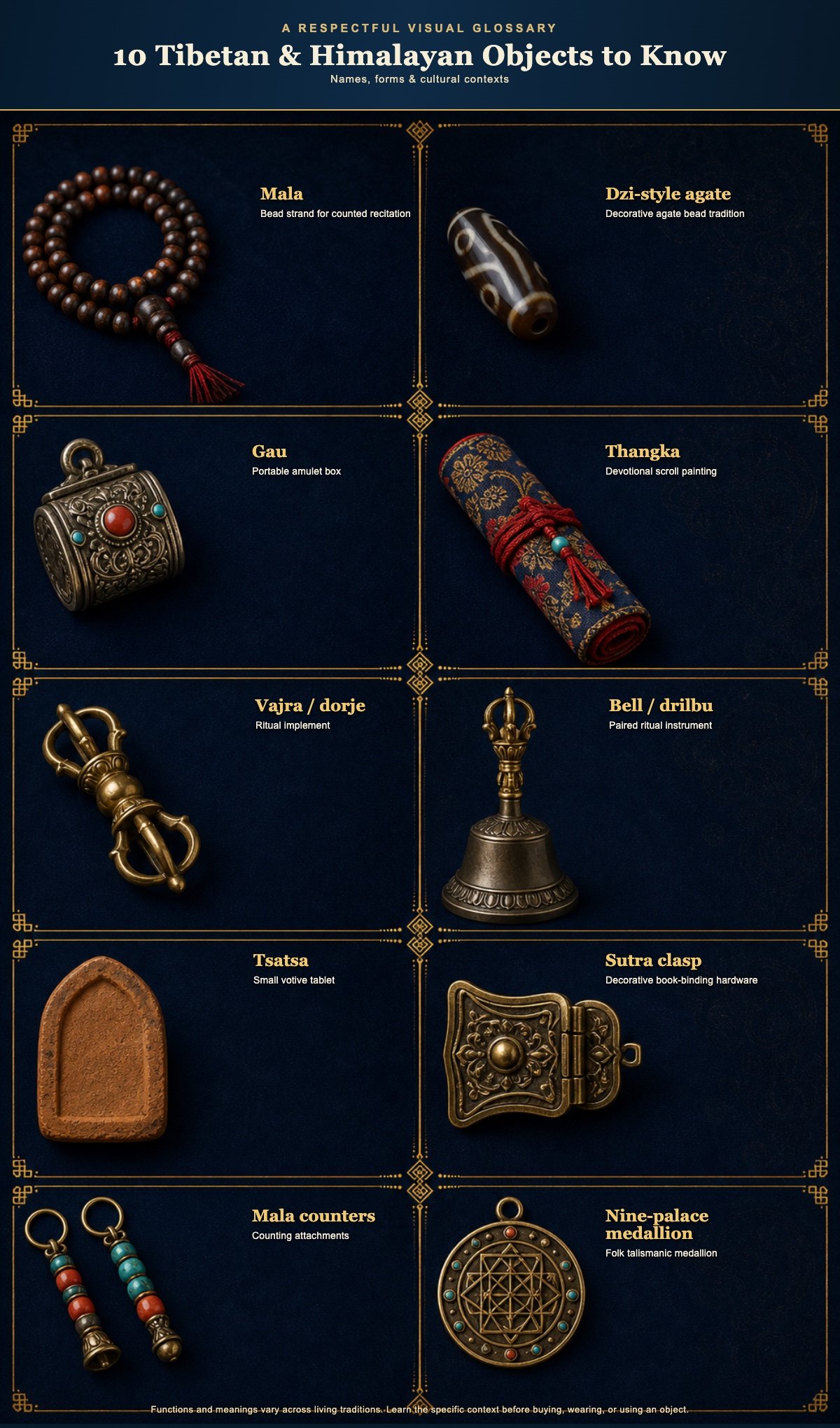
Names, functions, and meanings vary across living traditions. Learn the specific context before buying, wearing, or using an object.
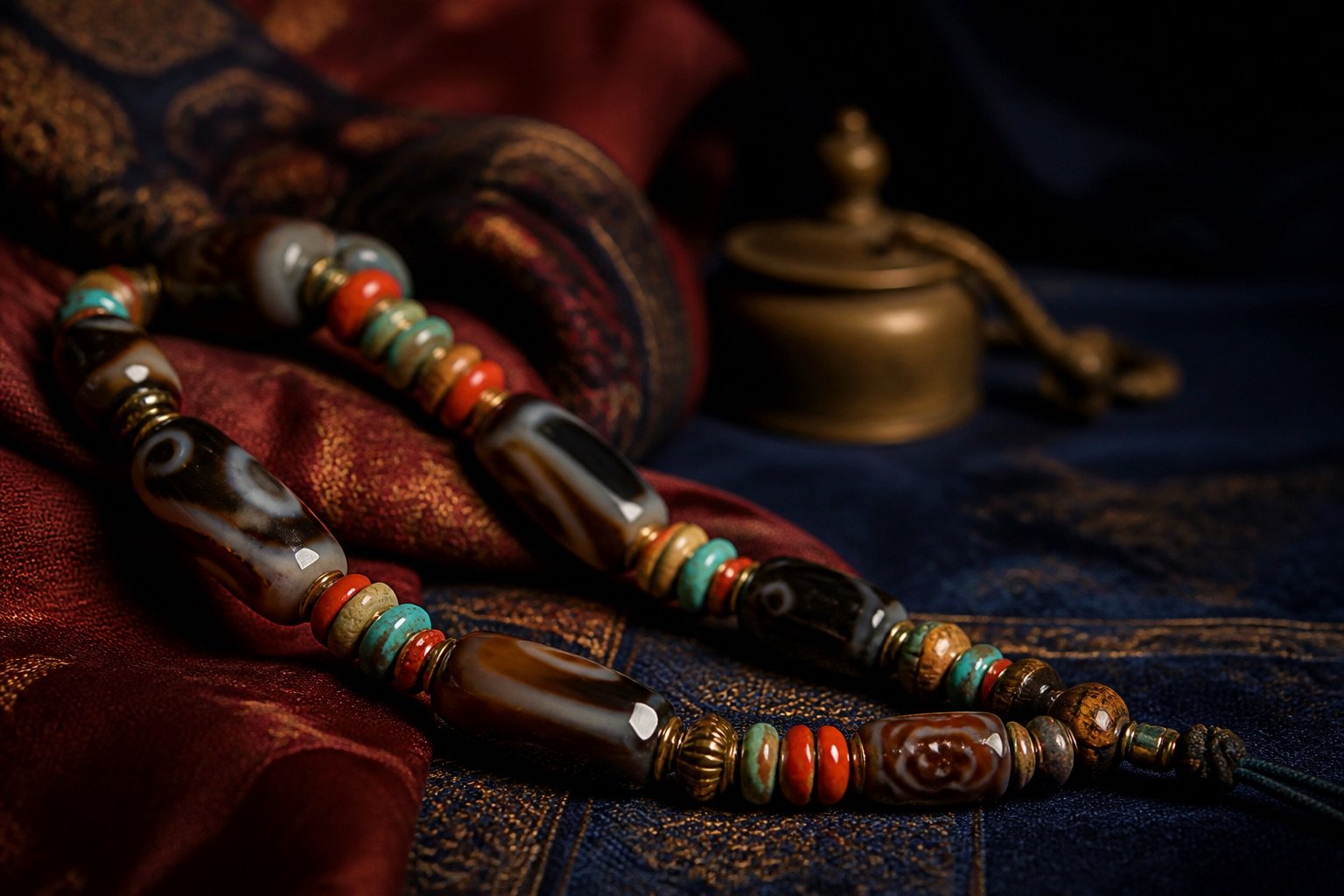
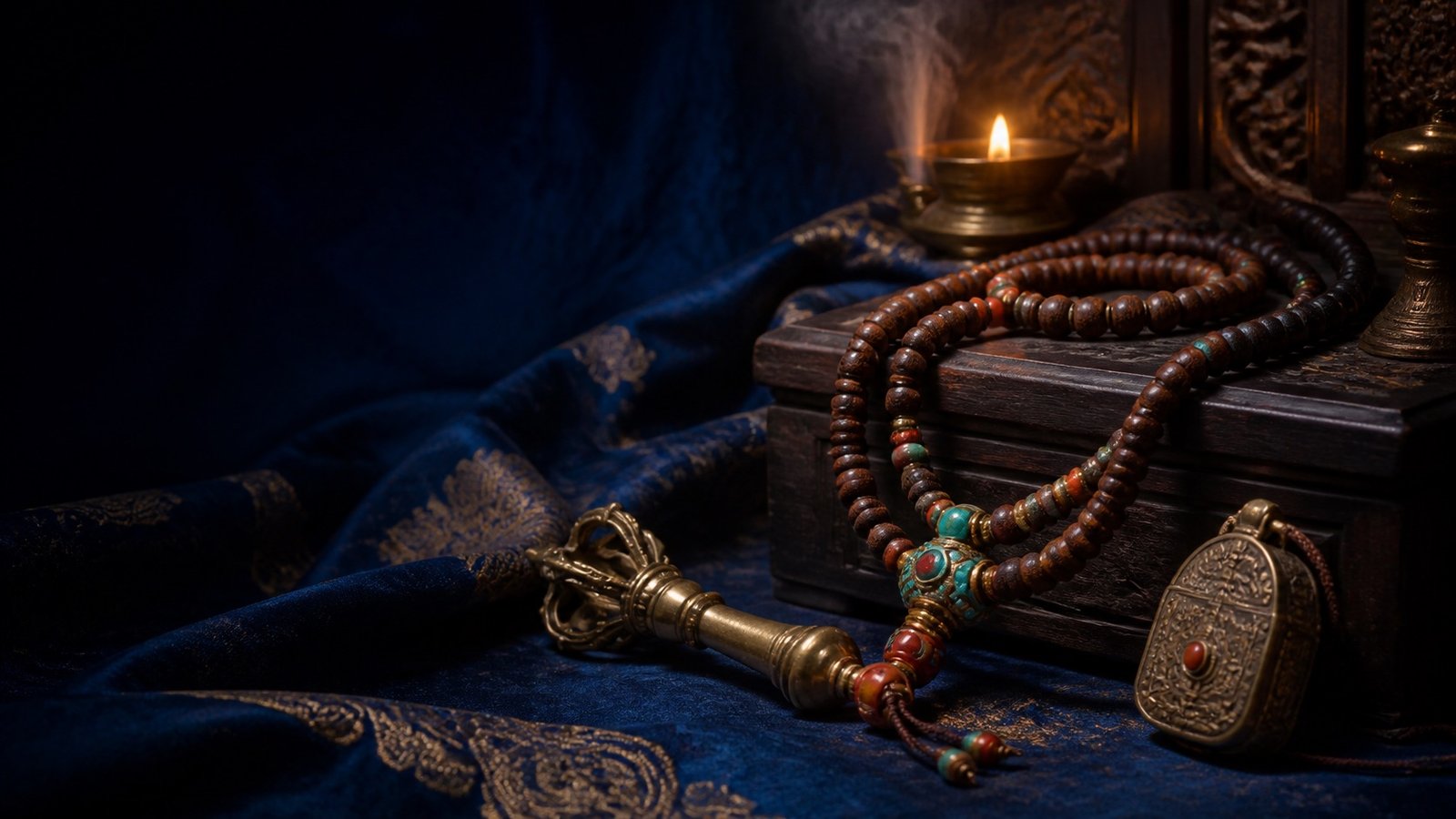
Mala beads
A mala supports repeated recitation. Ask about its bead count, materials, origin, and whether it has been used or blessed. Handle it cleanly and avoid treating every bead strand as interchangeable sacred jewelry.
Gau
A gau is a portable shrine or amulet box. Some contain images, prayers, relics, or other consecrated material. Do not open one merely out of curiosity; first learn what it contains and how it has been cared for.
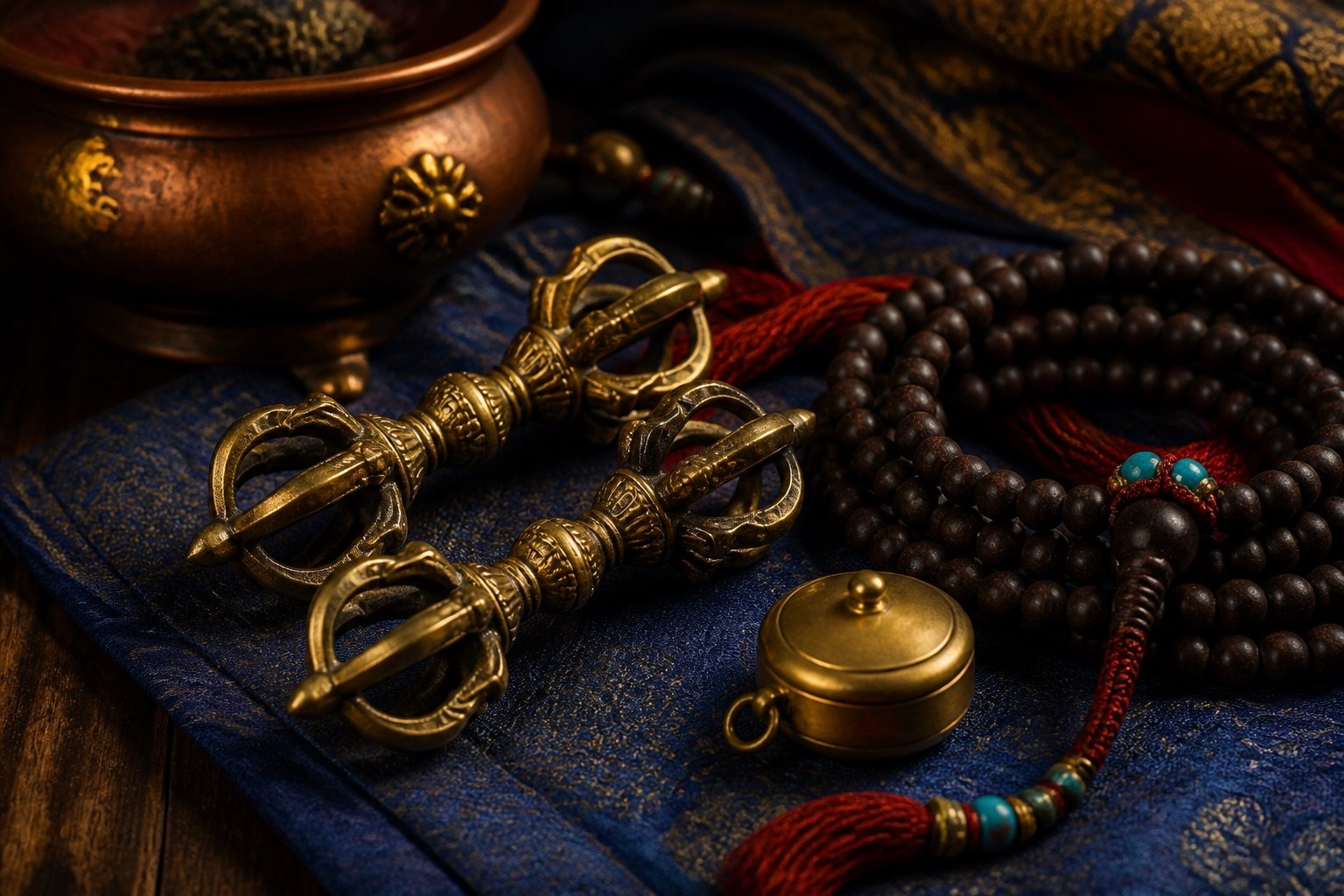
Vajra and bell
The vajra and bell are paired implements within Vajrayana practice. Their meaning is embodied through ritual, study, and instruction. They are not simply symbols to display or use without context.
Sacred images
Thangkas, statues, and printed images can function as supports for devotion, visualization, or teaching. Keep them clean, place them respectfully, and learn whose image you are looking at before making claims about its meaning.
Five questions before you buy
- What is it? Learn the object’s name, form, and traditional purpose.
- Who made it? Look for the artisan, lineage, or community behind it.
- How was it acquired? Ask for an honest, lawful provenance.
- What condition is it in? Check for damage, repairs, or unsuitable restoration.
- How will I relate to it? Be ready to understand, care for, and use it respectfully.
“The object is not the practice.”
Care, provenance, and responsibility
Choose quality over quantity. Support artisans and communities who keep these traditions alive. Record what the seller tells you, store materials appropriately, and be transparent about what you know—and what you do not.
Questions, answered
Can I wear a mala?
Sometimes, but the answer depends on the mala’s purpose and tradition. Ask the maker or teacher when possible.
Is a gau the same as a locket?
Not necessarily. A gau may contain sacred material and carry a role beyond ornament.
Can a vajra be used as décor?
Treat it as a ritual implement first. Learn its context before deciding how to place or handle it.
How can I tell whether an antique is authentic?
Age claims require evidence. Look for documentation, material knowledge, repair history, and a seller willing to explain uncertainty.
Collect with context.
Choose objects you can understand, care for, and live with respectfully.
Editorial note: Terms and object meanings vary across communities and lineages. This guide offers a respectful starting point, not ritual instruction.